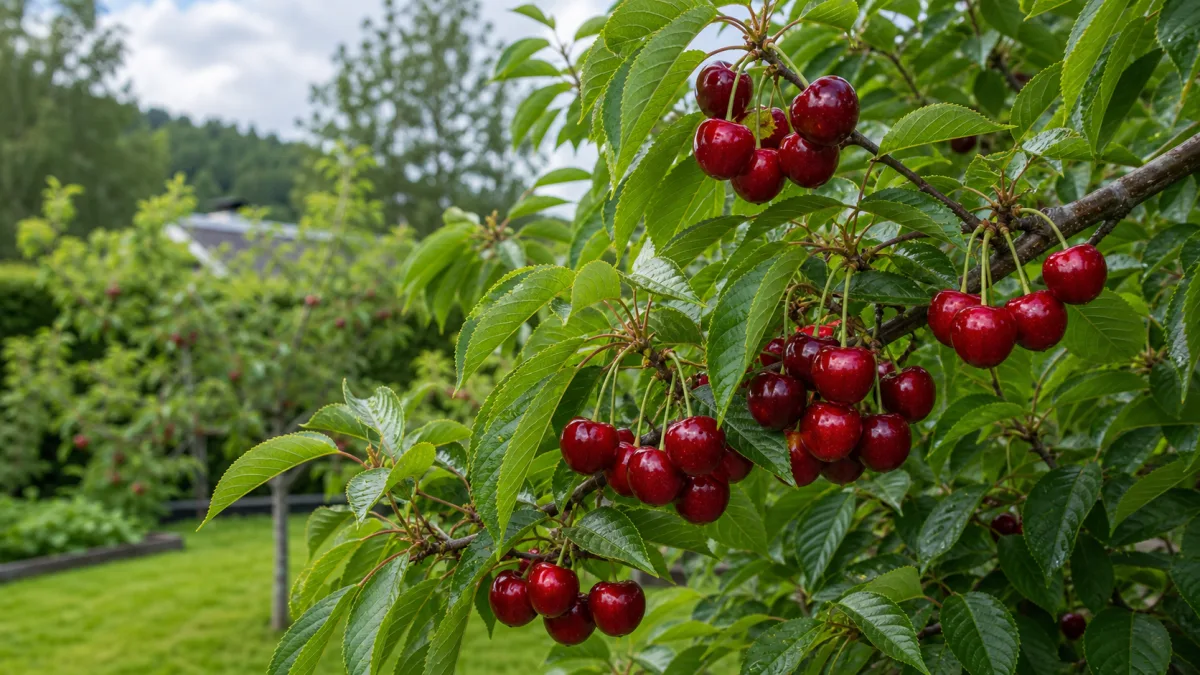
Sweet cherries need more planning than their spring blossom suggests. Choose a rootstock that fits the final space, check whether the cultivar needs a compatible pollination partner, and reserve a sunny, sheltered site with deep, well-drained soil before planting. The same site must make summer pruning, bird protection and a midsummer harvest practical; a tree expected to reach 3-6 m cannot be treated like a shrub at the back of a narrow bed.
Match rootstock and pollination to the garden
Prunus avium can form a substantial crown, but the eventual height depends heavily on the chosen rootstock. Ask for the rootstock name and expected size rather than relying on the cultivar label alone.
Pollination is a separate decision. Some cultivars are self-fertile, while others need a compatible cherry flowering at the same time; an ornamental cherry nearby is not automatically a useful partner.
White blossom appears before the red to dark-red crop. A warm wall may advance flowering into a frost-prone spell, so shelter matters, but the crown still needs light and moving air.
- fruit tree for sheltered gardens (Prunus avium).
- white spring blossom and red to dark red cherries.
- often 3-6 m depending on variety and rootstock.
Choose a site that protects blossom and fruit
Allow for the mature crown as well as the trunk. Deep, well-drained soil and a sunny position support the tree, while an accessible path makes watering a young tree, pruning and picking safer.
Look above and around the planting hole before digging: overhead lines, a boundary, a greenhouse roof or a narrow gate can make a 3-6 m fruit tree the wrong choice even when the soil is suitable.
- confirm the cultivar's pollination group and whether a partner is needed
- choose a rootstock whose mature size fits the available width and height
- avoid a frost pocket or waterlogged ground where blossom and roots are repeatedly stressed
- leave practical access for summer pruning, bird protection and picking
Plant and establish the tree without rushing it
Plant while the tree is dormant and the soil is workable, commonly in spring or early autumn. Keep the graft union above soil level, stake only as firmly as needed, water the root zone and keep competing grass away from the young trunk.
Delay planting if the hole is holding water or the ground is frozen. A calendar date cannot correct smeared, compacted soil around a new root system.
From spring blossom to midsummer cherries
- Dormant season: plant or inspect stakes, ties and the weed-free root area.
- Spring: watch the white blossom for frost exposure and confirm that a pollination partner is flowering.
- Early summer: water young trees through dry spells and prepare bird protection before fruit colours.
- Midsummer: pick ripe cherries promptly and complete necessary pruning in dry summer weather.
Water, prune and inspect without trapping disease
Water a newly planted cherry deeply when the root zone begins to dry, then reassess rather than keeping the soil constantly wet. Keep mulch clear of the trunk and loosen or remove ties before they constrict the bark.
Prune established sweet cherries in summer rather than treating them like winter-pruned apples. Remove only what is needed for sound structure, access and airflow, and inspect damaged fruit or leaves before assuming fertiliser is the answer.
Problems decided before the first crop
A cherry can flower beautifully yet crop poorly when pollination, frost exposure or access for bird protection was overlooked at planting time.
- buying a cultivar without recording its rootstock or pollination requirements
- planting in a frost pocket because the position is sunny later in the day
- waiting until cherries colour before working out how a net can be fitted and removed
- making heavy dormant-season cuts instead of planning restrained summer pruning
Compare cherries with other tree fruit by the work they create
Apple, pear and plum trees differ in pollination, pruning season and pest pressure. Compare those jobs as well as fruit preference before committing the best sunny space to a cherry.
On a small plot, a compact rootstock with a known pollination solution is more useful than a vigorous tree that cannot be safely netted, pruned or harvested.
Sweet cherry questions from planting to harvest
Does a sweet cherry tree need another cherry for pollination?
It depends on the cultivar. Confirm whether it is self-fertile or needs a compatible partner that flowers at the same time before choosing the planting position.
How large will a sweet cherry tree become?
The rootstock is the most useful size clue. Recorded heights often span roughly 3-6 m, so ask for the rootstock and expected crown spread rather than judging by the young tree.
When should a sweet cherry tree be pruned?
Plan necessary pruning for dry summer weather after growth is active, and keep cuts restrained. Cherry does not follow the same winter-pruning routine as an apple tree.
How can birds be kept from the ripening crop?
Plan a secure net or fruit cage before cherries colour, making sure wildlife cannot become trapped and that the ripe fruit remains reachable for picking.