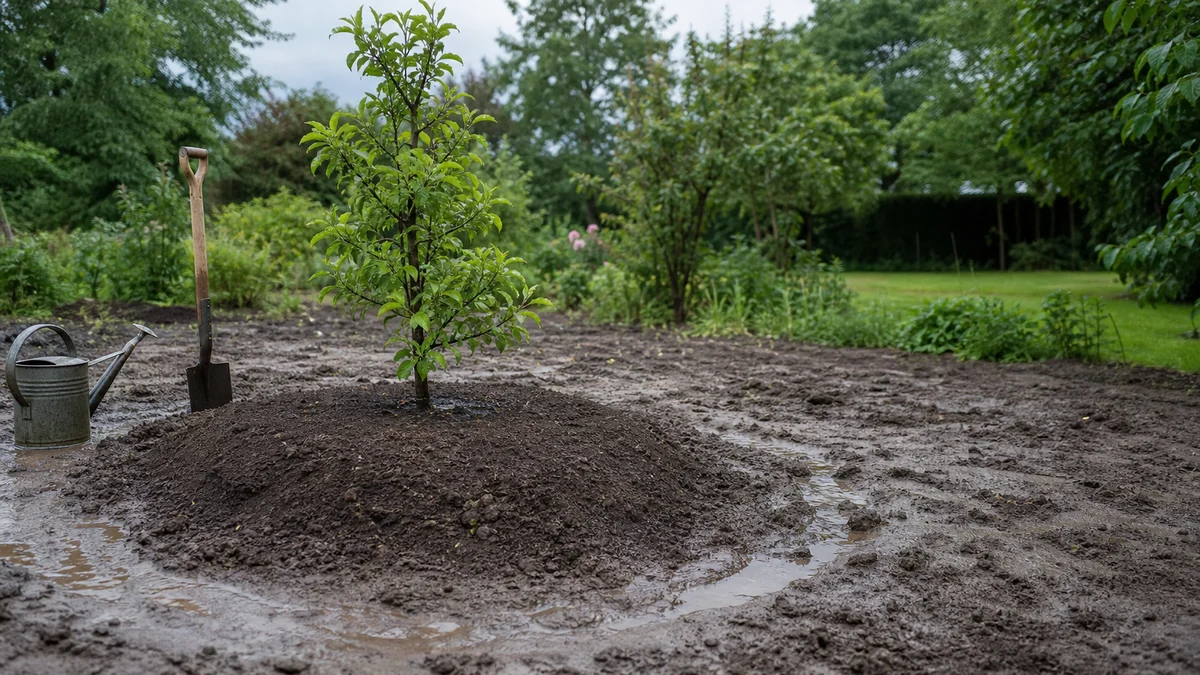
A fruit tree that stalls after rain may be sitting in a water-filled planting pocket even while the clay surface looks dry. Find the root flare, inspect moisture at the edge of the root ball and test how quickly the proposed site drains before adding compost or more water. Apples, raspberries, blueberries and currants do not share one clay-soil recipe: rootstock, acidity and tolerance of standing water change the safe planting method.
Look for trapped water, not clay colour alone
Check the plant after rain. Yellowing leaves, drooping shoots and sour-smelling soil can point to saturated soil, even if the surface dries later. Open a small inspection hole at the edge of the root ball and feel whether the soil stays wet and tight for days.
That distinction changes the rescue plan. A drowning root system needs air and drainage before it needs more water or fertilizer.
- Confirm that the root flare is visible above finished soil level.
- Look for shiny water or grey, sour soil at the bottom of an inspection hole.
- Compare the planting mix with the surrounding clay; a loose dark pocket inside a tight wall is the warning sign.
Test drainage before roots enter the ground
Before planting in clay, dig a test hole about 12 inches deep and 12 inches wide where the plant would go. Fill it with water, let it drain, fill it again the next day and time the second drain. Water that is not gone within eight hours signals slow drainage.
Run the test at the planning stage; it says more about root risk than colour or stickiness alone.
- Very fast drainage may mean more careful watering after planting.
- Slow drainage means the planting area should be broad and shallow, moved, or built up.
- Do not test inside a hole that has already been heavily amended; test the actual native soil nearby.
Keep the root flare visible in a broad, shallow hole
Do not dig deeper than the root ball measured from the root flare to the bottom. Make the hole two to three times wider than the roots and loosen compacted sides so new roots can leave the original ball. Do not loosen the base so much that the plant settles and buries the flare.
Backfill mostly with the soil you removed. Mature compost can be worked through a broad top layer if organic matter is needed, but a deep pocket of pure compost in clay creates a poor transition from loose soil to dense soil.
- Find the root flare before planting, including on container plants with excess potting mix on top.
- Keep the graft union on apples and pears clearly above soil level.
- Water in to settle voids, but do not stamp the backfill into a hard mass.
Raise the root zone when water cannot escape sideways
If the drainage test is slow or water stands after rain, a low mound is safer than a deeper hole. A slight mound about 25–30 cm high and roughly 1 metre wide can keep the main roots above the wettest layer; the dimensions are a starting point, not a substitute for reading the site.
For raspberries, blueberries and many berry shrubs, a broad raised bed can work better than individual pits. Build it wide enough that roots move gradually into the surrounding soil, not into a small box with wet clay underneath.
- Use mineral soil plus mature compost across the whole mound, not only under the plant.
- Shape the edges gently so roots and water do not stop at a sharp boundary.
- Keep mulch away from trunks, crowns and root flares.
Use compost across the surface, not as a buried sponge
Use compost or well-rotted manure as thin mulch or a broad top-layer amendment, not a nutrient plug under the root ball. In a sealed clay hole, organic matter holds extra water; fresh or strong manure can scorch oxygen-starved roots, and fertilizer should wait until normal new growth returns.
Beyond the trunk and exposed root flare, protect surface structure with mulch or suitable living cover rather than repeatedly leaving wet clay bare and compacted. Keep the immediate crown clear, and improve the whole rooting area gradually instead of creating one rich pocket.
- Suspect fresh manure if the mix smells of ammonia or feels hot and unfinished.
- Suspect drainage if the hole stays wet for days after rain.
- Pause fertilizer until the plant is making normal new growth.
Match the remedy to apples, cane fruit or acid-loving berries
An apple on a vigorous rootstock tolerates ordinary clay better than a dwarf tree, but neither should sit with water around the roots after rain. Dwarf trees often need support and a controlled site; larger rootstocks give better anchorage and more soil volume.
Raspberries need full sun, air movement and good drainage; standing water raises disease risk and can kill roots through lack of oxygen. Blueberries are different again: they need acidic, loose, well-drained soil, and pH work belongs across the whole rooting area, not in one small hole. Currants and gooseberries tolerate more, but perform best in rich, well-drained soil.
- Choose fruit trees by rootstock and mature size, not only cultivar name.
- Put raspberries in a row or raised strip that can be drained and pruned.
- Plant blueberries only where the pH plan and drainage plan fit the same site.
Rescue a waterlogged planting without burying roots again
Start with steps that do not tear up roots. Pull soil and mulch back from the trunk or crown, expose the flare, and stop adding fertilizer. Dig a small inspection hole outside the root ball to see whether water is sitting in the planting pocket.
If this season's plant is trapped in a wet pocket, lifting it onto a broad mound can preserve more root than passive waiting. For older plants, divert roof or path water and improve surface structure gradually.
- Do not cut back the top of a fruit tree to compensate for wet roots; remove only broken wood.
- Use a shallow swale or edge to move surface water away from the plant.
- Water only when the root ball has started to dry several inches down.
Four mistakes that turn clay into a wet planting pit
Most mistakes come from trying to be extra generous inside the hole. In clay soil, improving a broad shallow area is safer than making one deep, rich, wet pit.
- digging a deep hole and filling the bottom with compost or manure
- burying the root flare or graft union because the plant looks steadier
- planting while water sits in the bottom of the hole
- choosing blueberries without a soil pH test and acid-soil plan
- watering by the calendar when the inspection hole is still wet
Questions about fruit roots in heavy soil
Is clay soil bad for every fruit tree?
No. Clay can hold nutrients and moisture, but the planting site must still provide air to roots and avoid a water-filled pocket.
Can I rescue a tree planted too deep?
A young tree can often be lifted and reset with the root flare at the correct level. First pull soil away from the trunk and find where the root ball really starts.
Can cow compost damage berry-bush roots?
Use only well-rotted cow compost as thin mulch or broad top-layer amendment. A thick layer at the bottom of a clay hole raises the risk of a wet pocket and root scorch.
Should blueberries be planted the same way as raspberries?
No. Both need drainage, but blueberries also need acidic soil across the whole root zone; raspberries mainly need a narrow, airy, well-drained row.