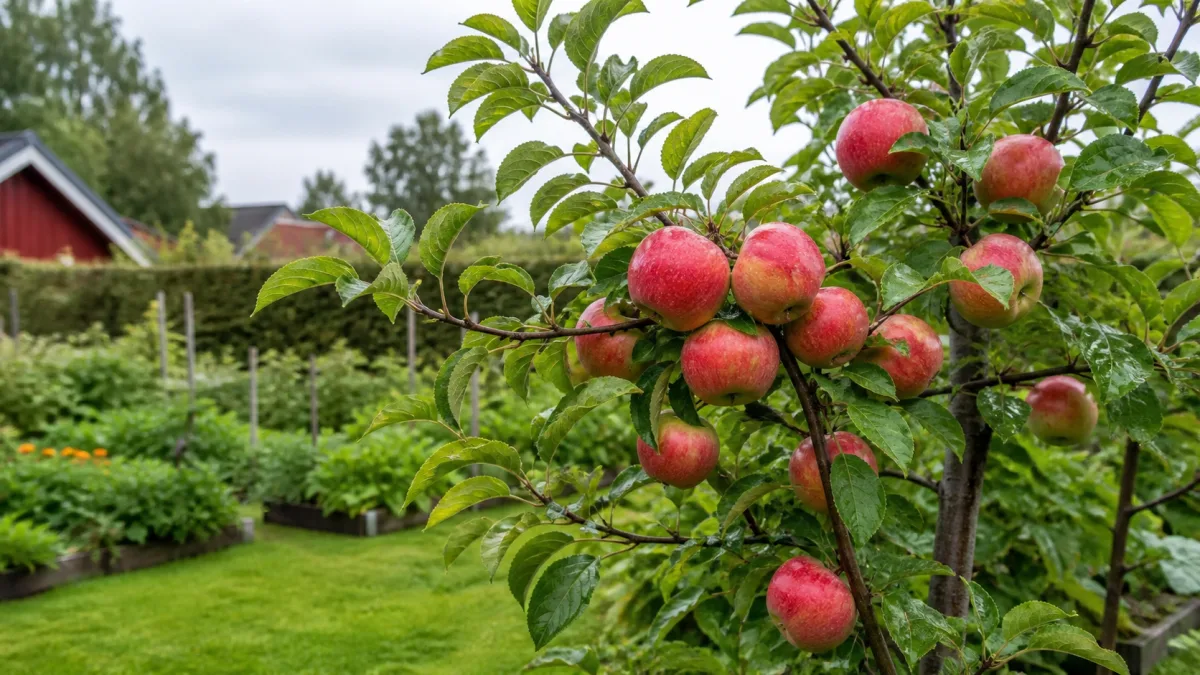
An apple cultivar determines the fruit and harvest window, while its rootstock largely controls mature size and vigour. Choose both for the available space, confirm a compatible pollinator with overlapping blossom, and plant with the graft union above the final soil level. Those label details shape every later job, from thinning after June drop to picking sound fruit in several rounds.
Apple trees: choose rootstock, cultivar and pollinator together
The rootstock controls much of the tree's eventual size and vigour, while the cultivar determines fruit use, harvest period, storage and some disease considerations. Treat the label as two linked identities rather than buying on the apple name alone.
Most cultivars also need compatible pollen during the same flowering period. A suitable nearby crab apple can sometimes provide it, but flowering overlap and compatibility still need to be checked before planting.
- rootstock and trained form for the available mature space
- cultivar use, harvest period, storage and disease profile
- compatible overlapping blossom and exposure to late frost
Prepare the planting position
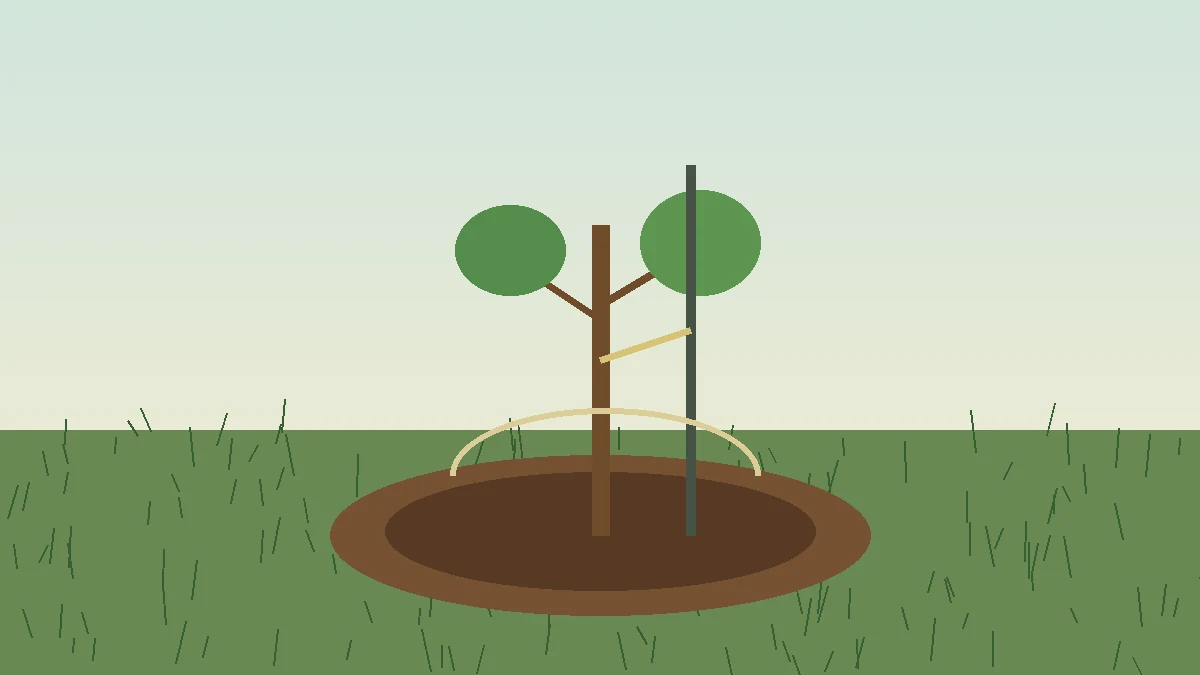
Allow for the mature crown, not only the young tree. The position needs full sun, free-draining soil, water during establishment and enough access for staking, pruning, thinning and picking without trampling the root zone.
Plant with the graft union above the final soil level and use a stake where the tree needs support. Keep grass and competing growth away from the immediate root area while the tree establishes.
- confirm the cultivar, rootstock and pollination partner on the order
- measure the space against the expected trained height and spread
- avoid a waterlogged position or a route that blocks future pruning and harvest
- keep the graft union visible above soil and secure the young tree as required
Read the tree as the season changes
Spring blossom signals both pollination and late-frost risk. After fruit set, wait for the natural June drop before deciding whether crowded clusters need further thinning to reduce branch load and improve spacing.
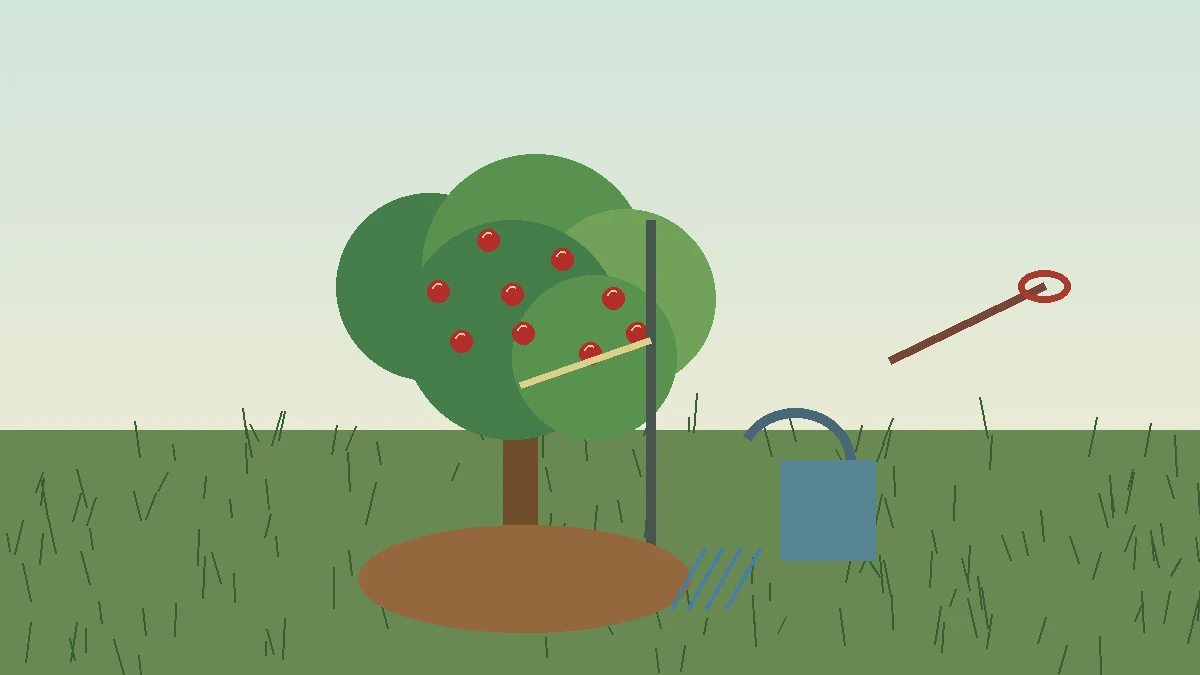
Harvest timing belongs to the cultivar and fruit, not a single date. Ground colour, flavour, aroma and release with a gentle lift and twist are more useful than waiting for frost or stripping the whole tree at once.
Four checks through the year
- Planting and establishment: protect the graft union, stake if needed and water the root zone.
- Blossom: confirm overlapping pollination and watch the forecast for late frost.
- After June drop: assess fruit spacing, branch load and signs of apple scab.
- Harvest and storage: pick in suitable rounds and store only sound fruit under appropriate conditions.
Water, thin, prune and inspect with a purpose
During establishment, inspect soil moisture, the stake and the graft union together. Deep watering is useful when the root zone needs it, but persistent wetness, a buried graft union or loose support calls for a different correction.
Pollination and apple scab need separate checks: poor fruit set does not by itself identify disease. Keep the canopy accessible and remove infected fallen leaves and fruit when scab is present; moderate pruning and sanitation reduce local pressure but cannot stop spores arriving from nearby trees.
- check the root zone and support after heavy rain or a dry spell
- thin only after natural fruit drop has shown what remains
- keep damaged, diseased and unripe fruit out of the storage batch
Purchase and planting errors that limit an apple tree
A mismatch made at purchase or planting can limit the tree for years.
- buying a cultivar without confirming the rootstock and compatible pollination
- planting the graft union below the final soil level or ignoring mature crown space
- thinning before June drop or leaving an overloaded branch unsupported
- using a calendar date or skin colour alone to decide harvest, then mixing damaged fruit into storage
Keep one record for the tree
Record the cultivar, rootstock, pollination partner and planting date with the tree. Add brief notes on blossom, June drop, scab symptoms, harvest cues and storage performance so next year's work is based on this tree rather than a generic calendar.
- note which nearby tree flowered at the same time
- record when fruit dropped naturally and whether further thinning was needed
- write down the harvest cues that matched good flavour and storage
Apple trees: common questions
How do I choose the right rootstock for an apple tree?
Use the rootstock to judge the tree's eventual size, then match that size to the soil, available space and training method. A grafted apple tree may mature at roughly 2–5 m in a garden, but the actual range depends on its rootstock and form.
Do I need a second apple tree for pollination?
Most apples need pollen from another compatible cultivar that flowers at the same time. A nearby crabapple can sometimes provide pollen, but check the named cultivar and flowering group instead of assuming any apple tree will do.
How can I tell when apples are ready to pick?
Use several cues together: ground colour, flavour, aroma and whether the fruit releases with a gentle lift and twist. Pick in more than one round when necessary; waiting for frost is not a reliable ripeness test.
What reduces apple scab pressure in a home garden?
Remove infected fallen leaves and fruit, and prune for an open canopy that dries more readily. These steps reduce local disease pressure but cannot prevent spores arriving from nearby apple or crabapple trees.