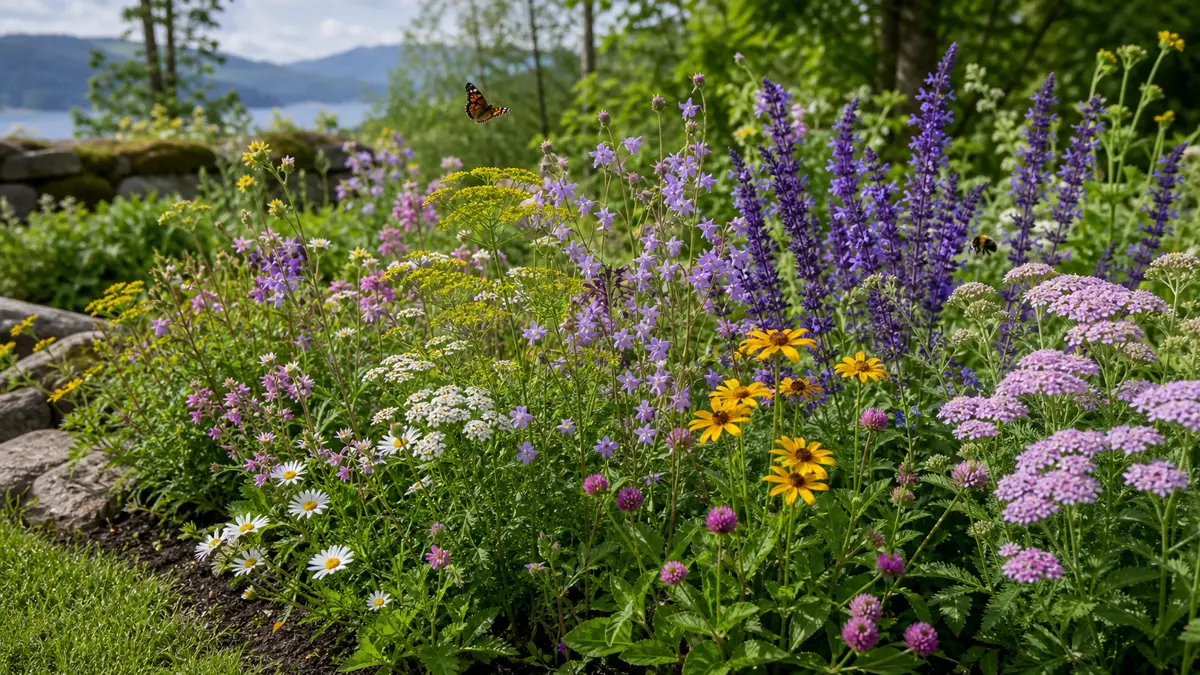
A pollinator border is only as useful as its longest flowering gap. A bed can look spectacular for three weeks and offer little nectar or pollen before and after that peak. Walk the same patch at intervals, record which flowers are genuinely open, and note whether bees, hoverflies, butterflies or moths use them. That record gives the next plant a job: it must extend a weak period, fit the site and survive the care you can provide.
Build a pollinator border around its flowering gaps: start with the empty weeks
Make a simple flowering calendar for the actual bed, balcony or courtyard. Check it more than once in spring, summer and autumn, because a label's broad flowering range does not show when a plant pauses in your conditions. Mark periods with plenty of open flowers and periods when only foliage remains.
A useful pollinator planting keeps nectar and pollen available in overlapping waves rather than concentrating every flower into one short peak. Add one or two well-chosen plants to the thinnest period before expanding the collection elsewhere.
- Record open flowers, not buds that may never develop on the site.
- Note sun, moisture and container volume beside each flowering gap.
- Choose a locally appropriate plant whose normal season overlaps the gap.
Read the border as a sequence
Use local plant information instead of copying fixed flowering months from another climate.
- At the first local bloom, identify whether early-foraging insects have more than one usable flower source.
- Around the main summer display, look for a handover between plants instead of a single synchronized peak.
- Late in the growing season, retain flowers that still open reliably before cold or wet weather ends growth.
- After flowering, note which stems, leaves and undisturbed patches could remain as shelter without blocking paths.
Flower form is a clue, not a guarantee
Open flowers with visible centers can make pollen or nectar easier to reach than densely doubled blooms, but shape alone does not prove value. Different insects have different mouthparts, body sizes and active periods. Watch the real flower and the visitors it receives rather than relying on a pollinator icon on a label.
Different pollinators use different flowers, so a border with varied flower shapes and bloom times serves more visitors than one repeated form. That variety only helps when each plant can tolerate the light, soil and moisture in its position.
Flowers are one part of the habitat
Host plants, nesting space and winter shelter matter alongside nectar flowers because pollinators need more than a feeding stop. A completely sealed surface, constant soil disturbance and aggressive autumn clearance can remove nesting or overwintering places even when the flower display is generous.
Where it is safe and tidy enough for the garden's use, retain a small patch of bare, well-drained soil, some hollow or pithy stems and a little leaf litter. Provide shallow water with dry landing points and refresh it often. These modest features make the planting function as habitat rather than a vase of flowers outdoors.
Do not turn forage into exposure
Avoid routine pesticide use on or near flowers visited by insects. Identify the damage first, decide whether action is necessary and read the current product label before any treatment. Timing, active ingredient and application method all affect risk, so a broad claim that a product is harmless is not enough.
Ask how purchased plants were grown when that information is available, but do not treat a nursery answer as a permanent guarantee. Continue to inspect the garden and use non-chemical measures where they solve the actual problem. A chewed leaf is usually a better signal for diagnosis than for blanket spraying.
A small space still needs continuity
Containers can fill a flowering gap, but their limited root volume makes missed watering more consequential. Group pots only if each plant still receives suitable light and drainage. In a border, leave access for weeding and observation so a useful flower is not buried by a more vigorous neighbor.
Choose the final species from guidance for your region; a North American plant list cannot decide what is native or winter-hardy elsewhere. Local botanic gardens, extension services and reputable nurseries can narrow the list once the flowering period and site conditions are known.
Use observations to edit the planting
Spend ten quiet minutes at different times of day rather than judging the border from a single sunny afternoon. Record the flower visited, approximate insect group, weather and date. The aim is not a formal population count; it is to see whether a flowering gap has closed and whether the new plant is actually used.
Keep plants that perform their assigned role and replace those that repeatedly fail in the site. One wet or cold year should not become a universal verdict. Over several seasons, the calendar shows whether the next change should add a plant, move one or leave the border alone.
Questions about pollinator-friendly flowers
Do I need a long list of recommended species?
No. Begin with the weak period in your own flowering calendar, then choose a few plants that fit the local climate, light and soil. A short list with overlapping bloom and reliable care is more useful than a large imported list with no site check.
Are double flowers always useless to pollinators?
No. Dense petals can make resources difficult to reach, but flower form is only one clue. Observe whether pollen or nectar is accessible and whether insects visit. Keep flowers you enjoy while ensuring the border also contains accessible forms through several parts of the season.
Can a balcony help pollinators?
A balcony can add nectar and pollen where the surrounding area has a gap. Use containers large enough to remain evenly moist, provide safe drainage and avoid pesticide exposure. It will be a small habitat patch, not a substitute for diverse connected habitat at landscape scale.
How will I know whether the change worked?
Compare the same weeks before and after planting. Check whether more flowers are open, whether they remain healthy and whether any pollinator groups use them in suitable weather. Treat a season's observations as guidance for the next edit, not as proof of a guaranteed effect.