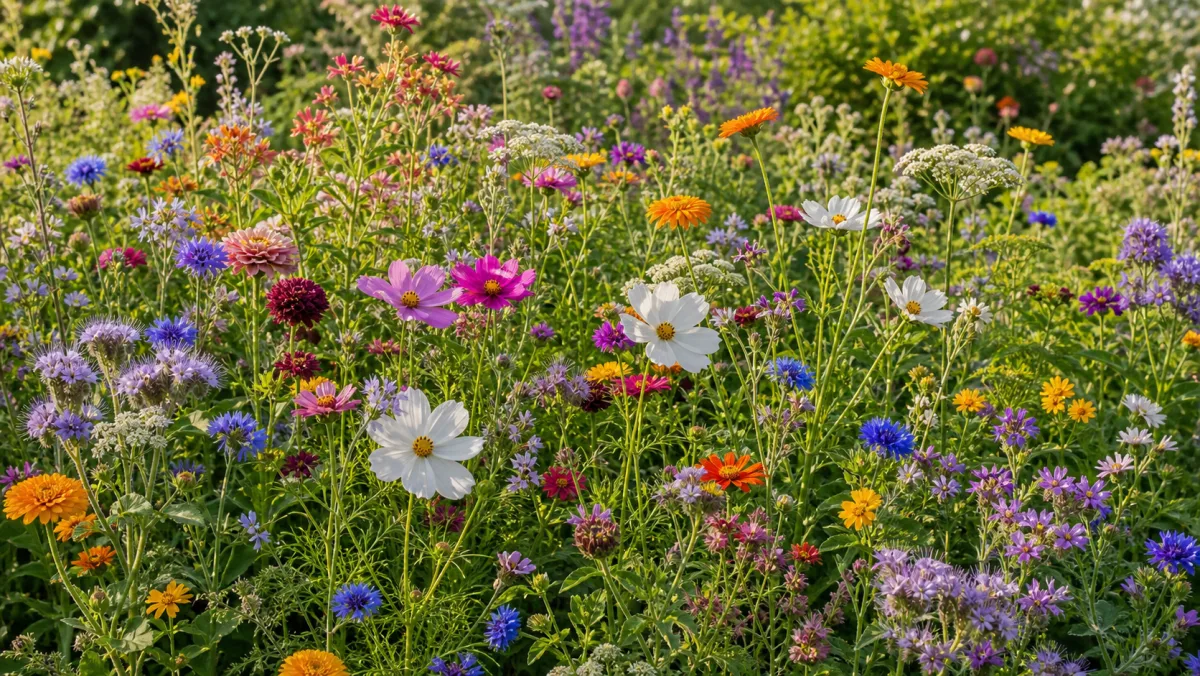
An annual mix trades control for discovery. A true annual completes its life cycle in one growing season, but the product name alone does not confirm that every seed in this packet is annual. Read the current ingredient list before setting expectations. An organic label should be checked against the standard and verification system behind it; the word alone does not identify either. Look for a named certifier and scheme on the current packet before treating its organic status as verified. If the ingredient list is missing, use a bounded plot and judge only what can be observed there: emergence, space used, flowering and whether the planting suits that part of the garden.
Give an annual mix one clear season to prove itself: decide what the plot must do
A mixed annual patch can be viewed from a path, used to fill a temporary gap or grown as an observational trial. Those jobs demand different placement. A display needs a deliberate viewing side, while a test plot needs labels and access around its edge. Neither should be sown where unknown seedlings will be mistaken for permanent planting.
Read the named ingredients, lot and sowing rate before measuring the site. The product name and photograph do not establish the current blend's composition. Record the exact packet wording; if the ingredient list is absent, treat the composition as unknown.
- Choose one clear purpose for the plot.
- Set a boundary that prevents accidental mowing or spread.
- Write the plot area and packet lot in the garden record.
Expose soil instead of feeding existing turf
Annual seeds need contact with prepared soil at the depth stated on the packet. Remove established weeds and their persistent roots, then rake the surface to suit the seed. Scattering a small packet into dense lawn or coarse mulch leaves it competing with plants that already own the water, light and root space.
Firming may improve contact for shallow-sown seed, but do not bury the entire mix under one arbitrary layer if the supplier specifies another method. Mark the boundary immediately. Until emergence is clear, the plot can look indistinguishable from an unsown patch to anyone else maintaining the garden.
Judge the plot across its full cycle
Use development stages rather than imported month names.
- After sowing, keep the seed layer evenly moist without washing seed into hollows.
- Once repeated seedling types are visible, identify before thinning or weeding.
- During flowering, record gaps, lodging and which species dominate the view.
- Before clearance, decide whether mature seed is welcome and note what should be changed in another trial.
Thin for plants, not a carpet of seedlings
For ingredients confirmed as annuals, the main life cycle lasts one season, and thinning gives the remaining seedlings room to develop instead of competing in a dense carpet. Begin only after identities are sufficiently clear, following packet or species spacing where available. Keep the healthiest correctly placed seedlings rather than automatically preserving the earliest to emerge.
Thin in stages when the blend is uncertain. A first pass can remove obvious crowding while retaining examples of slower types. Photograph the plot before and after, because the pattern helps explain later bare areas or dominance. Water the survivors if root disturbance and weather make that necessary.
Follow the moisture front below the crust
Water the seedbed deeply enough to wet the root zone, then let the surface guide the next check rather than watering by a fixed daily rule. During germination, the relevant layer is shallow and should not dry severely; after roots extend, test below the surface and encourage a useful wetted depth without creating runoff.
Use a gentle application that does not move seed or flatten seedlings. Rainfall, soil texture, sun, wind and plant density all change the interval. A timer can deliver water, but only a hand check can confirm whether it reached the intended layer.
Check pollinator claims against the ingredients
A mixed packet earns a pollinator claim only when its listed species provide nectar, pollen or host value across useful bloom periods. An insect photograph on the front cannot establish that. Check the named plants against reliable regional guidance and watch whether flowers are accessible and actually visited in suitable weather.
Even a useful flower patch is not a complete habitat. Avoid pesticide exposure, retain appropriate nesting or shelter features elsewhere and provide continuity beyond the annual plot. If the ingredient list is missing, describe the mix as unknown rather than attaching a wildlife benefit that cannot be tied to named plants.
Close the trial deliberately
At the end of the local growing season, decide whether the plot will be cleared before seed ripens or allowed to shed seed. That decision depends on identified species, local restrictions and the future use of the ground. Do not assume that every volunteer next year is desirable or that the same blend will reproduce itself.
Compare the written success measure with the result. Record flowering sequence, bare ground, weed labor, height conflicts and any plants worth buying by name. Use those notes to choose a smaller repeat plot, named seed instead of a mix, or no repeat at all.
Questions for an annual-mix trial
Is an annual flower mix the same as a perennial meadow?
No. Species confirmed as annuals complete their main cycle within one growing season, while a perennial meadow is established and managed across years. Verify the packet contents, then keep the expectations and maintenance separate.
Can I sow the mix into an existing lawn?
Dense turf already controls light, roots and moisture. Prepare exposed soil according to the packet rather than expecting a small quantity of annual seed to displace established grass. Use a bounded test area first.
Must I thin mixed seedlings?
Crowded annual seedlings benefit from space, but identify them before acting and use packet or species guidance. Thin in stages when emergence speeds differ, retaining labeled photographs of the pattern.
Will the flowers return next year?
Some annuals may shed viable seed, but that outcome and the resulting proportions are not guaranteed. Identify the species, check local suitability and choose deliberately whether seed is allowed to mature before clearing the plot.
Certification and seedbed fit matter more than the packet
Judge an organic annual mix by its certification, species list and fit with the prepared seedbed; sowing density, weed control and season-long flower resources matter more than the packet picture.