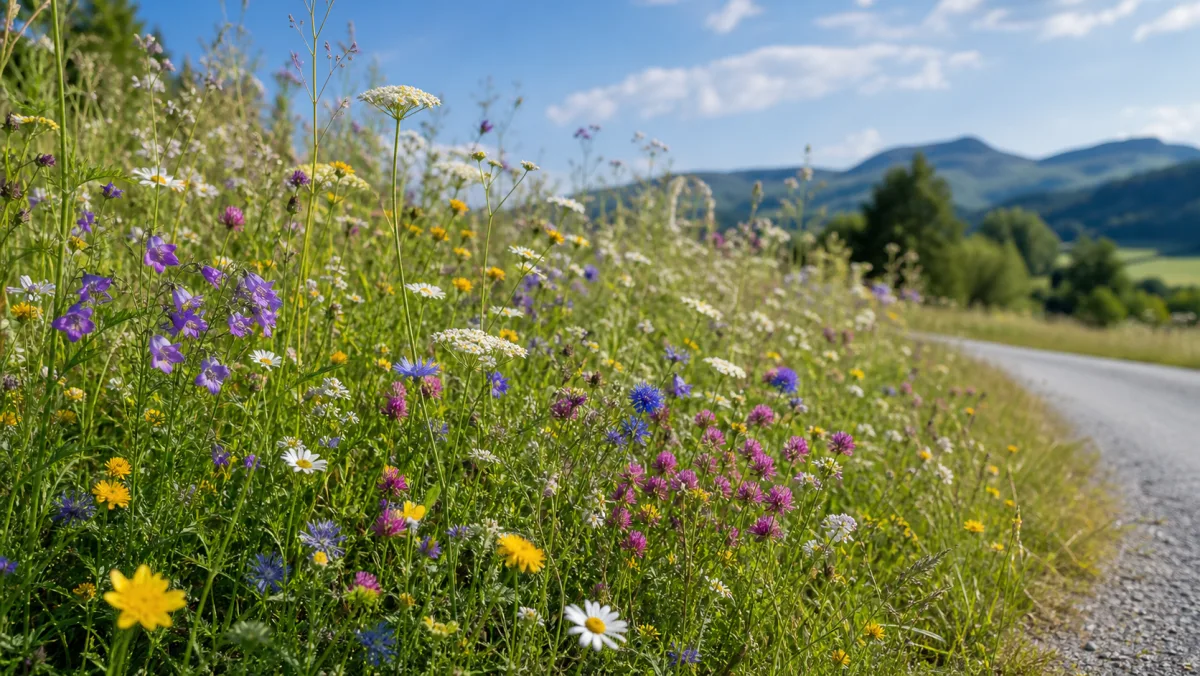
The first roadside-flower decision is administrative and physical, not botanical. A strip inside a private boundary can be managed like a small meadow; a verge, shoulder or right-of-way beside a public road may be owned, regulated or maintained by someone else. Before cutting, digging or sowing, identify the boundary, contact the landowner and responsible road or highway authority, and obtain whatever consent, permit or license local rules require. Then map sightlines, signs, drainage, pull-over or recovery space and maintenance access. A seed mix cannot compensate for vegetation placed where drivers, cyclists, pedestrians or crews need a clear zone.
Begin by locating the legal boundary
Find the legal boundary rather than judging ownership from a fence, ditch or mowing line. Public rights-of-way and maintenance easements can extend beyond the paved surface, and responsibilities differ among countries and road classes. Ask the landowner and responsible highway or road authority which local consent, permit or license, if any, applies.
Follow that local process before disturbing soil or introducing seed or plugs, and record any conditions on mowing, herbicide use, access and disposal of cut material. If authorization is absent or uncertain, keep the project entirely inside the private boundary and leave the managed verge untouched.
For a community or authority project, agree who will inspect the site and maintain it after the first flowering season. A meadow is ongoing vegetation management, not a one-time packet of seeds.
- Confirm the boundary and responsible authority.
- Record what maintenance and materials are permitted.
- Name the person or organization responsible after establishment.
Protect sightlines, signs and drainage
Walk the site from every legal approach, not only from the garden side. Mark junction and driveway sightlines, the faces of signs, pedestrian and cycle routes, drainage inlets and channels, utility access and any area used for pulling over or vehicle recovery. Repeat the check at the eye height and direction relevant to road users.
Vegetation height and setback cannot be prescribed globally. Road speed, curves, slopes, snow storage, maintenance machinery and local standards change the required clear space. Keep authority-designated safety zones short and open even when the rest of the strip is managed less frequently.
Grass, weeds and brush can limit a driver's view of approaching vehicles. The exact visibility rules remain local: roadside vegetation must follow the standard set for the actual road, rather than a setback copied from a photograph of another verge.
Survey vegetation before considering seed
- Permission and safety survey: identify the controller, allowed work, sightlines, clear zones, drainage and safe access for people and equipment.
- Vegetation and soil assessment: record existing flowering plants, invasive or regulated species, turf density, fertility, shade and compaction before deciding anything should be removed.
- Establishment where justified: retain valuable existing habitat; otherwise prepare weed-free bare soil and sow a locally appropriate mix without fertilizer, following local seasonal advice.
- Long-term management: keep safety cuts separate, allow desired plants to complete the appropriate cycle where safe, cut and collect the meadow zone, then monitor bare patches and aggressive species.
Restore existing habitat where possible
Survey before assuming the verge is species-poor. Remnant native plants can be more locally adapted and ecologically valuable than a generic wildflower mix, while an invasive or regulated plant may require a separate authorized control plan. Protecting what is already present is often less disruptive than cultivation.
On road verges, treat seeding as a last resort after existing vegetation and mowing options have been assessed. If introducing plants is appropriate, native perennial material of local provenance can preserve regional character and improve ecological fit. Apply that principle through local native-range and seed-movement guidance rather than copying a British species list.
Where a new meadow is genuinely appropriate, sow into weed-free bare soil. Seed broadcast onto an intact lawn rarely reaches soil or survives grass competition. Do not add fertilizer: meadow species generally compete better when fertility is restrained, and added nutrients favour vigorous grasses.
Separate safety mowing from meadow management
A single mowing rule forces a false choice between a continuously short verge and unmanaged tall growth. Keep the authority's safety strip, junction sightlines and access points cut as required, while less critical areas can follow a later or less frequent meadow cycle if local authorization allows.
After the meadow-zone cut, remove the cut material. Cut-and-collect prevents a mat from smothering regrowth and slowly removes nutrients locked in the vegetation. Rake safely from inside the authorized work area; never stand in a live traffic lane or work where the traffic-management plan is inadequate.
Monitor the result by zone. Record blocked sightlines, erosion, litter, drainage obstruction, desired flowering and problem species. The next cut is then based on road function and vegetation response, not on a universal height, distance, month or number of annual cuts.
- Safety zone: cut to the authority's road-specific standard.
- Meadow zone: time cuts for local plants only where safe.
- All zones: keep drainage, signs and maintenance access functional.
Roadside-flower questions
Can I sow flowers on the verge outside my property?
Do not assume so. Ownership, right-of-way boundaries, maintenance contracts and local road rules vary. Contact the landowner and responsible road or highway authority, then obtain whatever consent, permit or license that jurisdiction requires before changing the strip.
How far from the road must flowers be kept?
There is no responsible universal distance. The authority sets clear zones, sightlines, drainage access and maintenance needs for that road, speed, junction and terrain; use its site-specific instruction.
Can I scatter seed into existing verge grass?
Usually not with useful results. Dense turf intercepts seed and outcompetes seedlings. First assess the existing vegetation; if sowing is justified, create weed-free bare soil and use a locally appropriate low-fertility meadow mix.
When should an authorised roadside meadow be cut?
Timing follows the local species, safety cuts, authority schedule and desired seed cycle. Cut only where it is safe, remove the cut material and adapt after monitoring rather than applying one date everywhere.