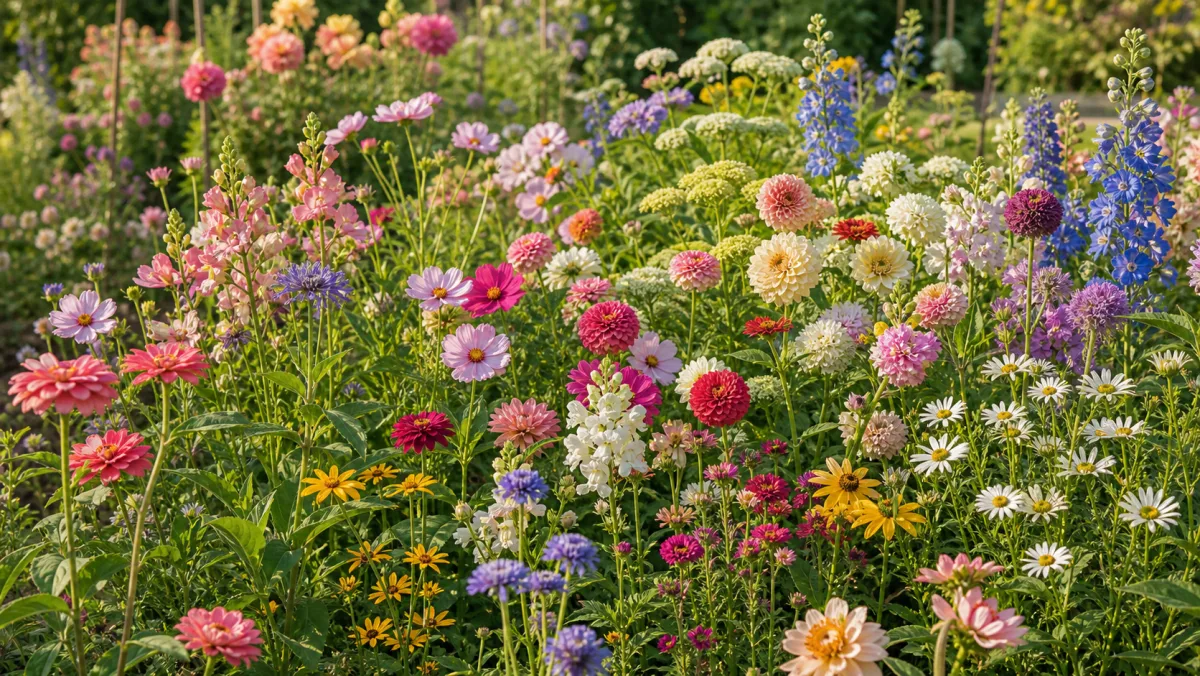
An organic cut-flower mix presents two separate unknowns: whether the label identifies a credible organic scheme and which flowers are actually inside. The word “organic” needs a named standard or verifier on the current label; it says nothing about the species list. Seed size, sowing depth, emergence speed, plant spread and cutting stage may all differ inside one envelope. Before opening the packet, photograph the packet's lot number, ingredient list and instructions. If the contents or method are not stated clearly, treat the composition as unknown and use a small, reachable cutting trial instead of inventing separate treatments. In a garden cutting bed, row access matters as much as the flower list.
Turn the cut-flower mix into a traceable trial: read the whole packet before the seal is broken
Look for named species or cultivars, seed count or weight, lot, treatment and sowing instructions. Do not infer composition, mature height or flowering behavior from the product name or photograph. If the current packet does not list its ingredients, keep the trial small and describe the contents as unknown.
Copy the species list into a bed note while the print is legible. Flag any plant you cannot identify for local suitability, toxicity or invasive risk. If composition is absent, treat the result as an exploratory patch and avoid placing it where unknown plants could escape or be confused with a food crop.
- Photograph ingredients, lot number and dated instructions.
- Record whether a complete species list is present or note that it is missing.
- Check each listed species against local restrictions and the available season.
Follow the mix instruction that is actually supplied
When the packet gives one instruction for the whole mix, sow it as a unit. Use species-specific depth, light or indoor lead time only for groups the producer has explicitly identified and separated. Do not sort an unknown blend by seed size or color.
Keep the packet beside the bed record and give the row a durable label. Never invent a cold treatment, soaking step or light requirement from a seed's appearance; ask the supplier for clearer instructions or keep the first sowing deliberately small.
Keep the first row clean enough to read
A clean seedbed and early weed removal are essential when mixed seedlings cannot yet be identified with confidence. Clear perennial roots before sowing, create good seed contact at the appropriate depth and use labels that will survive watering. Avoid broadcasting the packet through an established border where every unfamiliar seedling becomes a guess.
Thin according to identifiable species guidance or the packet rather than pulling the slowest seedlings automatically. Mixed emergence can create bare-looking intervals that later fill. Where identification remains uncertain, compare successive photographs with the packet's named species and reliable identification material before making an irreversible decision.
Run a small, labeled first cycle
The trial should answer questions before the remaining seed is committed.
- Prepare a clean, reachable row and mark its exact length before sowing.
- Sow by the packet's mix instruction, recording the date, row length and any producer-identified segments.
- At emergence, photograph seedlings with their labels and remove weeds only when identification is secure.
- At first harvest, note the species, cutting stage, stem length and firmness, and the plant's response after cutting.
Preserve a route for the bucket
A cutting mix still needs a cutting-bed layout. Keep rows narrow enough to reach, leave room to support named plants that require it and keep the label visible from the path. Unknown heights call for a small trial because a packet photograph cannot define a reliable layered display.
Take clean tools and water to the row. Remove stems without crushing neighboring crowns and keep harvested species separate until their behavior is known. A useful mix produces stems that can be reached and identified; a dense tangle of flowers may photograph well while failing as a cutting bed.
Give each flower its own harvest cue
Harvest stage varies by species, so the packet or a species guide must decide whether a stem is cut in bud or fully open. Add the cue to the row label as identities become clear. Place cut stems in clean water promptly and keep the bucket out of strong sun during the remaining harvest.
Condition unfamiliar flowers in separate, labeled containers. Record stem firmness, leaf condition and how long the flowers remain presentable in clean water; one bouquet is only a first observation. The aim is to decide which constituents deserve space next season and which are better enjoyed in the bed.
Let the mix become a shortlist
At the end of the trial, compare species by germination, weed distinguishability, support needs, cutting stage, stem length and firmness, and regrowth. A component can be attractive yet ill-suited to the bed because it hides paths or matures outside the usable season. Another may be modest in the border but dependable in the bucket.
Buy named seed next time for the strongest performers when traceability matters. Repeating the same unnamed blend may not reproduce the composition, proportions or lot quality. Keep the original packet record with the trial notes so the result remains attached to the product actually sown.
Questions about a mixed cut-flower packet
Does “organic” reveal which flowers are in the mix?
No. “Organic” describes a standards-and-verification claim, not a species list. Organic schemes differ by market, so check the current label for a named certifier and applicable standard. Read the named species, lot and sowing information separately; if they are missing, do not infer them from the title or illustration.
Should I separate the seeds?
No, not by appearance alone. Follow the mix instruction unless the producer has explicitly identified and separated groups with different treatments. If the directions remain unclear, ask the supplier or use a small trial row.
How do I tell seedlings from weeds?
Start in a prepared row, photograph emergence and compare repeated seedlings with the packet's named species and reliable identification material. Remove plants only when confident. Broadcasting through an existing bed makes that learning much harder.
Can the packet picture tell me the final heights?
No. A marketing image cannot establish the packet's current proportions, cultivars or mature heights in your site. Read the ingredient list, research named entries and leave room to support only the plants that actually require it.
Design the mix for repeated cutting
A useful organic cut-flower mix combines credible certification with species you can sow, support, reach and harvest at their proper stage, leaving enough row access for repeated cutting.