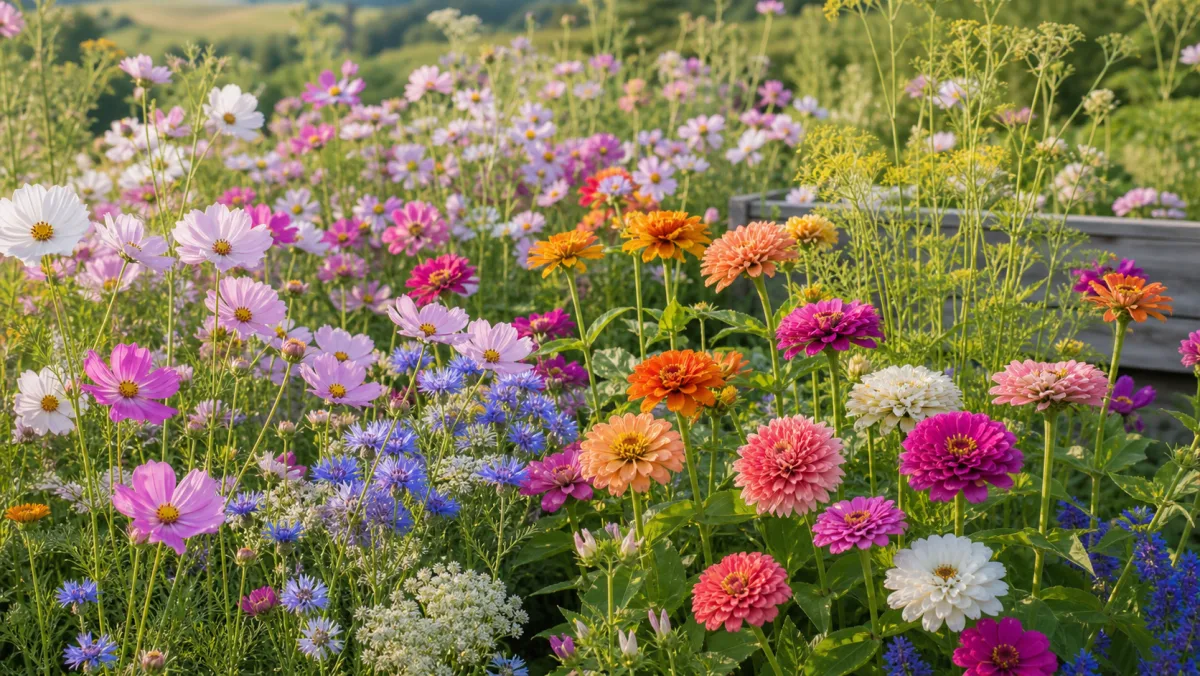
A packet of mixed summer cut flowers becomes a working crop only when every row can be reached without stepping between the stems. Allow for plants from roughly 40 to 110 cm, reserve support for the taller kinds and sow in stages so the pink, orange, white, blue and yellow mix does not peak all at once. Keep a clean bucket beside the bed: harvest timing and immediate hydration begin before the stems reach the vase.
Design the bed for stems you can actually cut
The mix combines annuals of different heights and flowering speeds, so its 40-110 cm range determines row spacing, support and where shorter plants remain visible.
For Summer cut flowers, the practical question is not whether it looks promising in isolation. It is whether rows, picking paths, stem length, repeat sowing and vase timing fit the soil, light, wind and maintenance route you actually have.
Keep June to October in view as a limit. If that detail conflicts with the site, change the position, timing or care routine before adding more plants or equipment, with the seasonal step narrowed to Summer cut flowers.
- cut flower seed mix.
- pink, orange, white, blue and yellow in a mix.
- 40-110 cm depending on art.
Leave a picking path beside every row
Use a sunny bed where narrow rows can be watered and cut from the side. A wide block may hold more seedlings, but crushed stems and missed flowers reduce its value for regular picking.
Put taller, support-hungry kinds where netting or stakes can be installed without shading the shortest flowers or blocking the harvest route.
- sowing one broad block that cannot be reached from either side
- mixing 40 cm and 110 cm plants without a height or support plan
- using the whole packet on one date instead of reserving seed for a later row
- placing the crop far from water and the clean bucket used at harvest
Sow in stages and install support early
Prepare a fine, weed-free seedbed, mark the first narrow rows and keep part of the mix for a later sowing. Add support netting while stems are still short enough to guide through it.
Let soil temperature and frost risk govern direct sowing. A second row can wait for the first seedlings to emerge, which also shows whether slugs, birds or crusted soil need attention.
The cutting season from seedbed to vase
- Spring: make narrow rows, sow the first portion and protect emerging seedlings.
- Early summer: thin crowded patches, add support and sow a smaller follow-on row.
- Summer: pick regularly, water the root zone and remove fading material before it sets unwanted seed.
- Autumn: make the last useful cuts, note the strongest species and clear diseased residue.
Grow straight stems and handle them cleanly
Thin dense seedlings before they stretch, guide tall growth through support and water the soil rather than wetting flowers just before cutting.
Cut during a cool part of the day with clean tools, place stems straight into water and remove foliage that would sit below the vase-water line.
Why a colourful bed may still give poor vase stems
These mistakes make Summer cut flowers harder to use well because the site, timing or care route becomes unclear.
- letting crowded seedlings produce thin, bent stems
- waiting until tall plants fall before adding support
- cutting into a dry bucket and leaving stems in sun while the arrangement is planned
- allowing early flowers to set seed when continued cutting is meant to drive the display
Choose companion guides by sowing and harvest method
A dedicated cutting mix differs from a pollinator patch because straight stems, picking access and vase timing are part of the crop plan.
Use the seed-sowing and pollinator guides to compare establishment and wildlife value, while keeping clean harvest handling specific to cut flowers.
Questions about sowing and picking a cut-flower mix
How wide should a cut-flower row be?
Keep rows narrow enough to reach their centres from a path. The exact width depends on arm's reach and plant habit, not on how much seed remains in the packet.
How can a cut-flower mix produce blooms for longer?
Reserve part of the seed for a later row, pick the first flowers regularly and prevent early plants from putting all their energy into mature seed.
Why are the cut-flower stems short or bent?
Crowding, shade and support added too late all shorten or bend stems. Thin early and guide taller plants through netting before they lean.
When should summer flowers be cut for a vase?
Cut during a cool part of the day when stems are well hydrated, then place them immediately in clean water and strip any foliage that would be submerged.