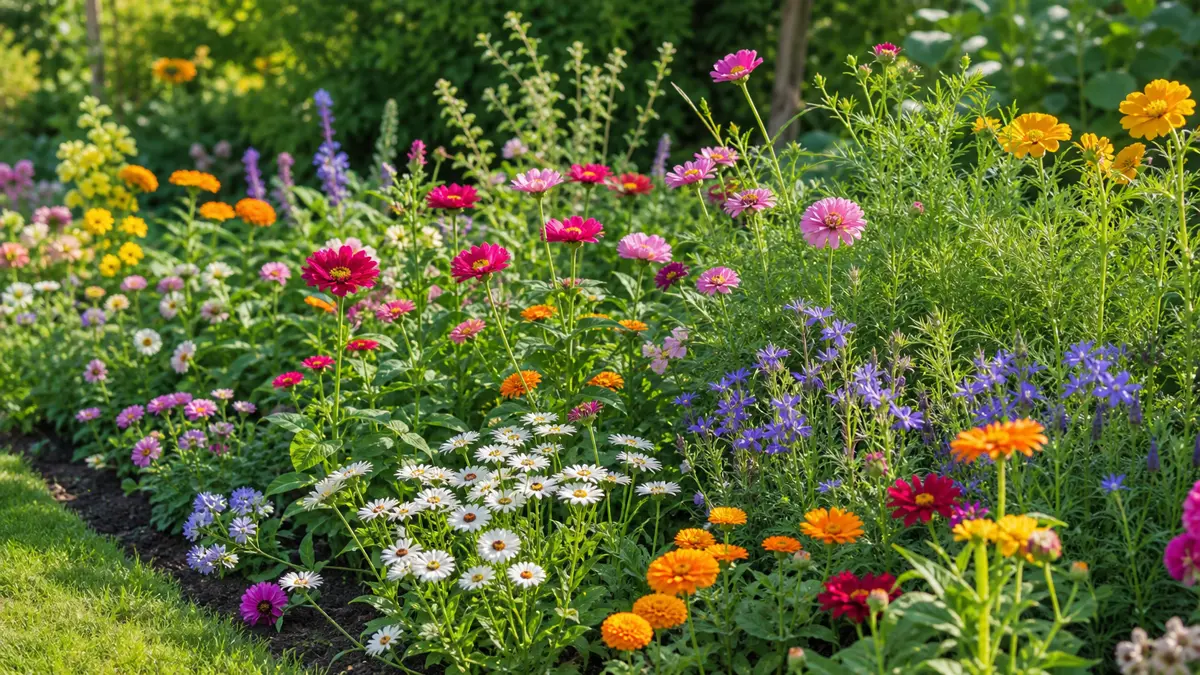
Annual flowers can be direct-sown into a prepared bed or started indoors for an earlier display, depending on the species. A fine, weed-free seedbed gives tiny seedlings a fair start, while indoor sowings need strong light and gradual hardening off before planting out. Decide the sowing method first, then plan thinning, watering and frost protection around the seedlings rather than around a fixed calendar date.
Choose annuals by sowing method and finished height
Direct sowing suits annuals that germinate readily outdoors and dislike root disturbance. It saves indoor space, but weeds, slugs, crusted soil and dry surface compost can overwhelm small seedlings.
Indoor sowing offers warmth and a head start for tender or slower species. It also creates a need for bright light, potting space, pricking out and a careful transition to outdoor conditions.
Finished height matters in a mixed bed: put tall annuals where they will not shade low growers, and keep every group reachable for thinning, watering, support and deadheading.
- direct sow where the seedlings can be identified and weeded without trampling the bed
- start tender annuals indoors only if bright growing space is available
- separate tall, support-hungry plants from low edging and container kinds
Prepare the seedbed before opening the packet
Clear perennial weeds, break down clods and rake the surface level enough for shallow sowing. Mark rows or labelled patches so wanted seedlings are not removed during the first weeding.
Check how the bed will be watered without washing seed into hollows. A fine rose or gentle hose setting is more useful than a strong jet after germination.
- wait if the soil is saturated, frozen or forming a hard surface crust
- label seed rows with species and sowing date before mixing packets
- reserve enough room to thin seedlings to their final spacing
- keep water within reach during the vulnerable germination stage
Time direct sowing and indoor starts separately
Sow hardy annuals into workable soil at the depth and spacing stated for the species. Start tender kinds under cover far enough ahead to grow sturdy plants, but not so early that they become drawn before nights are frost-free.
Harden indoor-raised plants gradually by increasing outdoor exposure over several days. Postpone planting out when a cold or windy spell would undo that preparation.
From the first seedbed to late-summer flowers
- Before sowing: group packets by direct-sown, indoor-started and tender planting-out dates.
- At emergence: keep the surface from drying, identify seedlings and remove competing weeds while they are small.
- During early growth: thin to final spacing, support tall kinds and water the root zone during dry spells.
- In flower: deadhead where repeat bloom is wanted, leave selected seed heads and record which sowing dates worked.
Thin, water and support the young stand
Thin crowded seedlings even when every plant looks valuable. Adequate spacing improves light and airflow and gives the remaining annuals room to build sturdier stems.
Water deliberately during establishment, then according to soil and weather. Pale, stretched plants usually need more light or space, while seedlings disappearing at soil level call for a pest check rather than extra feed.
Why a seed patch fails to fill out
- broadcasting fine seed into a weedy bed where seedlings cannot be identified
- starting tender annuals too early for the available indoor light
- leaving dense germination unthinned until stems are weak and tangled
- planting out soft indoor growth without hardening it to sun, wind and cool nights
Connect the sowing plan to pollinators and cutting
A pollinator patch can retain more seed heads and overlapping bloom, while a cutting row needs access, straight stems and frequent harvest. Choose the function before combining packets.
Containers favour compact annuals and demand closer watering; open beds give taller kinds more root room but expose new sowings to weeds and pests.
Direct sowing and indoor starts solve different problems
Use direct sowing for simplicity when the species and seedbed allow it. Use indoor propagation to gain warmth or time, accepting the extra work of lighting, spacing, hardening and transplanting.
The packet's species instructions should settle depth and timing. General annual-flower advice cannot safely turn a mixed packet into one universal sowing date.
FAQ about Annual flowers from seed
Should these annual flowers be direct-sown or started indoors?
Direct-sow hardy annuals that establish readily outdoors; start tender or slow species indoors when bright growing space and time for hardening off are available.
Why do annual-flower seedlings need thinning?
Thinning gives the remaining plants light, airflow and root room. Leave spacing suited to the species rather than preserving every crowded seedling.
When can indoor-raised annuals be planted outside?
Move them out after hardening off and once the species' frost tolerance matches the forecast. Tender annuals should not be rushed into cold nights.
How can flowering be extended through summer?
Stagger suitable sowings and deadhead species that rebloom after cutting. Keep selected seed heads only where self-sowing or seed collection is wanted.