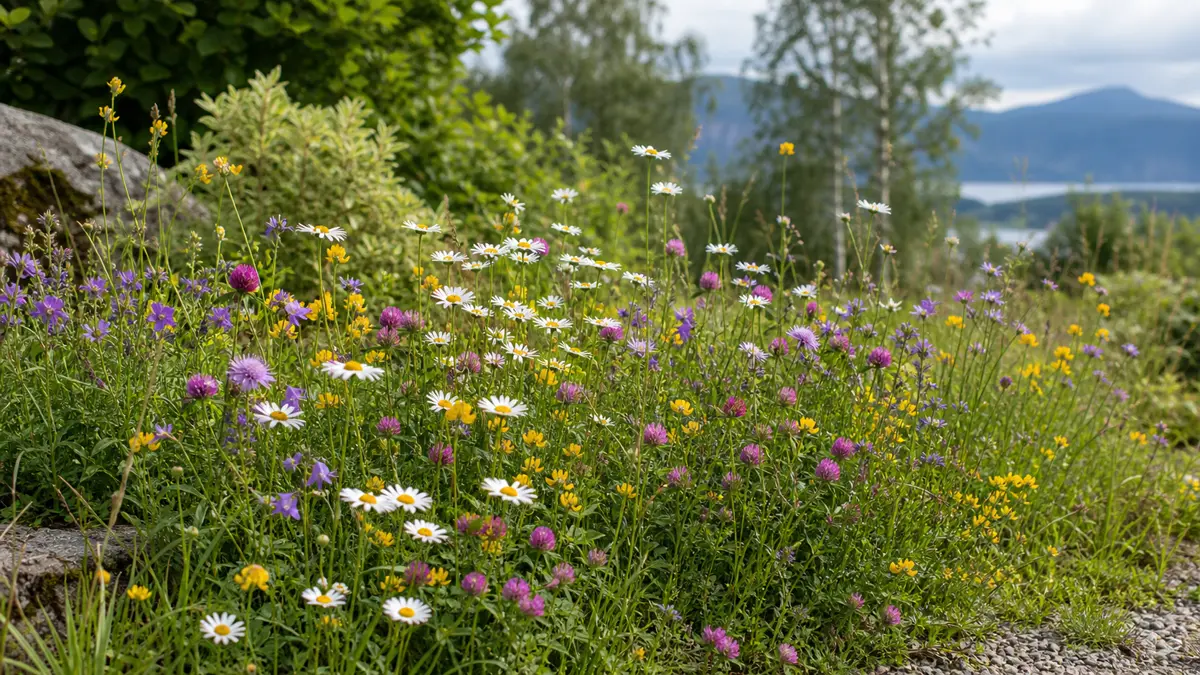
A fertile lawn is not an empty meadow seedbed. Established grass already controls the light, water and root space, while rich soil favors vigorous growth that can overwhelm slower wildflowers. Before opening a packet, decide whether the project is a perennial meadow, a one-season flower patch or a low bee lawn. Those systems use different seed, different cutting regimes and very different measures of success.
Decide whether you want a perennial meadow, annual patch or bee lawn
A perennial meadow is managed over years, an annual patch is a seasonal display, and a bee lawn remains a short mown surface. A packet that blurs these categories cannot tell you how to prepare the ground or when to cut. Read the species list and the intended management system before comparing colors.
A frequently mown bee lawn is a different system from a taller meadow; its mowing schedule does not belong in a meadow plan. Likewise, advice for a newly cultivated annual patch cannot be applied automatically to an established perennial sward.
- Perennial meadow: long establishment, low fertility and a defined annual cutting regime.
- Annual flower patch: bare prepared ground and a one-season expectation unless species say otherwise.
- Bee lawn: low-growing flowering species managed with regular mowing rather than meadow cutting.
Read fertility and weed pressure before choosing seed
A perennial meadow is established on a low-fertility, weed-controlled seedbed, not by scattering seed over dense, vigorous turf. Test the practical signs: strong grass growth, repeated need for mowing, nettles or other nutrient-loving weeds, compacted wet areas and persistent perennial roots.
Do not add fertilizer as a routine improvement. Where fertility is high, removing cut growth over time may be part of the management, but it is not an instant soil treatment. If the site has bindweed, couch grass, docks or other persistent weeds, deal with them before valuable meadow seed makes later cultivation difficult.
Press small seed onto firm bare soil
Create a level, firm surface with exposed soil and as little active weed growth as practical. Fine seed disappears into deep loose cultivation, heavy thatch or rough clods. Rake, allow the ground to settle and follow the packet's sowing rate rather than adding extra seed as insurance.
Broadcasting over a tight lawn leaves most seed above the soil and surrounded by established roots. If lawn conversion is the goal, choose a documented method: remove turf, open substantial patches, or weaken the grass over time. Keep the methods in separate trial areas so the results can be interpreted.
Judge the first year by establishment, not flower count
Flower quantity alone is a poor first-year measure for a perennial meadow.
- After sowing, check for washouts, seed piled in hollows and new weed flushes.
- As seedlings emerge, use the packet's species list and marked sample rows to distinguish wanted plants from weeds.
- During early growth, apply only the first-year cutting method appropriate to the selected meadow system.
- At season's end, record bare areas, grass dominance and surviving meadow species before reseeding anything.
Cut and remove arisings to complete the cycle
Meadow management is a long-term cycle of growth, cutting and removing cut material rather than a one-season flower display. The cutting date and number of cuts depend on the species, soil and meadow type; no single calendar fits every region.
Where the aim is to reduce returned nutrients, allow the cut material to drop seed only when the chosen method requires it, then rake it up and remove it. Leaving a thick mat can shade small plants and return fertility. Plan access for raking and removal before enlarging the area.
Make the seed packet answer site questions
Look for a full species list, annual and perennial proportions, recommended soil, sowing rate and management instructions. A photograph of a colorful field does not establish local suitability. Avoid mixes that provide only color categories or a universal promise for every soil.
Use regional botanical or conservation advice to check whether the listed species suit the climate and whether any are invasive. Do not infer origin, native status or a flowering timetable from the phrase wildflower mix. The packet must describe what is inside; local guidance must decide whether it belongs on the site.
Diagnose bare patches before buying more seed
A sparse first season can mean slow perennial establishment, dry weather, weed competition, poor soil contact or an unsuitable mix. These causes require different responses. Photograph fixed points, count recognizable listed species and compare treated trial areas rather than judging the result from one close-up.
If grass continues to dominate, review fertility and cutting. If seedling emergence was patchy, inspect surface preparation and rainfall. If named species appear but fail later, revisit soil and climate fit. More seed is useful only after the limiting step has been identified.
Wildflower-meadow seed questions
Can I scatter meadow seed over an existing lawn?
Not if you expect reliable establishment. Dense turf blocks seed from the soil and adds immediate root competition. Use a documented lawn-conversion method or create a separate bare seedbed; do not combine the two systems casually.
Does every meadow need poor soil?
Low fertility is especially important for many perennial meadows because vigorous grasses can dominate rich ground. An annual flower patch may have different requirements. Match the seed mix to the soil instead of treating every flower-rich area as the same habitat.
When should meadow seed be sown?
There is no worldwide date. Follow the exact mix, local climate guidance, soil moisture and weed-control plan. Sow only when the prepared surface can be protected from renewed weed competition during establishment.
Why should cut material be removed from a perennial meadow?
In a perennial meadow managed for lower fertility, removing cut material limits the nutrients returned and prevents a dense mat from shading small plants. The timing and drying period still depend on the selected meadow method and species.