Plum trees can range from manageable garden trees to vigorous crowns largely because the grafted rootstock and training form differ. Before buying, record both cultivar and rootstock, check whether the cultivar is self-fertile or needs a compatible plum flowering nearby, and avoid the lowest frost pocket where early blossom is most exposed. Reserve the mature width and picking height stated for that exact combination, then plan fruit thinning, dry-season stone-fruit pruning, disease inspection and a harvest route that does not require leaning a ladder into overloaded branches.
Plum trees: buy a cultivar-rootstock combination, not a name alone
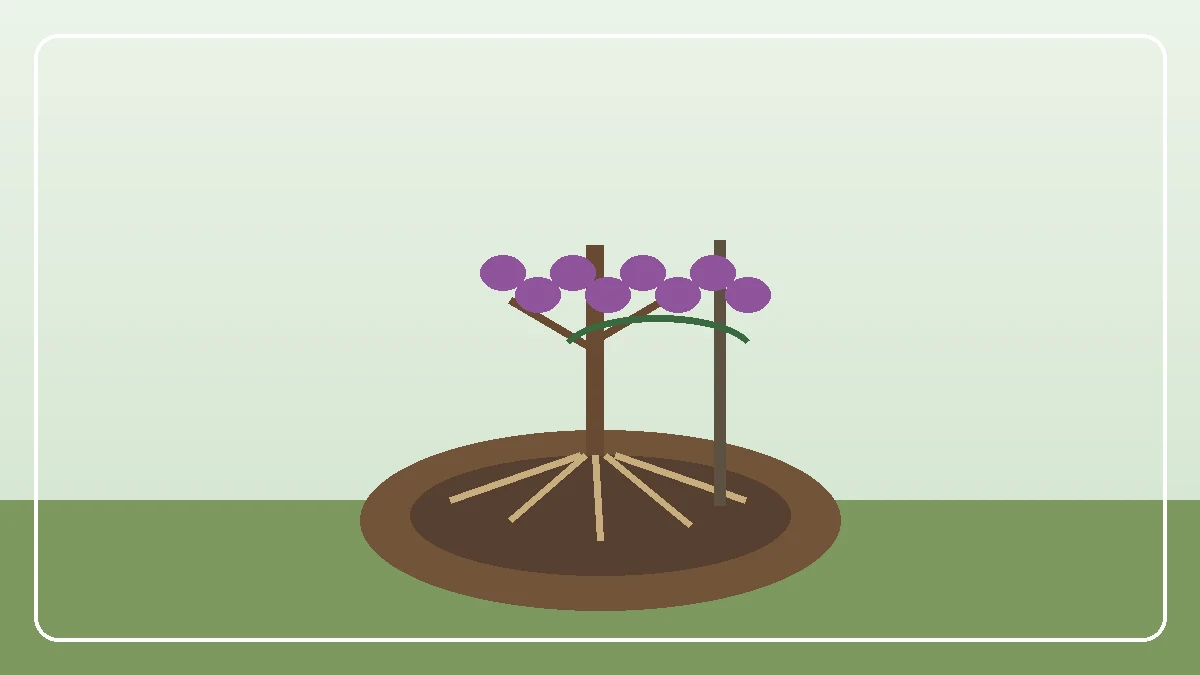
Rootstock influences ultimate height, speed of establishment, anchorage and how soon the tree may crop. Ask for the rootstock label and compare its expected size with the available width, soil and support needs. A patio-sized photograph cannot prove that an unidentified rootstock will remain small.
Choose the plum itself for flavour, use and ripening sequence. Dessert fruit, cooking fruit and preservation may call for different harvest maturity, while a heavy short season can create more processing work than expected. If planting more than one tree, stagger harvest where compatible cultivars allow it.
Keep the graft union visible above the finished soil level and preserve the nursery label until the combination is recorded elsewhere. Growth from below the union belongs to the rootstock and should be removed at its origin rather than allowed to compete with the named plum.
- Record both cultivar and rootstock before purchase.
- Compare expected mature spread with paths, boundaries and picking access.
- Choose a harvest use and season that the household can actually handle.
Match blossom partners and avoid the coldest pocket
Some plum cultivars are self-fertile; others need pollen from a compatible cultivar whose blossom overlaps. A second random plum is not automatically a partner. Use a reputable compatibility list for the named cultivars and consider whether a nearby tree is close enough and healthy enough to flower at the same time.
Early blossom is vulnerable in low ground where cold air settles. Prefer a sunny, sheltered site with air drainage rather than the warmest wall if that wall encourages very early bloom. Avoid waterlogged soil, but keep new trees within watering reach during establishment.
- Confirm whether the exact cultivar is self-fertile or needs a partner.
- Check flowering overlap, not only whether two labels both say plum.
- Look for sun, shelter and cold-air drainage outside the lowest hollow.
- Reject a site where standing winter water persists around the root zone.
Plant without burying the graft or creating a wet pit
Plant a dormant bare-root tree during its suitable local planting period, or a container-grown tree when weather and soil allow establishment. The ground should be workable rather than frozen or saturated. Dig broad enough to spread roots, keep the trunk flare and graft union at the correct height, and backfill with the site's soil instead of making a small rich pocket that holds water.
Stake only as firmly and for as long as the rootstock and site require. Keep ties broad and adjustable, water the developing root zone deeply during dry establishment periods and maintain a grass-free mulch circle without piling material against the trunk.
The plum year is not one harvest date
- Dormant season: inspect structure, labels, stakes and trunk damage without making unsuitable cold-season pruning cuts.
- Blossom: note frost events and whether compatible trees flower together.
- Early fruit growth: thin overloaded clusters after natural fruit drop when guidance for the cultivar calls for it.
- Ripening: pick in several passes as colour, flavour and ease of detachment show maturity; remove damaged fruit promptly.
Thin overloaded clusters and prune stone fruit cautiously
A heavy set can produce small fruit and strain branches. After the natural drop, thin according to current plum guidance so remaining fruit has space and load is distributed. Remove damaged fruit and support an exceptional branch temporarily rather than allowing it to split at a narrow union.
Plums are stone fruits and are generally pruned during a suitable dry period in the growing season rather than as a routine winter job, reducing exposure to diseases such as silver leaf. Remove dead or damaged wood first, keep cuts modest and use local horticultural advice for timing because climate and disease pressure differ.
Read symptoms before reaching for a spray
Fruit loss, leaf spots, dieback and poor growth have several causes. Record where and when symptoms begin, inspect fruit and branches closely and use a reliable diagnosis route before choosing a treatment.
- blaming pollination when blossom was damaged by frost
- letting mummified or rotting fruit remain against healthy clusters
- making large routine winter cuts on a stone-fruit tree
- leaving rootstock suckers to overtake the grafted cultivar
- allowing one overloaded branch to split before thinning or support
Design access for thinning and several picking rounds
Keep the ground beneath the crown reachable without a dense hedge, shed or fragile border blocking every side. Thinning, inspection and harvest are safer when a person can stand securely and use appropriate picking equipment rather than stretching from a ladder against fruit-laden branches.
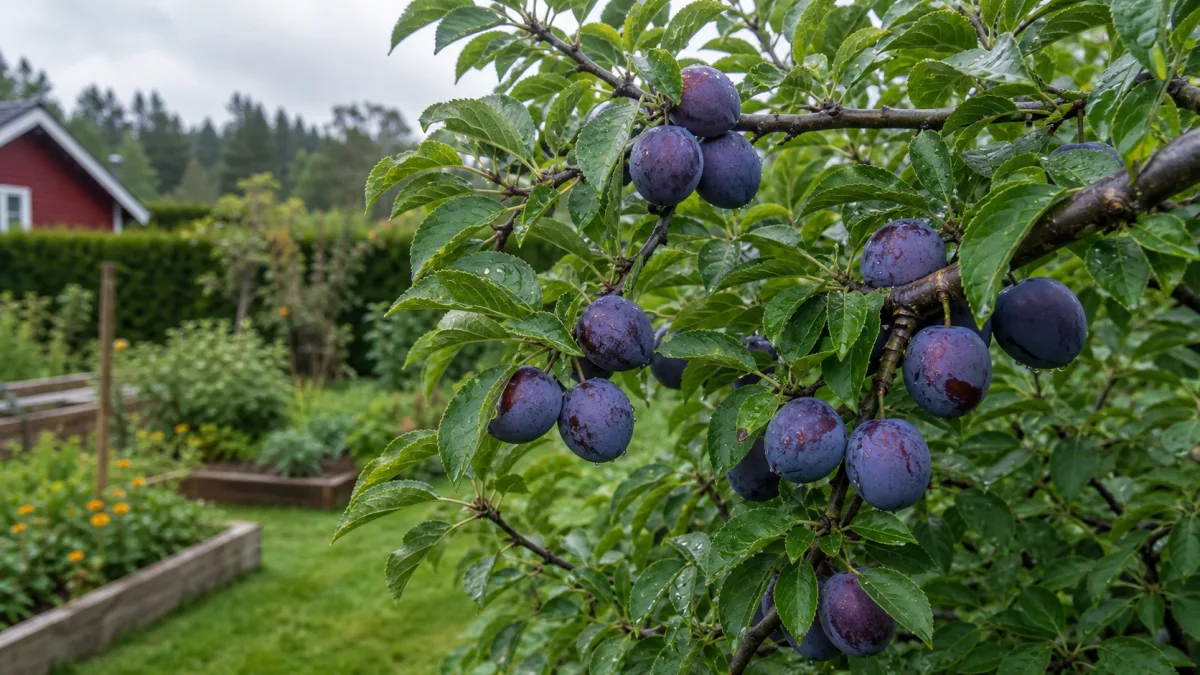
Harvest readiness varies across the canopy and by intended use. Taste representative fruit, look for developed cultivar colour and test whether it lifts with a gentle twist. Pick sound fruit into shallow containers and process damaged or very ripe plums first.
Use the quiet period to review crop load and health
After the crop, remove fallen and damaged fruit, review branch injuries and note where disease appeared. Keep records of blossom timing, frost, thinning and harvest; one season's poor crop does not prove that a supposedly self-fertile tree needs a pollinator, nor does one heavy crop prove the branch structure can carry the same load next year.
Check ties and guards before they constrict the trunk, and protect the root zone from severe competition. New trees may still need water after harvest while leaves remain active. Stop forcing soft late growth with unnecessary feeding and let the tree enter dormancy according to local conditions.
Plum-tree questions
Why does plum rootstock matter?
It influences mature size, vigour, anchorage and cropping behaviour. Record the rootstock as well as the cultivar and compare the combination with the soil, available width, support and picking access.
Does every plum tree need a pollination partner?
No. Some cultivars are self-fertile, while others need a compatible cultivar flowering at the same time. Check the exact name against a reliable compatibility list instead of assuming any nearby plum will work.
When should plums be pruned?
Stone fruit is generally pruned in a suitable dry growing-season period rather than by routine winter cutting. Use current local guidance, remove dead or damaged wood first and keep cuts modest to reduce disease exposure.
How do I know when a plum is ripe?
Use developed cultivar colour, flavour and a gentle lift or twist rather than a calendar alone. Fruit on one tree may ripen over several rounds, so pick selectively and handle ripe plums in shallow containers.