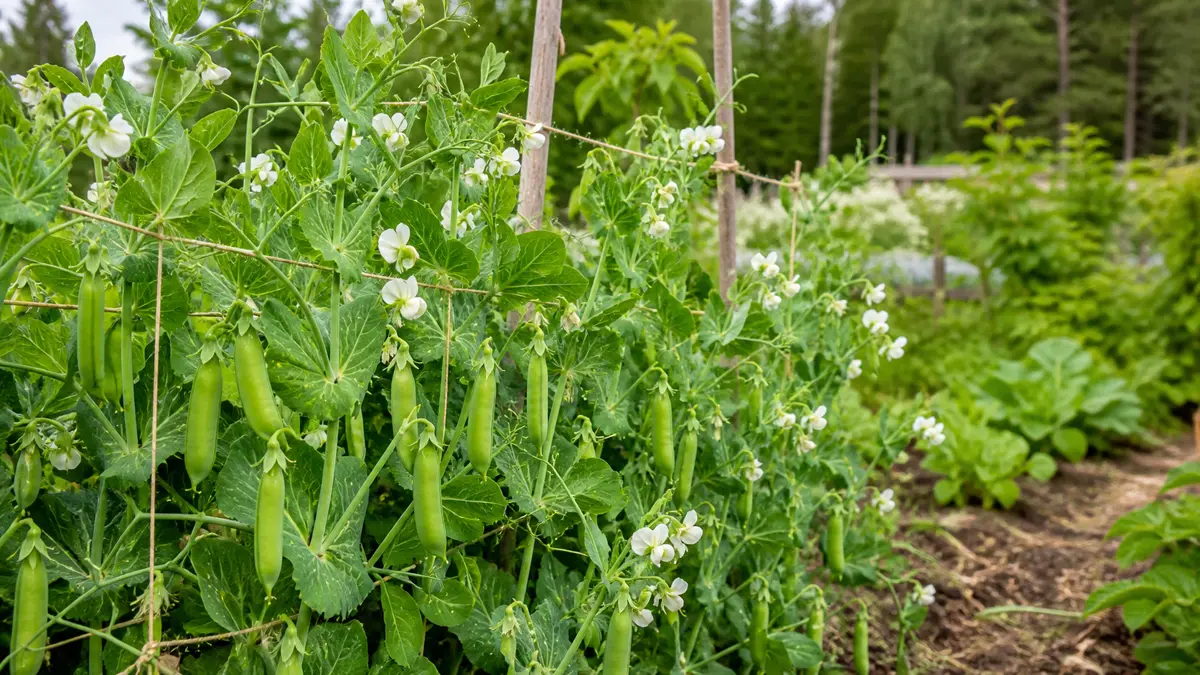
Sugar snap peas are climbing peas grown for crisp edible pods rather than mature shelled seed. Their practical constraint is access: tendrils need a trellis as growth begins, flowers need protection from a late cold spell, and pods must be seen and picked before the peas inside become coarse. Put the support in first, sow into workable drained soil and leave a hand-width route along the harvest face.
Buy the pod type you intend to eat
Sugar snap, mangetout and shelling peas are not interchangeable names. Sugar snaps develop a fleshy rounded pod eaten with the peas inside; mangetout are usually picked flatter; shelling varieties are grown for peas removed from the pod. Read the packet for type, mature height and days to harvest rather than relying on a photograph.
A short cultivar can use twiggy support, while a tall one needs netting or strings fixed against wind. The stated height also tells you where shade will fall on neighbouring crops.
- Whole edible pod or shelled peas
- Expected height and support method
- Harvest interval and disease-resistance notes on the packet
Sow when the soil crumbles instead of smearing
Peas tolerate cool conditions, but seed sitting in saturated airless soil can rot. Test the bed by squeezing a handful: if it smears into a dense ribbon, wait or improve drainage rather than compensating with more seed. Sow to packet depth and protect the row from birds or rodents without sealing it into a humid tunnel.
Successive short sowings can spread the picking period, but stop before local heat makes flowering unreliable. A late batch that never reaches pods uses support and water without solving the harvest gap.
Harvest on time and get more from the plant
Sugar snap peas are sweetest when the pods are crisp and the peas have only just begun to swell. Pick them by holding the vine with one hand; pulling the pod away can damage the slender stem and reduce the next set of flowers.
Make one side the picking face
Fix the trellis firmly enough that a wet canopy cannot pull it over. Guide the first tendrils rather than tying every shoot. Keep the side used for harvest clear of broad leaves from neighbouring crops, because hidden pods quickly pass their best texture.
If the row is against a wall or fence, leave enough gap for air and for a hand to reach behind the vines. A decorative screen that cannot be picked from either side becomes a pod trap.
Protect flowers differently from seedlings
Young pea plants can tolerate a light frost better than open flowers. Keep fleece or another temporary cover available when a cold night follows bud formation, then remove it promptly so stems are not flattened and insects can reach the flowers.
Heat creates a different limit. When vines stop setting tender pods, keep harvesting what remains but do not force exhausted plants with heavy feeding.
Water for pods, then taste before filling the basket
Give the root zone a thorough drink when the upper soil begins to dry, especially from flowering through pod fill. Shallow daily splashes encourage surface rooting and leave lower foliage humid without wetting the full root depth.
Pick with two hands so the stem is not torn from the trellis. Bite one pod in the garden: it should snap and taste sweet, with peas formed but not hard. That direct test is more useful than waiting for every pod to reach an identical length.
From bare trellis to the final picking
- Before sowing: check drainage, fix support and choose which side will remain open for harvest.
- After emergence: guide tendrils, replace missing plants only while the row is still young and watch for bird damage.
- At flowering: maintain root moisture and keep temporary frost protection ready without blocking the crop continuously.
- During harvest: pick every few days, remove overmature pods and clear the row when quality collapses rather than leaving a tangled disease reservoir.
Practical questions about Sugar snap peas
Can sugar snap peas be grown in a container?
Yes, if the pot has enough root volume, free drainage and a support anchored against wind. Containers dry faster at flowering, so place them where watering and picking are easy.
Why are the pods tough even though they look full?
They may have stayed on the vine too long or the plants may be stressed by heat and uneven water. Pick a little earlier and taste pods from several parts of the row.
Should I pinch the tops of sugar snap peas?
Do not apply one rule to every cultivar. Follow the packet height and support advice; uncontrolled pinching can remove flowering growth without improving access.
Can peas use the same trellis as cucumbers later?
Only if the pea crop will be removed before cucumber growth blocks picking and airflow. Plan the handover date and avoid pulling pea roots so roughly that the next crop's support is destabilised.
Judge the row by the next pod, not its height
A successful sugar-snap row is one you can reach repeatedly. If the next pod is visible, crisp and easy to cut without dragging down the trellis, the spacing and harvest route are doing their job.
Keep support, cool growth and pod texture in one plan
Treat sugar snap peas as a whole-pod crop: regular picking while pods are crisp keeps the eating quality ahead of swelling seed.
This cool-season crop can tolerate light frost as a seedling, but frost at flowering can still cut pod set, so keep temporary protection removable.
In well-drained soil with steady moisture, pick crisp pods before the seeds inside become fully mature and starchy.