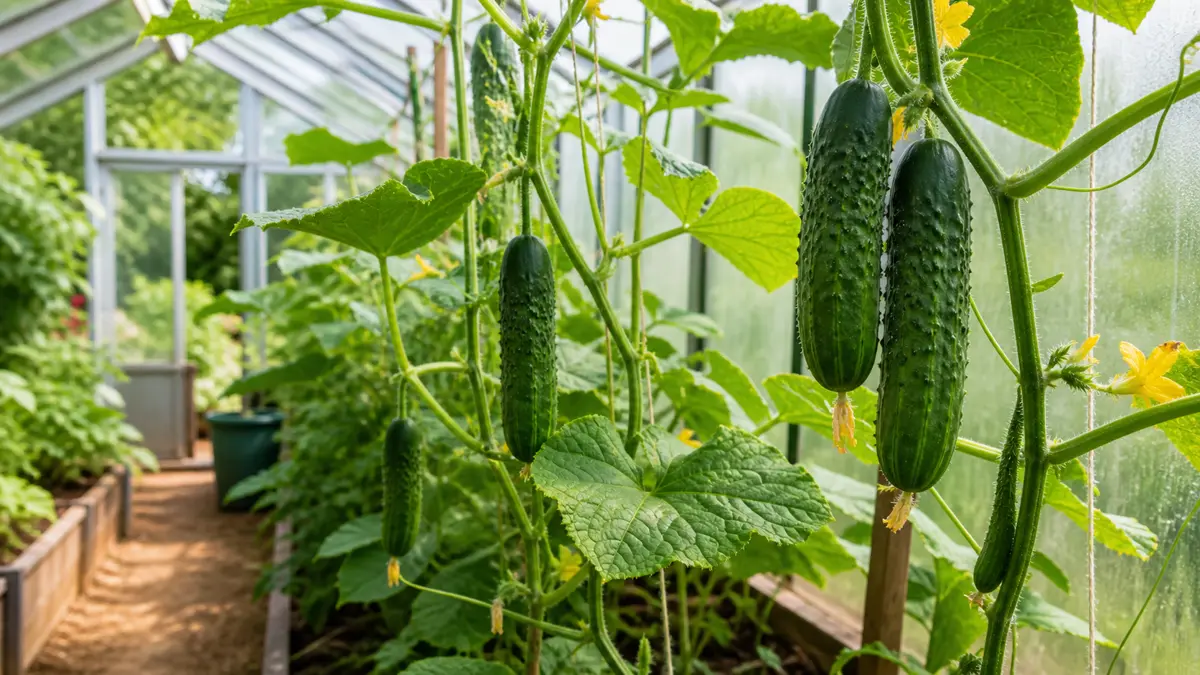
Cucumber is a warm-season vine for a greenhouse, tunnel, sheltered outdoor bed or large container only when warmth, water and harvest access line up. Plan support before the stems run, keep water at the root zone, check whether the variety needs bees, and pick young firm fruit often enough that yellow overripe cucumbers never become the signal to harvest.
Why cucumbers need warmth and vertical room
Cucumber is a warm-season vine crop, not a cool spring filler. It earns a place when the site is warm enough, water reaches the root zone easily and the harvest path stays open after the vines climb or sprawl.
Start by choosing the growing method. Greenhouse and tunnel cucumbers give the longest protected season but need ventilation and support; outdoor cucumbers need a sunny sheltered position and flowers open to bees if the variety depends on insect pollination.
Containers can work for compact varieties, but they are not a shortcut around water. Use a pot at least 30 cm wide and deep with free drainage, and keep it where daily root-zone watering is realistic in hot or windy spells.
- Protected growing: prepare twine, trellis, ventilation and shade before the vines fill the space.
- Outdoor beds: wait for warm soil, keep covers removable at flowering and leave access for bees.
- Containers: choose a compact variety, a deep free-draining pot and a nearby water source.
Choose between a greenhouse, an outdoor bed and a container
A good cucumber place is warm, bright and sheltered, but it should not trap stale humid air around the leaves. Check how the spot behaves on a cool night, after heavy rain and during a hot afternoon before you commit the plant.
Walk the route you will use in midsummer: can you water at the base, tie soft growth, inspect lower leaves and cut fruit without stepping on vines or compacting the root zone?
- Use a soil thermometer for direct sowing; cucumber seed starts reliably only when soil is warm, around 70 F / 21 C at shallow depth.
- Put supports in at planting so later stakes do not tear roots or snap brittle shoots.
- Leave airflow around leaves so powdery mildew, yellowing or cucumber beetle damage is noticed early.
- Open row covers once flowering starts if the variety needs bees or other insects for pollination.
- Place the crop near the kitchen-garden path because overlarge cucumbers slow the next fruit set.
Sow into warm soil without disturbing the roots
Direct sow only after local frost risk has passed and the soil has warmed. A reading of 70 F / 21 C at one inch depth is a useful direct-sowing benchmark; in a cooler bed, waiting a few days usually beats nursing stalled seedlings.
If you start indoors, keep it short. Sow in individual pots no earlier than four weeks before planting out, harden plants off gradually and move the root ball without breaking the taproot. Protected crops still need steady warmth; treat 12 C as a caution line rather than a promise that outdoor soil is ready.
Prepare fertile, moisture-retentive but well-drained soil with mature compost. Avoid fresh manure close to the crop because it can carry harmful bacteria and add weed pressure, then water deeply after sowing or transplanting so the whole root zone is settled.
From the first sowing to the final harvest
- Before sowing: choose greenhouse, outdoor or container varieties and check the seed packet for pollination notes.
- Sowing and transplanting: wait for warm soil, mild nights and a forecast that will not chill young roots.
- Early growth: install support, mulch only after the soil is warm and keep cultivation shallow around surface roots.
- Flowering: identify male flowers and female flowers, then remove covers if bees are needed.
- Summer harvest: water deeply at the base, watch for powdery mildew or beetle damage and cut young firm cucumbers every few days.
- End of crop: take the last usable fruit, remove diseased foliage and clean strings, clips or trellis before the next cucumber season.
Harvest on time and get more from the plant
Pick cucumbers while they are still firm and modest in size; leaving yellowing fruit on the vine slows the next flush of flowers. Check the plant every few days during warm weather and cut the stem cleanly rather than twisting the support loose.
Water the roots, ventilate covers and guide the vines
Cucumber care is mostly water, air and picking rhythm. Soak the soil thoroughly when it dries instead of splashing the leaves, and expect trellised plants or containers to need checks more often than ground-grown vines.
Keep leaves drier where you can. Drip hose, soaker hose or careful base watering lowers the pressure from leaf diseases, while ventilation and spacing make powdery mildew easier to spot before it spreads through the vine.
Pollination depends on the variety. Some greenhouse or seedless types set fruit without bee visits, while many outdoor cucumbers have male flowers first and later female flowers with a tiny fruit behind the bloom. If flowers appear but fruit fails, check variety type, closed covers, cool wet weather and bee access before adding fertilizer.
Setbacks that stop cucumbers forming
Most cucumber failures begin before the first harvest: cold soil, damaged roots, shallow watering, blocked pollination or fruit left too long on the vine.
- starting seed indoors too early and holding the plant in a small pot until it stalls
- setting transplants into cold, wet soil because the calendar says spring
- watering the surface repeatedly while the root zone stays dry
- leaving row cover closed on a bee-pollinated variety after flowers open
- pulling fruit from the vine instead of cutting the stem cleanly
- leaving yellow, oversized or soft cucumbers to drain energy from new fruit
Choose neighbours that will not steal light or airflow
Use combinations to protect access, not to make unsupported companion-planting promises. A cucumber trellis can share a water point with other warm-season crops, but keep enough space that leaves do not merge into a damp wall.
Fast early crops can sit in front of the row only if they will be gone before cucumber vines shade the ground. In small beds, keep sprawling squash, pumpkins and melons away from the cucumber path unless there is enough room to pick without dragging vines across each other.
For containers, pair the cucumber with its own support rather than with thirsty neighbours in the same pot. One plant with steady water is usually more useful than a crowded display that dries before fruit reaches picking size.
- Leave a hand-width route for tying, checking flowers and cutting fruit.
- Keep low early crops temporary so they do not compete once cucumber roots are active.
- Avoid dense leaf walls in greenhouses; ventilation is part of cucumber care.
- Put harvest crops where you can wash hands and tools before handling raw produce.
Cucumber questions
When should I sow cucumbers?
Direct sow after local frost risk has passed and soil is warm, around 70 F / 21 C; keep indoor starts short and transplant with an intact root ball.
Can cucumbers grow outdoors, or do they need a greenhouse?
Both can work when the variety matches the site: protected types need ventilation and support, while outdoor types need warmth, shelter and pollination access.
Why are there flowers but no cucumbers?
Male flowers often appear first. If female flowers fail to set fruit, check bee access, closed covers, cold or wet weather and the variety's pollination notes.
How should I harvest and prepare fresh cucumbers safely?
Cut young firm fruit often, then wash it under running water and scrub firm cucumbers with a clean produce brush before eating raw.