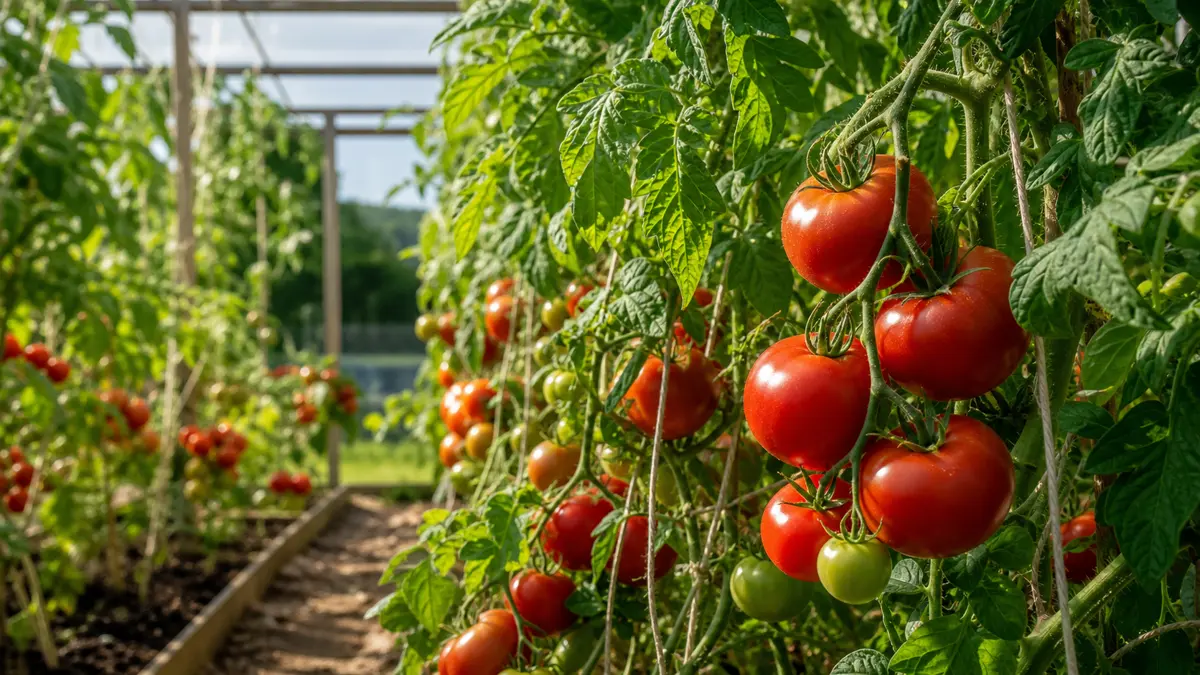
A tomato label should answer the structural question before the plant goes into a bed or pot: cordon plants climb on one trained stem and need side-shoot removal, while bush plants retain their branches and spread their fruiting points through a broader frame. Put support in place, choose a warm site with moving air and reserve enough root volume for steady watering before summer growth makes those decisions difficult to change.
Let growth habit set the footprint
A cordon tomato belongs beside a cane, string or trellis tall enough for its expected growth. Tie the main stem with soft loops and remove side shoots that arise between leaf and stem while they are small. The task is training, not stripping away healthy leaves.
A bush or determinate tomato normally keeps its side branches. Give it a cage or low support that holds fruit clear of soil without squeezing the centre. When the label is unclear, preserve growth until flowers reveal the plant's structure rather than pruning by guesswork.
- Cordon: one trained main stem and repeated tying
- Bush: branching frame with support under fruiting stems
- Dwarf or patio forms: container volume still matters even when height is modest
Warm the root ball without burying a cold pot
Harden transplants gradually and wait until the soil or container mix is warm enough to keep new roots active. A tall leggy plant can be set deeper where the stem is healthy, but remove leaves that would be buried and do not place a saturated root ball into cold compacted ground.
Install the permanent support at planting so later stakes do not spear an established root system. In containers, choose drainage holes and a stable base before the canopy catches wind.
Keep water below a canopy that can dry
Water slowly enough to wet the main root zone, then let the surface begin to breathe before the next irrigation. Large swings between drought and saturation disrupt growth and split some fruit; wet leaves and soil splash also increase avoidable disease pressure.
Remove only the lowest leaves that touch soil, yellow badly or prevent access. More defoliation is not automatically more airflow: the remaining canopy still protects fruit from intense sun and powers ripening.
Read flowers and fruit before changing feed
Poor fruit set during very hot or cold spells is not fixed by adding fertiliser. Check whether flowers are shedding normally, whether the root zone is cycling between dry and wet, and whether the cultivar is suited to the available season.
Once fruit begins to colour, taste and texture matter more than a rigid calendar. Pick promptly when cracking, cold or animal damage is likely, and let sound fruit finish indoors only when necessary.
Carry clean fruit into the kitchen
Harvest into a clean container rather than dropping tomatoes onto soil. Discard mouldy fruit, cut away ordinary minor damage only when the remainder is sound, and keep unwashed storage fruit dry.
Wash hands and rinse fruit under running water immediately before preparation. Use a clean board and knife, particularly when tomatoes will be served raw.
The decisions that move with a tomato plant
- At purchase: identify cordon, bush or dwarf habit and check expected size and harvest window.
- At planting: warm the site, secure support and water the root ball into the surrounding soil.
- During extension growth: tie cordons, remove small side shoots and maintain a dryable canopy.
- At harvest: pick sound fruit, record which cultivar ripened reliably and clean supports before storage.
Practical questions about Tomatoes
How can I tell a side shoot from a flower truss?
A side shoot grows from the angle between a leaf stalk and the main stem and begins with leaves. A flower truss emerges as a separate cluster of buds; pause until the shapes are clear before pinching anything.
Why are the lower tomato leaves yellowing?
One or two old leaves may age naturally, but widespread yellowing can reflect cold roots, irregular water, nutrient imbalance or disease. Examine the pattern and new growth before feeding.
Is a greenhouse essential for tomatoes?
No. A sheltered sunny wall, raised bed or large container can work where the season is warm enough. A greenhouse adds warmth but also increases the need for ventilation and reliable watering.
Should tomatoes be refrigerated after picking?
Follow food-safety guidance and the condition of the fruit. Sound ripe tomatoes often keep their flavour best in a cool room for short use, while cut fruit needs refrigeration.
Keep one clear line from root to fruit
When support is firm, water reaches the root zone and a hand can move through dry foliage to the next ripe tomato, the crop is easier to diagnose and harvest. Add no task that breaks that line without a specific reason.
Link plant habit to the root zone and clean harvest
Train a cordon tomato to firm support and remove each side-shoot while small; leave a bush tomato to build its branching framework.
Combine root-zone watering with warm transplanting and clear airflow so lower tomato leaves do not remain crowded and splash-wet.
Before serving raw fruit, wash tomatoes under running water and keep the clean board and knife away from raw meat.