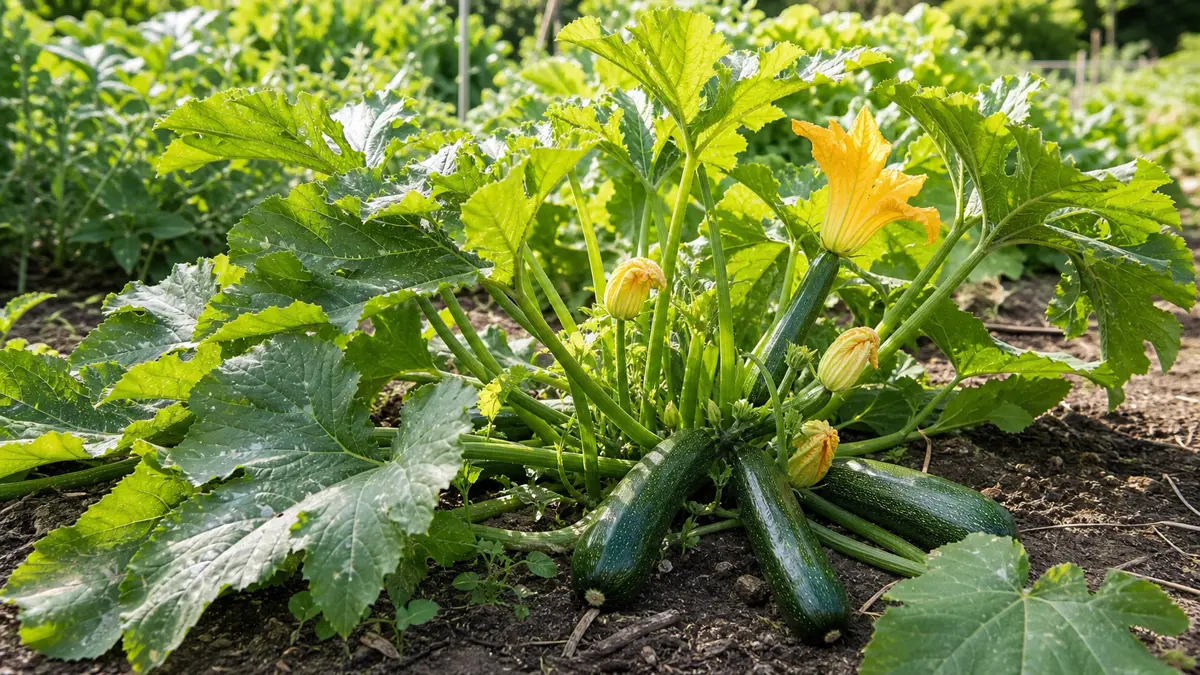
Squash needs more horizontal room than its small transplant suggests: a bush type can spread roughly across a metre of bed, while a trailing type may travel farther. Wait for warm soil after frost, prepare a sunny, well-drained bed and keep the flowers open for pollination once they appear. Water deeply at the root zone and inspect beneath the leaves every few days, because frequent picking supports continued cropping and regular checks reveal powdery mildew and hidden fruit early.
Squash: give the mature canopy a measured footprint
Check whether the seed or plant is described as bush, semi-trailing or trailing. A bush summer squash still uses a broad circle of leaves, and the thick stalks are awkward to reach through once they overlap a path or neighbouring crop. Mark the footprint before planting and leave an approach to the crown from at least one side.
Containers are possible for compact cultivars, but the pot needs generous compost volume, reliable drainage and enough weight not to tip beneath the canopy. A small pot can move from moist to wilted quickly in warm weather and leaves no buffer when the plant is carrying several fruits.
Use the open edge of a bed rather than its crowded centre. The plant can shade an early salad after harvest, but it should not bury a permanent crop or force every watering can through prickly leaves.
- Check the cultivar's growth habit before assigning bed space.
- Keep one clear route to the crown, flowers and hidden fruits.
- Reserve a sunny station that warms without remaining waterlogged.
Warm the root zone, then open the flowers
Do not read one warm afternoon as proof that the soil is ready. Wait until frost risk has passed and the bed itself has warmed, then transplant without breaking the root ball. Compost-rich soil should still drain after a thorough watering; a cold saturated pocket delays roots and can undo an early start.
Squash produces separate male and female flowers. Female flowers have a small swelling behind the petals, while males do not. Early plants may open mostly male flowers, and cool or wet weather can limit insect activity. Remove or open fleece and row cover at flowering so bees can move between blossoms.
- warm soil after frost rather than only warm air
- flowers uncovered for bee pollination
- deep root-zone watering without a wet stem base
- space and access for powdery mildew checks and frequent picking
Sow without creating a stalled pot-bound transplant
Indoor sowing gains time only when the plant can move outside before its roots circle a small pot. Sow individually, give seedlings strong light and warmth, and harden them gradually. Handle the pot rather than the brittle stem when transplanting into the prepared station.
Direct sowing avoids transplant disturbance but needs genuinely warm soil and protection from the hazards present in that garden. Use the spacing on the cultivar instructions, mark the station clearly and keep young growth visible rather than surrounding it immediately with a dense mulch.
Water the planting hole and nearby soil so roots expand beyond the original compost. As leaves spread, direct later water beneath the canopy to the root zone instead of wetting flowers and foliage from above.
A crop rhythm measured in days, not weeks
- Before sowing: identify growth habit, reserve the footprint and prepare compost-rich drained soil.
- At planting: wait for warm soil after frost, water the root ball and keep temporary covers secure.
- At first flowers: remove pollinator barriers, distinguish male and female blossoms and maintain steady moisture.
- During harvest: search beneath leaves every few days, cut young fruits cleanly and monitor older foliage for powdery mildew.
Harvest on time and get more from the plant
Harvest summer squash when the skin is still tender and the fruit fits comfortably in one hand. Oversized fruits turn seedy quickly and hide new flowers beneath the leaves, so a two- or three-day check keeps the plant productive.
Water below the leaves and harvest with a clean cut
Large leaves can lose substantial water on hot days. Water slowly and deeply over the root area, then check below the surface before repeating. Keep the main stem base out of a permanent puddle and avoid a daily light sprinkle that wets leaves while leaving deeper soil dry.
Lift leaves carefully and cut fruit with a clean knife or secateurs, leaving a short stem. Pulling can tear the plant. Harvest young fruits at the size suited to the cultivar and kitchen use; frequent checks prevent a hidden fruit from becoming an oversized marrow and help you find smaller fruit in time.
Troubleshoot fruit set before changing the whole feeding plan
A female flower can begin to swell and then stop when pollination is incomplete or weather is unfavourable. First check flower timing, insect access, temperature and water consistency rather than assuming the plant needs more fertiliser.
- planting into cold soil after a single warm day
- leaving row cover closed after flowers open
- allowing hidden young fruits to become oversized between harvests
- wetting foliage repeatedly while powdery mildew pressure is rising
- growing squash where paths and water cannot reach the centre of the plant
Manage powdery mildew without stripping a working canopy
Powdery mildew often appears as a powdery white coating as the season advances. Give leaves airflow, water the soil rather than the canopy and remove badly affected older leaves with clean tools when they no longer contribute much. Do not strip every marked leaf at once; the plant still needs healthy foliage to fuel its crop.
Distinguish the natural pale pattern on some squash leaves from a coating that develops and spreads. Check both leaf surfaces and compare new and old growth. Clear exhausted plants and debris at season end rather than leaving a dense diseased canopy over the bed.
- preserve enough healthy leaf area for continued growth
- cut removed leaves without tearing the hollow stems
- clean tools and clear heavily affected debris from the bed
Squash-growing questions
When should squash be planted out?
Wait until local frost risk has passed and the soil is genuinely warm, not just after one warm afternoon. Harden indoor seedlings gradually and avoid leaving the root ball standing in cold saturated ground.
Why do tiny squash rot or fail to grow?
Incomplete pollination, cool weather or irregular moisture can stop early fruit. Make sure covers are open, look for both male and female flowers and allow insects to move between them before changing the feeding regime.
How large should squash be harvested?
Pick young fruits at the size suited to the cultivar and kitchen use, often every few days in productive weather. Regular inspection prevents one fruit from becoming an unnoticed oversized marrow.
Squash: how do I reduce powdery mildew?
Leave room for airflow, water the root zone and remove badly affected older leaves when they no longer contribute much. Keep enough healthy canopy to support the crop and clear diseased debris at season end.
Connect warm roots, open flowers and the picking route
Let the cultivar and intended dish determine harvest size; regular harvest also stops a concealed squash from swelling into an oversized marrow.
Plant summer squash into warm soil after frost, remove flower covers for pollination and return for regular harvest while fruits are young.
Powdery mildew is the powdery white growth that spreads across older squash leaves; wider spacing lowers pressure without guaranteeing clean foliage.