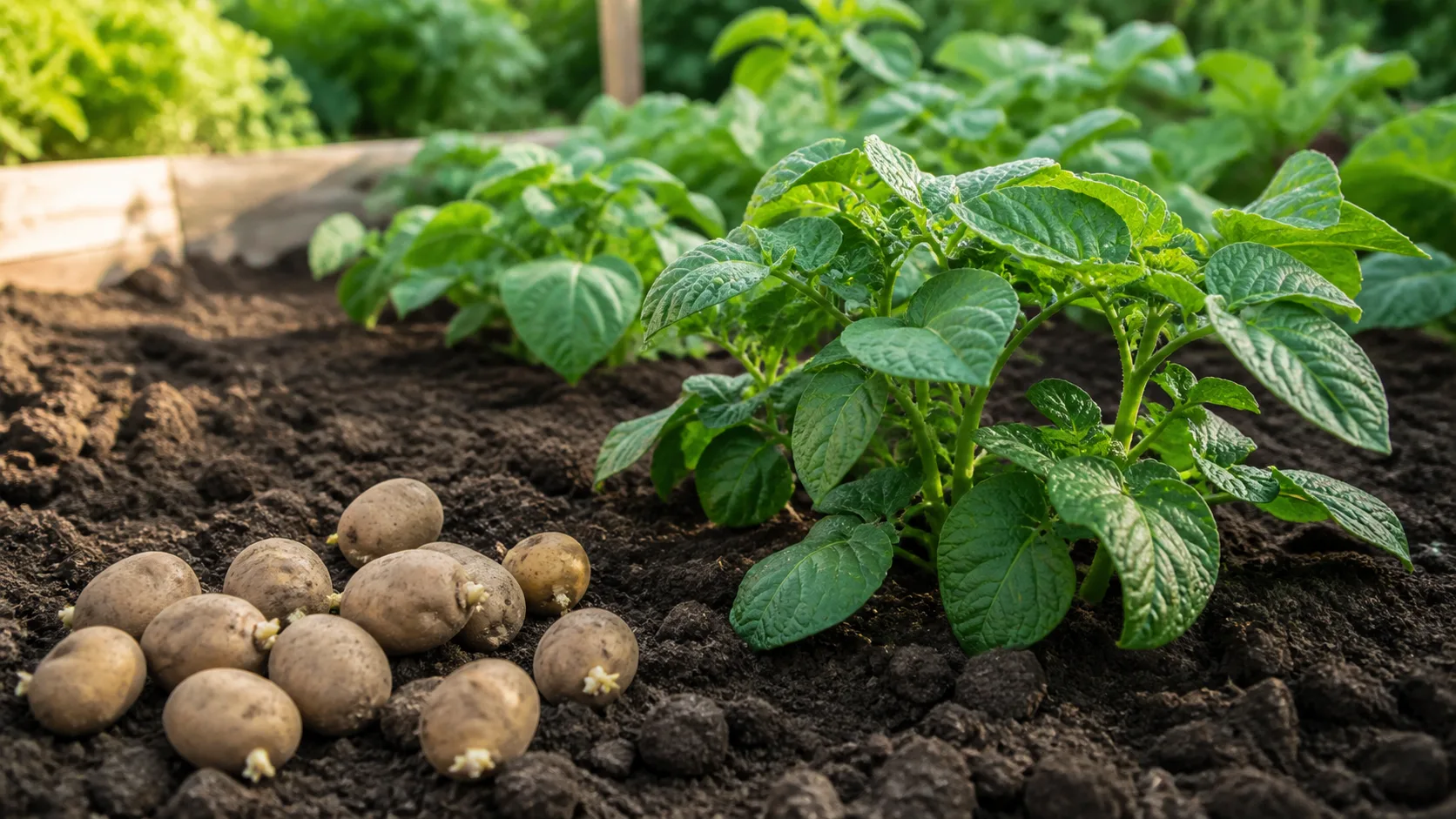
A potato row has two different harvests. Earlies are lifted while their skin is still tender and eaten promptly; a maincrop for storage stays until the haulm has died back and a sample tuber's skin resists the thumb. Soil and weather still have the last word: lift in dry weather, keep damaged or blighted tubers out of the store, and never let a calendar overrule a wet bed.
Why potatoes are earthed up
Potatoes, Solanum tuberosum, form new tubers on underground stems above the planted seed potato. Drawing loose soil around the shoots gives those tubers room and keeps them dark.
Light makes exposed tubers green, so repair cracks in a ridge before a potato reaches the surface. Earthing up also combines weed control with a chance to judge whether the soil is too dry, saturated or compacted.
- use certified seed potatoes rather than grocery tubers
- chit earlies in a bright, cool and frost-free place when useful
- keep every developing tuber covered from light
Choose the bed before opening the seed bag
Choose an open bed with drainage, enough soil on both sides of each row for earthing up, and a path from which you can lift without standing over the tubers.
Mark which rows are earlies and which are maincrop before planting. That choice controls spacing, how long the haulm remains and whether the harvest needs curing space.
- avoid soil that is saturated at planting or lifting
- leave room to move a fork into the ridge from the side
- use crop rotation rather than repeating potatoes in the same bed
Planting and earthing up
Set seed potatoes into friable soil in spring. Chit earlies first when an earlier start is useful, then label the early and storage rows so they are not harvested on the same schedule.
As shoots rise, earth up with loose soil while leaving the upper leaves in daylight. Repeat if rain flattens the ridge or cracks expose shallow tubers; earthing up prevents green potatoes but does not replace late blight checks.
A potato season without fixed dates
- Before planting: chit earlies if useful and wait for workable soil.
- After emergence: earth up while shoots are easy to reach.
- During growth: water the ridge in dry spells and watch for late blight.
- At harvest: lift earlies for immediate use and skin-test maincrop potatoes.
Water, cover and disease checks
Keep the ridge evenly moist while tubers swell, watering the soil rather than the foliage. After heavy rain, cover cracks before a tuber reaches the light.
Late blight can move from foliage into tubers. Rapidly spreading dark lesions in damp weather are not ordinary senescence; follow local plant-health advice and do not assume an affected crop will store.
Mistakes that follow potatoes into storage
Cuts, bruises and wet soil acquired at lifting often reappear as rot weeks later. Treat the fork, drying space and storage box as one handling chain.
- scraping immature skin while lifting from sticky soil
- putting the fork so close to the stem that tines spear the crop
- mixing cut, green, soft or blight-suspect tubers with sound potatoes
- sealing warm potatoes in an unventilated container
New potatoes or a maincrop for winter
New potatoes are deliberately lifted before the skin toughens. Their tenderness is the reason to eat them soon, not evidence that the crop failed to mature.
A maincrop variety chosen for storage needs a firm skin, careful lifting and a dark, cool, frost-free place with airflow. Packet timing is a starting point rather than a promise.
Read the haulm before lifting
Take a few earlies from the side of the ridge when they are large enough to eat. Their tender skin makes them food for the next meals rather than long storage.
For a healthy maincrop, wait until the haulm yellows and dies back, then allow about ten days as a default for skin set. Shorten that wait if persistent wet soil, frost or late blight threatens the crop; those conditions outweigh the calendar.
Use the thumb test and a dry lifting window
Rub a sample tuber gently with your thumb. A storage-ready skin should resist rubbing; if it slips, leave healthy potatoes longer only when soil and forecast make that safe.
Choose dry weather and soil that falls away from the tubers. Insert the fork well outside the plant, lift from beneath and use cut or bruised tubers first instead of storing them.
Dry, cure and store without trapped moisture
Let surface moisture dry under cover and brush away loose soil; do not wash potatoes before storage. Keep them out of light from harvest onward.
Cure only sound tubers in a ventilated, dark place, then store them cool and frost-free in breathable sacks or slatted boxes. Avoid abrupt temperature changes that create condensation, inspect regularly and remove anything soft or rotten.
FAQ about Potatoes
When can I lift new potatoes?
Lift a few earlies when the tubers are a useful size. Their tender skin is expected, but it means they should be eaten promptly rather than stored.
How do I know a maincrop potato is ready?
After healthy haulm has died back, use the waiting period only as a guide and rub a sample with your thumb. The skin should stay in place.
Should I wait if the bed is wet?
Avoid lifting from sticky soil if a short dry spell is coming, but do not leave a mature crop indefinitely when rain, frost or late blight is making conditions worse.
Can potatoes with late blight be stored?
Treat them cautiously. Blight can affect tubers as well as foliage, and affected crops are generally unsuitable for storage; keep suspect tubers separate and follow local guidance.
Should storage potatoes be washed?
No. Let the surface dry, brush off loose soil and wash only before cooking. Added moisture works against a clean, dry storage lot.
What should be removed before storage?
Set aside cut, bruised, green, soft or diseased tubers. Use minor damage promptly and never rely on curing to repair rot or frost injury.
The five checks before the storage row is lifted
A storage row is ready only when variety, haulm, skin, soil and forecast point in the same direction. If one check fails, decide whether a short wait is safer than lifting or whether wet weather and frost make delay the greater risk.
- the variety was chosen as a maincrop with storage potential
- healthy haulm has died back rather than collapsed from late blight
- the skin resists a thumb
- soil falls away without smearing
- drying space is ready before the fork enters the ridge
Harvesting potatoes from containers
Stop watering once a container crop is ready and let excess moisture drain. Tip a light container onto a sheet rather than probing blindly with a fork, then sort the exposed tubers before the compost hides cuts or green patches.
- lift only a few earlies if the plant is still producing
- keep maincrop tubers dark while they dry
- do not store a waterlogged container harvest without strict sorting