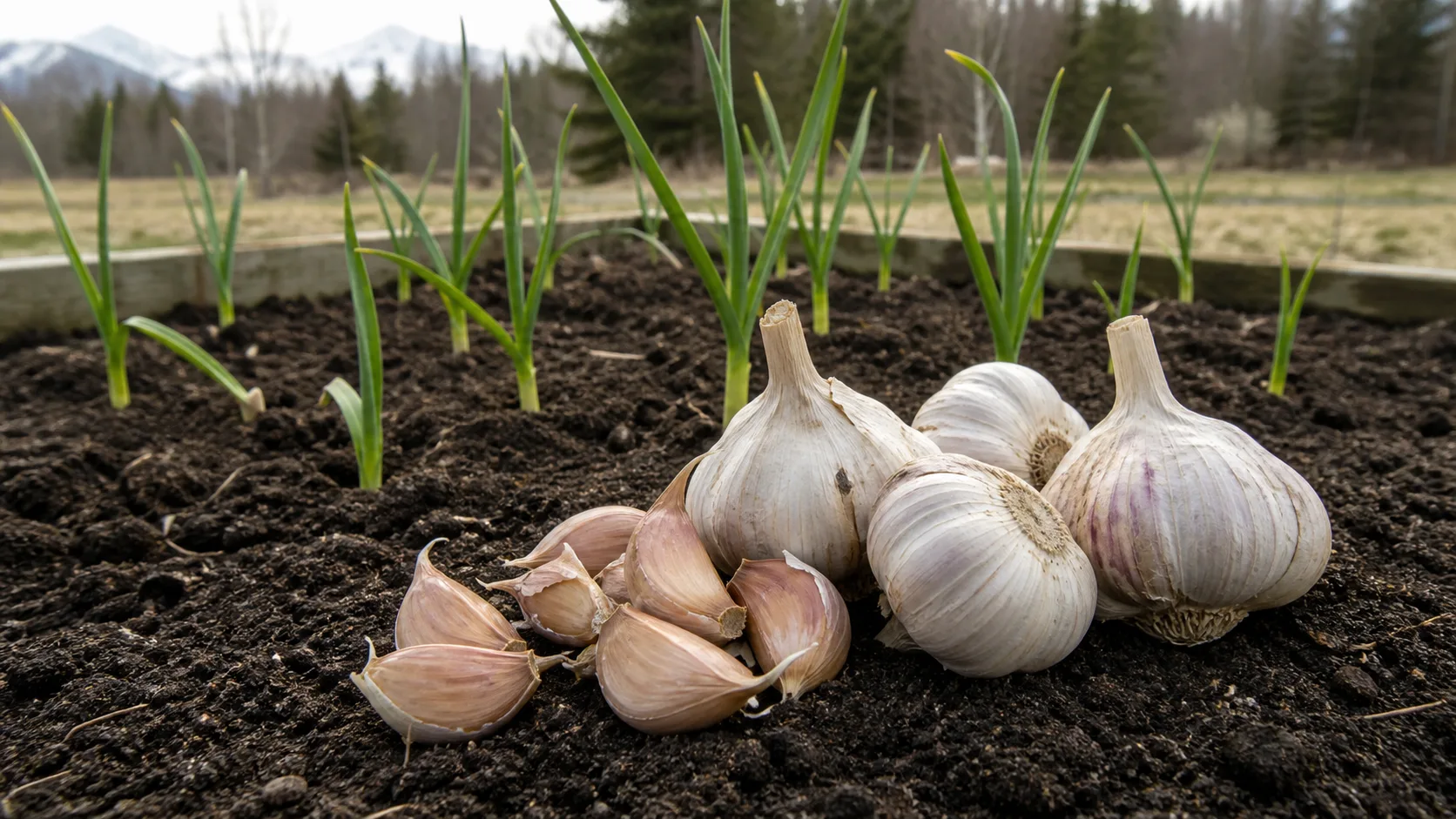
Garlic does not finish when the leaves yellow. Success runs from sound, adapted planting cloves through winter drainage and spring growth to a trial bulb, intact wrappers and a dry curing space. Decide how you will cure and store the crop before the cloves enter the ground.
Start with a clove that can finish the season
Plant garlic cloves with the pointed end up, normally in autumn, because many cultivars need a period of cold before they divide into a well-formed bulb.
Separate bulbs shortly before planting so the basal plate does not dry out. Choose firm cloves without mould or wounds; the largest cloves usually have the reserves to establish strongly, while undersized cloves are better used in the kitchen.
Build the bed around winter drainage
Garlic roots during cool weather, but a clove sitting in saturated soil can rot before spring growth begins. Use a bed that drains after prolonged rain, remove perennial weeds first and avoid pushing cloves into a compacted, airless layer.
Space cloves far enough apart for leaves to dry and bulbs to expand. In a container, use enough depth for roots and enough volume that moisture does not swing from waterlogged to dust-dry in a single day.
Place the basal plate down and protect the rooting period
Set aside the largest sound cloves for planting, mulch after the ground cools where winter protection is needed, and cure harvested bulbs with dry airflow before storage.
Mulch should moderate freeze-thaw movement without sealing wet soil. Pull heavy, matted material back when growth resumes, then weed by hand so shallow tools do not slice new roots or nick swelling bulbs.
Manage water and scapes without feeding late growth
Keep the root zone evenly moist during active leaf growth and early bulb expansion, then reduce irrigation as maturity approaches. Repeated shallow watering encourages a shallow root system; soaking already wet ground increases disease pressure.
Hardneck garlic produces a scape that can be cut while curled; lift the bulb before its outer wrapper breaks down, then keep only dry, undamaged bulbs for storage.
A scape is not a general sign that the bulb is ready. It belongs to the hardneck growth cycle; harvest timing still comes from the leaves, wrappers and a trial bulb dug carefully from the row.
Dig a trial bulb before wrappers begin to split
Loosen soil beside the bulb with a fork and lift rather than pulling the stem. If cloves have filled out but the outer wrappers are still intact, harvest the row during a dry spell; if the bulb is small, recheck after a short interval while leaves remain functional.
Do not wash storage bulbs. Brush off loose dry soil after curing, trim roots without cutting the basal plate and keep the best labelled bulbs separate if they will supply next season's planting stock.
Curing is part of the crop, not an optional tidy-up
Spread or hang bulbs in a shaded, rain-free place with moving air. Crowded piles trap moisture around necks; direct hot sun can damage freshly lifted bulbs. Curing is complete only when neck tissue and outer wrappers feel dry.
After sorting, store bulbs cool, dry and ventilated. Check periodically and remove any bulb that softens or develops mould so one failure does not remain pressed against healthy neighbours.
Treat garlic in oil as a separate food-safety task
Fresh garlic held in oil creates a botulism risk unless the mixture is refrigerated and handled within current public-health storage guidance.
Oil excludes oxygen; it does not make fresh garlic safe at room temperature. Garden quality, organic growing and clean-looking cloves do not change that storage hazard, so use a tested preservation method rather than improvising a pantry jar.
Judge the crop by the bulb that reaches dry storage
A useful garlic record follows one labelled variety from planting date through scape emergence, lower-leaf browning, lifting and curing. That sequence reveals whether the next adjustment belongs in the bed, the harvest window or the drying space.
Questions gardeners ask
Should I plant supermarket garlic?
Use named, healthy planting stock adapted to your growing conditions. Food bulbs may be treated to delay sprouting, may carry disease and may not have a useful cold response for your site.
Which way up does a garlic clove go?
Place the flat basal plate down and the pointed tip up. Keep the clove intact until planting and discard any that are soft, mouldy or damaged around the base.
When is garlic ready to lift?
Use leaf condition rather than a calendar date. Begin checking when several lower leaves have browned but enough green leaves remain to supply intact wrappers around the bulb.
How do I cure garlic for storage?
Cure bulbs in dry shade with airflow until their necks harden.
Should hardneck garlic scapes be removed?
Cut a scape while it is still curled if bulb size is the priority, but leave the foliage. Keep a few scapes if you want to observe maturity or collect bulbils.
Is homemade garlic in oil shelf-stable?
No. Raw garlic in oil is not a shelf-stable preserve; refrigerate it promptly and follow current public-health advice for preparation, storage time and disposal.