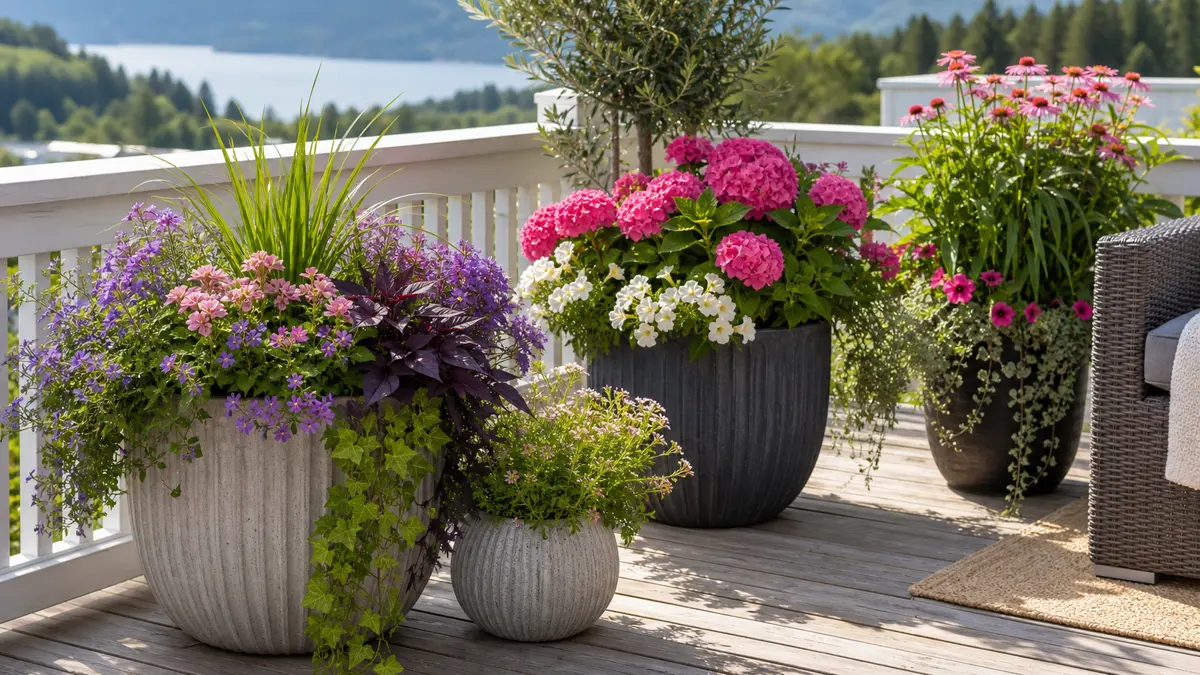
A mixed flower container succeeds or fails at the drainage holes: roots need a generous volume of fresh potting mix, yet excess water must leave freely after every soaking. Group plants by light and moisture needs, leave enough rim space for watering, and decide who will feed, deadhead and turn the pot before a windy or hot week exposes every shortcut.
Design the pot around its shared root zone
Container flowers share one restricted root zone, so pot volume and compatible growth matter more than the number of colours at the garden centre. Upright plants, fillers and trailing stems can make a balanced display only when none of them smothers a slower neighbour or demands a completely different watering rhythm.
For three or four modest annuals, a 5- to 7-gallon container is a useful planning example, not a universal recipe. Increase the volume when mature spread, root vigour or exposure demands it, and reduce the plant count rather than crowding the rim.
Use a container with unobstructed holes and enough compost that water can soak the full root ball instead of running down a dry gap at the edge. A saucer may protect a surface, but it should not leave roots standing in collected water.
Feeding and deadheading depend on the plants in the mix. Follow their labels, remove spent flowers where that encourages new buds, and replace a struggling plant rather than increasing feed for the entire container.
- Ornamental container guide.
- mixed annual and tender container flowers.
- drainage holes, fresh potting mix and several gallons of root volume for mixed displays.
Match light, wind and watering access
Set the empty pot in its final position before filling it. Confirm that the surface is level, drainage water has somewhere to go, wind cannot topple the display and a watering can or hose can reach without dragging through the planting.
Observe the light over a full day, then choose plants for that exposure. A hot reflective wall, an open balcony and a sheltered entrance can sit only metres apart but impose very different heat, wind and moisture loads.
- choosing Flowers in containers before drainage, feed and watering have been checked on the actual site
- following a fixed date when soil, wind, rain, heat or frost says wait, with timing adjusted to Flowers in containers.
- filling a heavy container before confirming its final position, drainage route and water access
- forgetting to note what should change before the same choice is repeated next season, with the watering detail checked against Flowers in containers.
Plant a mixed display without crowding the rim
Test drainage and stability while the container is still empty, then fill with fresh potting mix and plant at the spacing each cultivar needs. Moving or drilling a waterlogged display after roots have knitted through it is needlessly disruptive.
Tender container flowers should wait until damaging cold has passed, while hardy choices can be assembled earlier. A forecast of strong wind is also a reason to delay planting tall or trailing stems into an exposed pot.
From spring planting to autumn clear-up
- Before planting: choose compatible flowers, place the empty pot and confirm where drainage water will go.
- After damaging cold has passed: plant tender annuals into fresh potting mix, leave a watering rim and soak the full root zone.
- Through summer: test moisture below the surface, feed by label and deadhead only the plants that benefit.
- Before frost: move any plant being kept into suitable frost-free conditions, then clear and clean the remaining container.
Water deeply, feed by label and deadhead selectively
Push a finger below the dry surface before watering, then soak until water drains from the bottom. During the same round, remove damaged growth and turn the container only if the plants are leaning away from uneven light.
When one plant wilts while its neighbours remain firm, check that individual root ball before soaking the whole display. Yellow leaves can reflect waterlogged compost as readily as drought, and adding feed to stressed roots compounds the problem.
Why mixed flower pots decline
Compare drainage, feed and watering with the actual site, then note the change before the next season.
- choosing Flowers in containers before drainage, feed and watering have been checked on the actual site
- following a fixed date when soil, wind, rain, heat or frost says wait, with timing adjusted to Flowers in containers.
- filling a heavy container before confirming its final position, drainage route and water access
- forgetting to note what should change before the same choice is repeated next season, with the watering detail checked against Flowers in containers.
Choose companions by vigour, not colour alone
Place pots so foliage can expand without blocking a door, hiding drainage outlets or tangling with the next display. Grouping containers can slow exposure to wind, but every pot still needs to be reached and watered individually.
Use the watering and plant-specific guides to check the thirst, light and feeding needs of each component before combining them; matching those needs is more valuable than repeating the same colour nearby.
Questions about flowers in containers
How large should a mixed flower container be?
A 5- to 7-gallon container is a useful example for three or four modest annuals, but mature plant size and exposure still decide the final volume. Make drainage non-negotiable, and use fewer plants when the rim or root zone would otherwise be crowded.
How can I tell when the pot needs water?
Feel below the dry surface and learn how the container weighs after a thorough watering. Wind, heat, rain and root growth change the interval, so inspect the compost instead of watering every mixed pot by the same calendar.
Can flowers with different water needs share one pot?
Only when their light, moisture and vigour are compatible. A drought-tolerant plant beside a thirsty, fast-growing companion forces one of them into the wrong routine and makes the display harder to maintain through summer.
Which guide helps with watering a mixed flower pot?
Use the container-watering guide to judge dry compost below the surface, soak the full root zone and adjust checks for pot size, wind and heat.