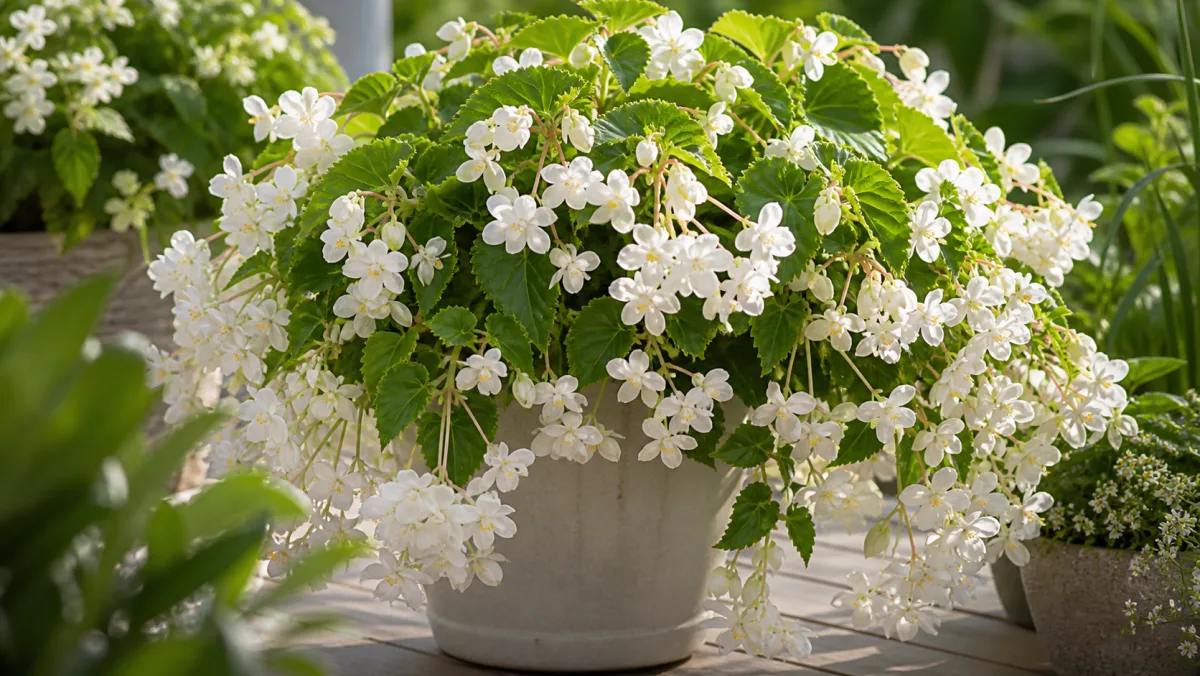
'Santa Barbara' is a white-flowered Begonia boliviensis F1 from the Sun Cities collection for baskets and mixed containers. Its mature size, watering interval, hardiness rating and storage method are not specified for every supplied plant. Choose the container around the plant and root ball you receive, leave excess water a clear exit and keep the purchase label for its light and end-of-season instructions.
'Santa Barbara': white flowers for baskets and mixed containers
The botanical name is Begonia boliviensis 'Santa Barbara'. It is an F1 selection in the Sun Cities collection, with white flowers for baskets or mixed containers. That establishes its colour and container role, but not a fixed shoot length, pot diameter or flowering calendar. The registered plant record marks the name as unresolved, so retain the full botanical and cultivar wording from the seller's label.
Keep the seller's label because the delivered form, exposure range and end-of-season instructions may vary. Begonias vary in growth habits, so match general care to the identified type rather than borrowing a routine from a different begonia. The cultivar name alone does not tell you whether the plant should be discarded, kept growing or stored dormant.
- Plant: Begonia boliviensis F1 'Santa Barbara'
- Collection: Sun Cities
- Flowers: white
- Use: baskets and mixed containers
Build the basket around drainage and wet weight
'Santa Barbara' is intended for baskets and mixed containers, but no universal pot size follows from that use. Give the root ball enough volume that it does not swing between saturation and drought, leave room for the stems you actually receive and check that hooks, chains and supports are rated for the full wet weight.
For a container plant, adequate root volume, open drainage and moisture checks must work together. Use fresh container mix rather than dense garden soil. Water once after planting and watch where the excess leaves. A decorative outer pot can conceal standing water, so lift the inner container or empty the cachepot after irrigation. Drainage is a property of the whole arrangement, not merely a hole hidden under compacted mix.
Use leaves and exposure to refine the light level
Begin with the label's exposure range and observe the plant through the hottest part of the day. Reflected heat beside glass or pale paving can be harsher than the same compass direction in an open garden. Move a portable pot gradually if leaves bleach, scorch or stretch weakly toward light.
Shelter is also physical. Long shoots can rub against a wall or snap in a windy doorway, while a tightly enclosed corner may dry slowly after rain. Place the container where air can move without turning every stem into a sail, then reassess after the canopy fills out.
Water the root ball, then let it drain
Check moisture inside the mix rather than judging the plant by the dry surface alone. Water thoroughly when the root zone needs it and confirm that excess drains away. A small hanging basket may dry quickly in wind, yet the same basket can remain wet during cool cloudy weather; a fixed daily dose ignores both conditions.
Wilt is not a diagnosis by itself. Feel the mix and inspect the roots, drainage and recent weather before adding water. Remove spent or damaged tissue with clean tools, but avoid repeated heavy grooming that leaves fresh wounds and little foliage to support the plant.
Plan for cold weather before frost
No universal winter-care method is specified for 'Santa Barbara', so use the instructions supplied with the plant before cold weather arrives. During active growth, balance even moisture with open drainage, then act on the supplied winter instructions before frost.
- During active growth, monitor moisture, drainage, light response and the security of the container support.
- Before frost is forecast, reread the label and decide whether the whole plant will be moved to suitable shelter or the display will end.
- If the supplied instructions describe dormant storage, label the plant before the foliage is removed.
- If the plant is kept, follow its supplied care directions and acclimate it gradually before it returns outdoors.
Do not infer winter care from the cultivar name
'Santa Barbara' is the white-flowered Sun Cities F1 for baskets and mixed containers, but its name does not determine hardiness or a storage method. Do not cut back the plant, lift its rootstock or choose a storage temperature solely because another begonia is handled that way.
If the seller identifies the supplied form and gives winter instructions, follow those directions. When the label is silent, ask the seller before applying a dormant-storage method; basket use and flower colour are not evidence for one.
Read a failing container as a system
When the plant wilts, check the mix below the surface and lift the basket before reaching for the watering can. Soft, dark tissue in persistently wet mix calls for open drainage and less water; crisp edges beside hot glass call for a cooler position and a fresh moisture check.
Also inspect the suspension and the stems nearest the wall. A basket that twists in wind can bruise shoots, while a cachepot can keep the root ball saturated after the visible surface has dried. Correct the observed fault, then judge recovery from healthy new growth rather than damaged leaves.
Questions before caring for 'Santa Barbara'
What kind of begonia is 'Santa Barbara'?
It is a Begonia boliviensis F1 in the Sun Cities collection, with white flowers for baskets or mixed containers. Those facts do not supply a standard mature size or watering interval.
Can the plant stay in a small hanging basket all season?
Only if the entire root zone moistens and drains evenly and the support stays secure. Check whether water still penetrates the mix and whether roots or top growth have made the basket unstable. Repot from observed need, not a fixed date.
Are white flowers a confirmed cultivar trait?
Yes. 'Santa Barbara' is described as white-flowered. The photograph remains only an illustration, however, and it cannot establish the size or condition of the plant in a particular batch.
What should the label tell me before winter?
Look for the supplied plant form and a specific instruction to keep it growing, store it dormant or end the display. If those details are missing, ask the seller instead of borrowing a method from another begonia.