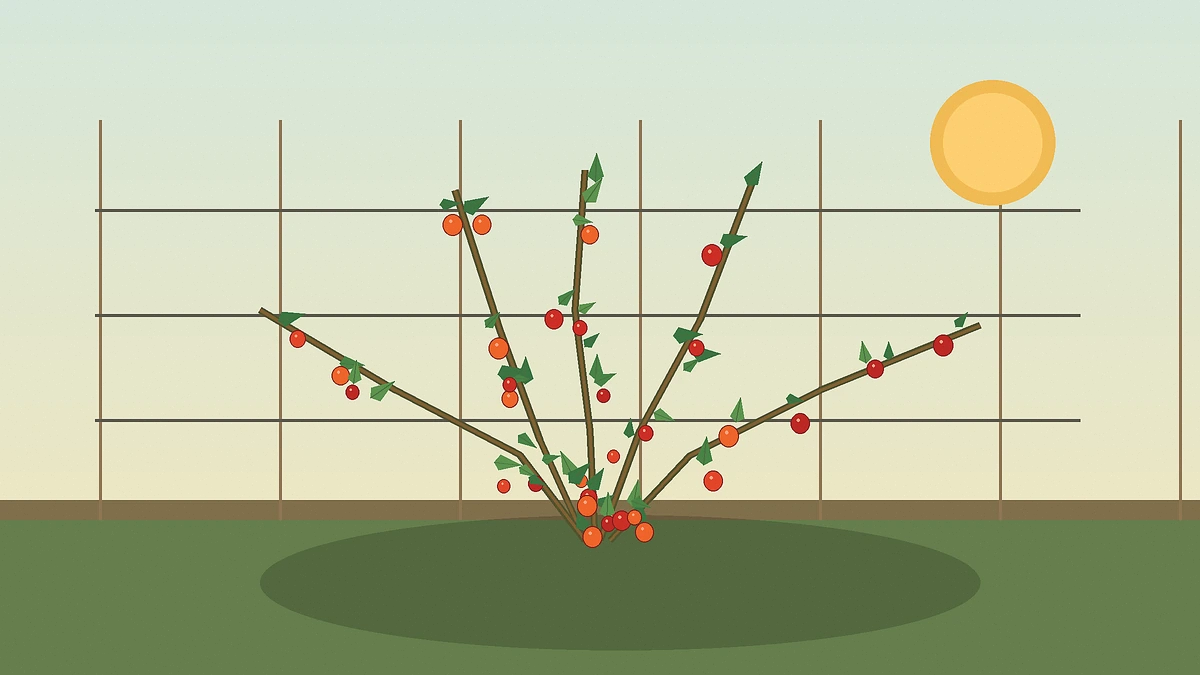
Goji, usually sold as Lycium barbarum, is a deciduous fruiting shrub that can reach 2-3 m and spread farther through root suckers. A sunny, free-draining position and accessible wires make its long stems easier to train and its red berries easier to pick when fully ripe.
Allow for a large shrub and wandering suckers
A young goji can look modest, but an established plant is not a compact berry bush. Its arching stems commonly grow 2-3 m high, while shoots arising from the roots can take it beyond the space first allotted.
Full sun, free-draining soil and a wire support provide the clearest route to fully ripe goji berries. Choose soil that drains freely, leave room to reach the base, and install a support before the stems become tangled. A large container can restrain the roots, but then drainage and summer watering need closer attention.
- Choose an open, sunny site rather than shade beneath established trees.
- Keep a clear edge around the crown so new suckers can be spotted.
- Install wires or another support before the stems become tangled.
Plant, water and train the framework
Plant at the same depth as the root ball and water regularly through the first growing season, while avoiding a saturated root zone. Goji is self-pollinating, but root suckers can spread after establishment and birds may take exposed ripe fruit. Plants raised from cuttings give more predictable fruiting than variable seed-grown plants.
Tie the strongest stems loosely to horizontal wires or a trellis. An open framework keeps fruit within reach and makes aphids or powdery mildew easier to notice. Check ties as stems thicken so they do not cut into the bark.
- Water a newly planted shrub during dry periods in its first season.
- Guide long shoots onto support rather than shortening every stem.
- Remove suckers that appear beyond the intended area.
- Keep the centre open enough to inspect leaves and ripening fruit.
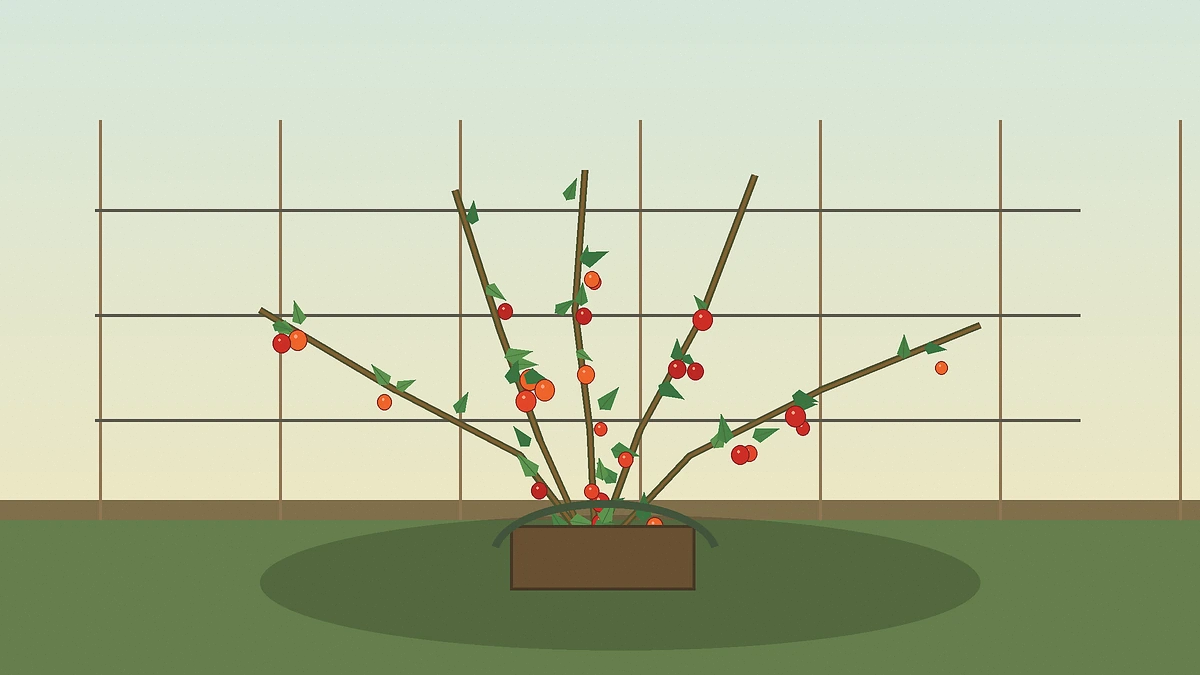
From purple flowers to fully ripe berries
Small purple flowers appear in summer and can be followed by red berries from late summer into autumn. A plant may take two or three years to produce a worthwhile harvest, so slow early progress is not by itself a reason to replace it.
Pick only berries that are fully coloured and ripe. Lift the delicate fruit gently, leave pale or firm berries to continue ripening, and discard damaged or mouldy fruit.
A yearly cycle for suckers, ripe berries and winter pruning
- Spring: remove dead wood and renew mulch without covering the stem.
- Early summer: tie in vigorous shoots and inspect soft growth for aphids.
- Late summer and autumn: pick fully ripe red berries as they become ready.
- Dormant season: thin congested stems and remove unwanted root suckers.
Prune for access rather than a rigid shape
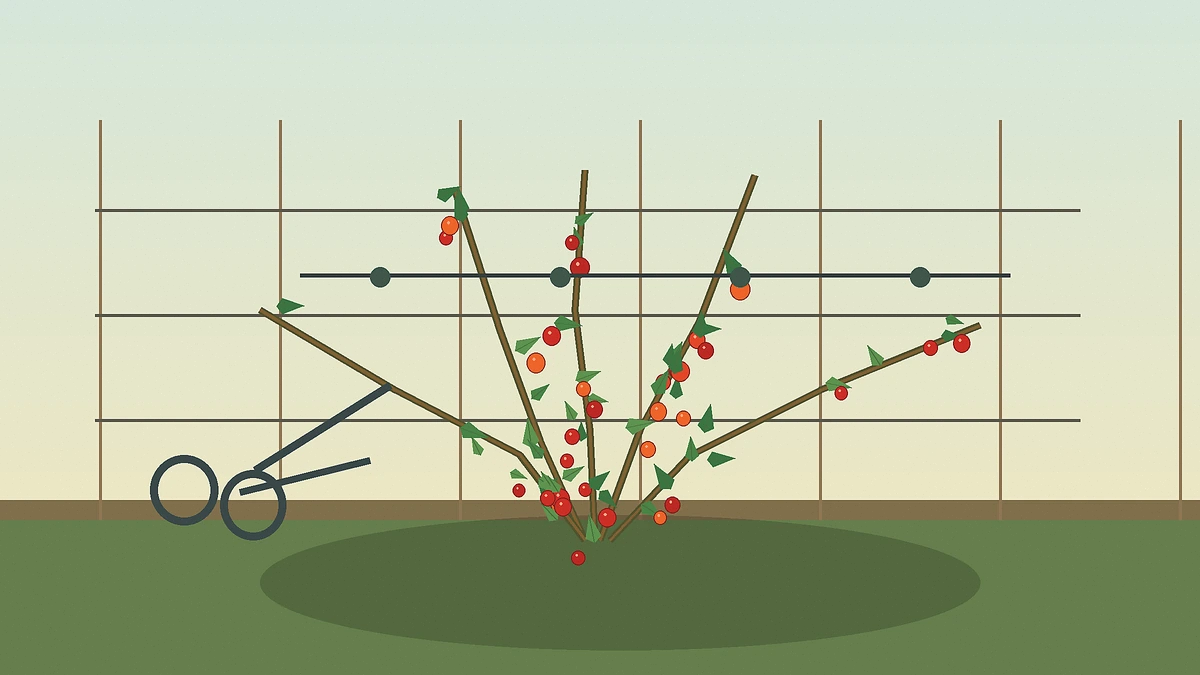
Winter pruning is mainly about keeping the plant manageable. Remove dead, damaged and crossing stems first, then thin older growth while preserving a reachable framework. Severe annual cutting can exchange potential flowers and fruit for leafy shoots.
During growth, tie in stems that belong to the framework and remove those obstructing paths. If the shrub becomes too wide, tackle root suckers at ground level instead of clipping only the top.
- Use clean secateurs and cut back to a healthy branch or the base.
- Preserve well-positioned young stems to replace ageing wood.
- Recheck supports before new growth hides loose ties.
Problems, harvest hygiene and food use
Few berries on a young shrub may simply reflect its age. On an established plant, heavy shade, tangled growth or excessive pruning deserves attention before extra fertiliser is added. Aphids and powdery mildew are easier to address when stems are trained openly.
Treat goji as food rather than medicine. Wash sound, ripe berries under running water. A published case report described bleeding and a raised INR in a person taking warfarin after drinking goji berry wine. A single case cannot establish the risk from ordinary food portions, but anyone taking warfarin should discuss goji foods, drinks or supplements with the clinician managing their treatment before using them regularly.
- Planting beside a boundary where spreading suckers cannot be controlled.
- Harvesting partly coloured berries merely because autumn has arrived.
- Keeping a container-grown shrub in waterlogged compost.
- Treating health claims as a reason to ignore possible medicine interactions.
Goji berries: the next practical step
Before buying or moving a goji, measure the available width, choose between open ground and a large free-draining container, and decide how the support and winter-pruning route will remain reachable.
- Check the crown for new suckers each month during active growth.
- Keep ties loose and replace any that begin to constrict stems.
- Leave unripe fruit on the plant instead of harvesting by date.
FAQ about Goji berries
How much room does a goji shrub need?
Allow for a plant around 2-3 m high and additional spread from root suckers. A support and reachable space around the crown make control easier.
When should goji berries be picked?
Pick berries only when they are fully coloured and ripe, usually from late summer into autumn. Handle them gently because the skin is delicate.
Why has my young goji not produced many berries?
A worthwhile crop may take two or three years. On older plants, also check sunlight, overcrowding and whether hard pruning removed productive growth.
Can goji be grown in a container?
Yes, a large container can restrain root spread, but it must drain freely, resist toppling and receive regular water during warm weather.
How can I keep goji root suckers under control?
Keep the ground around the crown accessible and remove unwanted suckers at ground level while they are young. A large, free-draining container can limit root spread where open-ground expansion would be difficult to manage.
When is the best time to prune goji?
Use the dormant season to remove dead, crossing and congested stems while preserving a reachable framework of healthy wood.