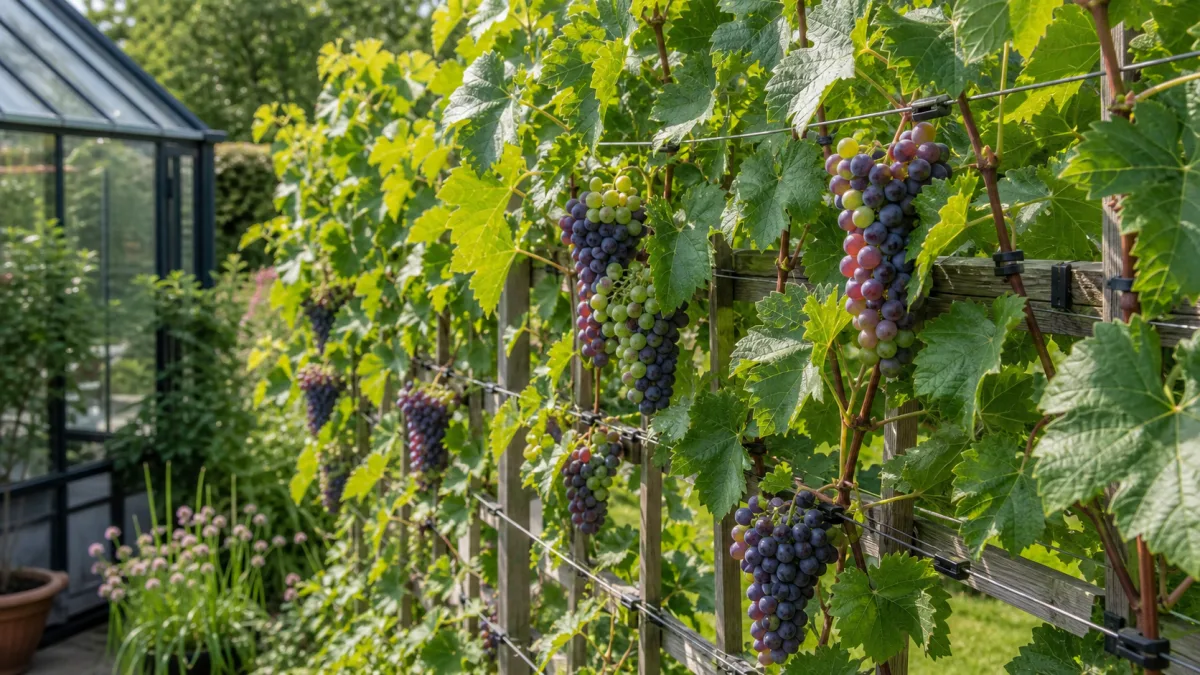
The decisive grape question is not whether a vine can grow, but whether a named cultivar can ripen worthwhile fruit in your warmest available position. Winter tolerance, time from budbreak to harvest and disease pressure are separate filters. Once a cultivar passes them, give it a sunny, sheltered site and a permanent wire, pergola or wall framework before planting. That structure is not decoration: it determines which wood remains at dormant pruning, where clusters receive light and whether you can reach the fruit to taste it before harvest.
Growing grapes: separate winter survival from fruit ripening
A hardy vine is not automatically an early vine. In a short or cool season, a late cultivar may make vigorous leaves and live through winter while the berries remain sharp. Ask a specialist nursery for the cultivar's ripening window and cold response in conditions comparable with yours, then compare that with the warm period at the proposed site.
Fruit purpose matters too. A seeded slip-skin grape for juice is not a failed version of a thin-skinned seedless table grape; they are different eating and processing experiences. Taste locally grown examples where possible, and decide whether the crop is for fresh eating, cooking, juice or another use before buying a name from a photograph.
Many table grape cultivars are self-fertile, so one vine may be enough for fruit, but verify the label. A second plant should earn its space through a documented compatibility need, a different flavour or an earlier or later harvest—not through a blanket two-vine rule.
- Check ripening season and winter response separately.
- Match fruit texture and flavour to its intended use.
- Confirm pollination information for the named cultivar.
Build the permanent framework before the roots settle
Choose the warmest sunny position that also has air movement and soil that drains freely. Shelter from cold wind can help warmth accumulate, but a sealed corner that stays humid can increase leaf and bunch problems. Avoid planting where roof runoff repeatedly saturates the base of the vine.
Install posts, wires or a pergola strong enough for years of woody growth before the vine is in the way. Keep fruiting zones within safe reach: a spectacular canopy above a roof is hard to prune, inspect and harvest. The exact wire heights and training pattern should follow the chosen system rather than a universal set of dimensions.
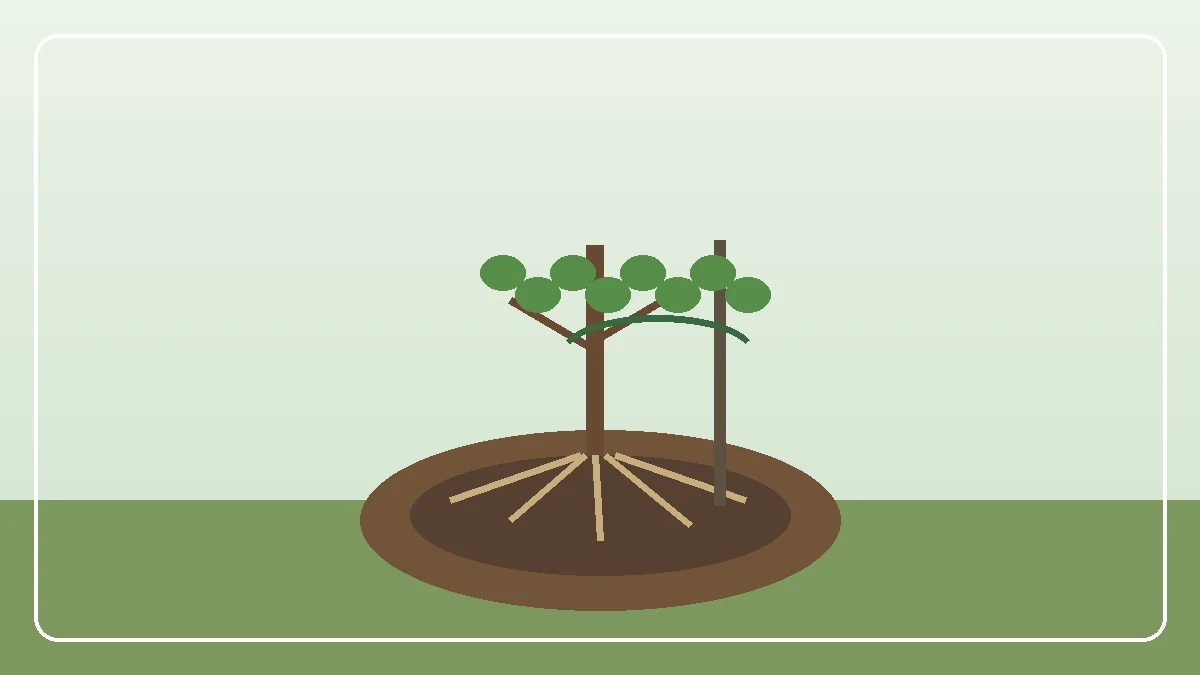
If the purchased vine is grafted, keep the graft union above the final soil level; verify it visually rather than assuming every grape is grafted. Spread the roots into the prepared soil, water the planting zone and guide one selected shoot towards the framework without burying the stem deeper than it grew in the nursery.
Train first, crop later
- Planting phase: establish a sound trunk and root system, tie soft growth loosely and remove competing shoots only when the intended training system makes the choice clear.
- Framework phase: extend permanent arms or select future fruiting canes; a young vine's job is to occupy the support, not carry every cluster it can set.
- Mature dormant pruning: remove the previous season's excess growth and retain the correct number and position of canes or spurs for this cultivar and system.
- Ripening phase: expose clusters without stripping the vine bare, protect fruit responsibly where needed and taste berries at the tip before choosing a harvest day.
Prune according to where fruitful buds occur
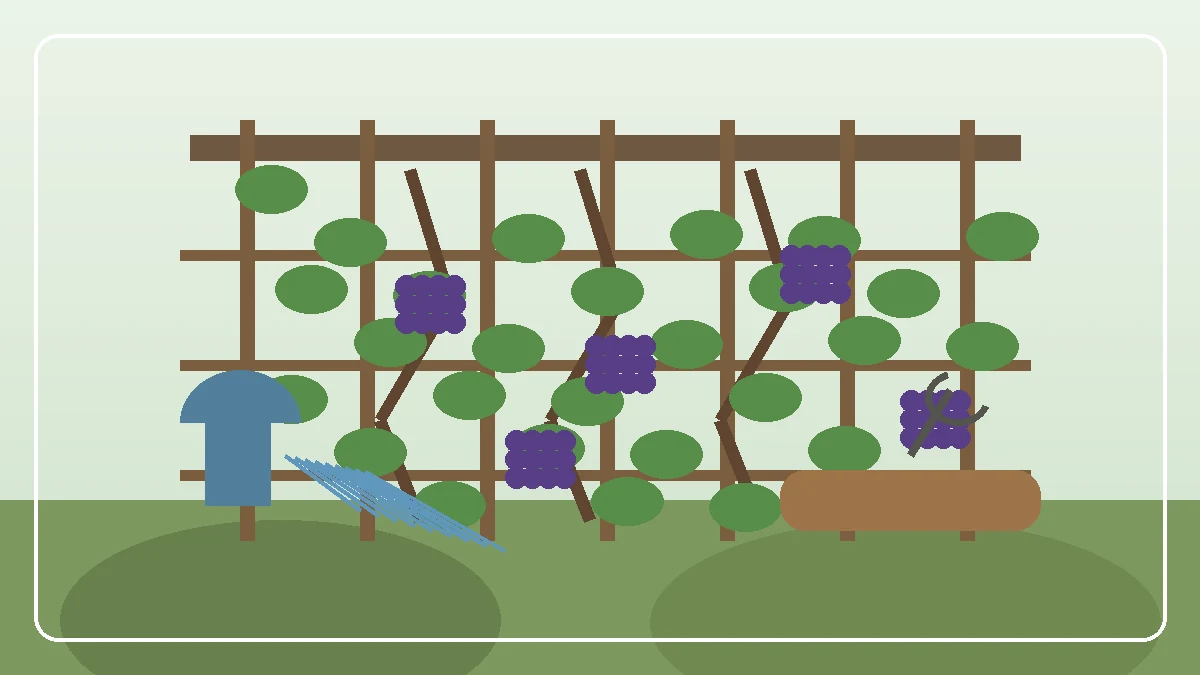
Grapes bear on new shoots that arise from one-year-old wood, but cultivars differ in how fruitful the buds near the base of a cane are. Spur pruning retains short sections of that wood; cane pruning keeps selected longer canes. If basal buds are unproductive, cutting everything to short spurs can leave abundant shoots and little fruit.
Identify the training system and cultivar recommendation before making dormant cuts. Mark the permanent trunk and arms, select sound one-year-old wood, and remove the rest in stages so an accidental cut is noticed before the whole framework is lost. Annual pruning is deliberately substantial because an unmanaged vine puts growth beyond reach and shades its own fruit zone.
Summer work is lighter and purposeful: position shoots, remove only the growth that blocks access or creates dense shade, and preserve enough healthy leaf area to ripen the crop and mature next year's wood. Severe mid-season stripping is not a substitute for correct dormant pruning.
Questions about growing grapes
Do I need two grapevines for fruit?
Many table grapes are self-fertile, so one correctly chosen cultivar can crop. Confirm the cultivar label rather than treating that as a rule for every grape, and add another only for a specific pollination, flavour or season reason.
When are grapes ripe?
Taste berries from the tip of a cluster, which are often the last to ripen. Colour can help once you know a cultivar, but grapes do not reliably finish sweetening after harvest.
Should I cane-prune or spur-prune?
Use the method recommended for the cultivar and training system. Some grapes carry fruitful basal buds and suit spurs; others need longer canes, so a generic diagram can remove next year's crop.
Can I grow a vine in a cool climate?
Possibly, if an early cultivar receives enough warmth and sun to ripen. A vine may survive winter yet fail to mature sweet fruit, so cold tolerance and ripening season must be checked separately.
Let flavour, not a colour chart, call the harvest
Berry colour varies by cultivar and can change before sweetness and aroma are fully developed. Taste berries from the tip of the bunch, where ripening often lags, and repeat the check over several days. A ripe sample should have the flavour and acid balance expected for that cultivar, not merely the advertised skin colour.
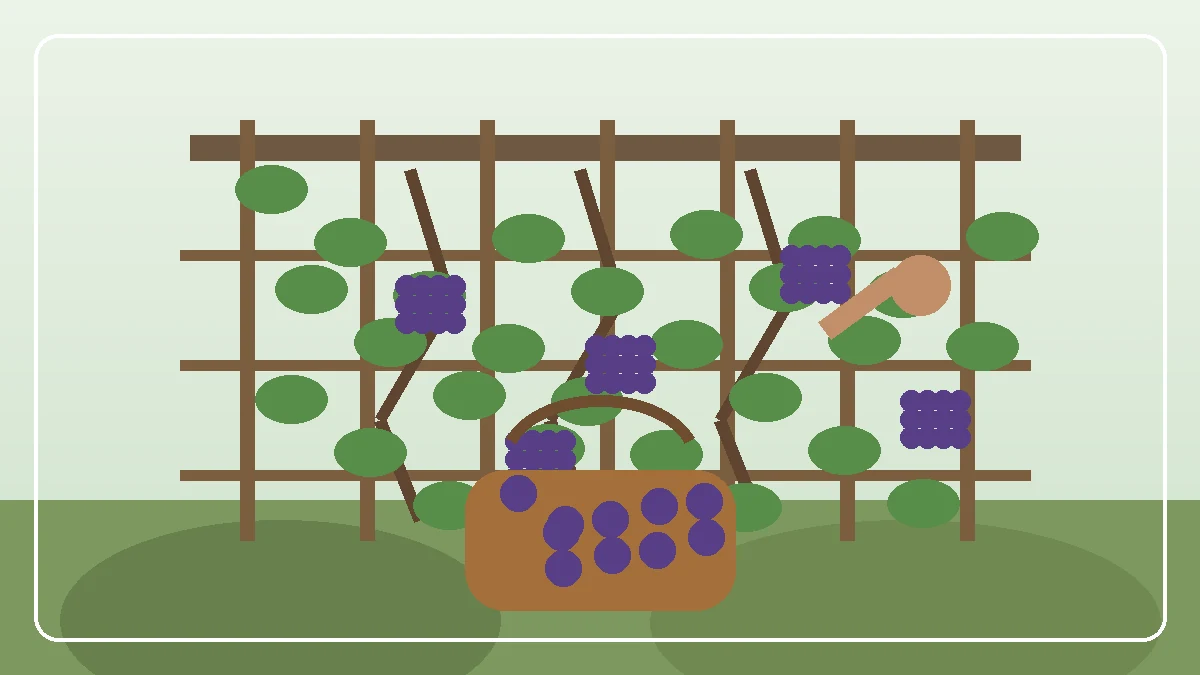
Harvest whole clusters with clean secateurs and handle them by the stem rather than rubbing the natural bloom from the berries. Remove damaged fruit, cool sound clusters promptly and remember that grapes do not improve meaningfully after picking. Leaving them indefinitely also carries costs: softening, cracking, birds, insects and bunch rot can overtake the last gain in sweetness.
Keep a simple record of budbreak, flowering, first colour, first acceptable taste, harvest and winter injury. After several seasons, those dates reveal whether the cultivar is a genuine fit or whether a warmer position, lighter crop, earlier-ripening cultivar or different pruning system would solve the problem more honestly than another generic feeding schedule.
Join cultivar choice to permanent wood and harvest flavour
Choose the sunny sheltered position first, install permanent support before planting and taste the fruit rather than harvesting by colour alone.
Because clusters form on new shoots from one-year-old wood, the training system must retain useful canes or spurs in known positions.
Let the cultivar determine pruning fit, then taste berries at the cluster tip because that part may lag behind the shoulder.