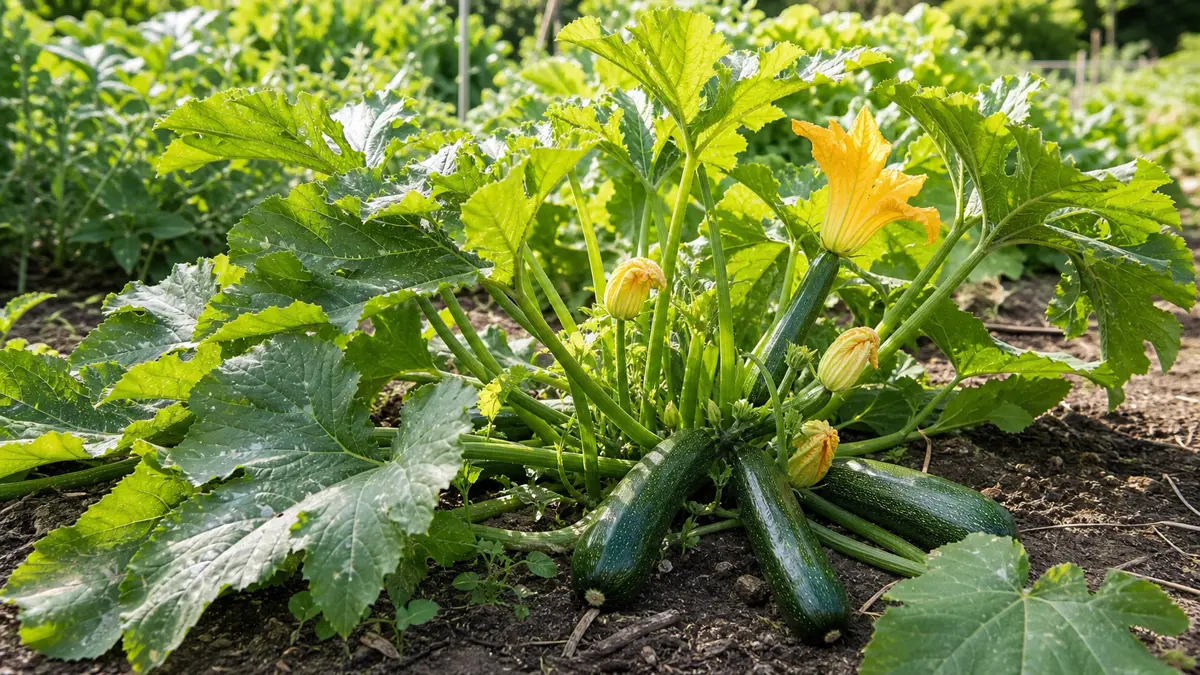
In warm weather, a zucchini can move from ideal size to oversized in only a few days. Check plants daily or every other day and harvest most long-fruited varieties at roughly 10–20 cm, allowing for cultivar and kitchen use.
Why regular picking matters
Zucchini is eaten as an immature summer squash. Once a fruit becomes very large, its skin hardens, its seeds develop and leaving it on the plant can reduce subsequent production.
Picking regularly encourages a longer cropping period, but it cannot guarantee a particular yield increase. Cultivar, warmth, pollination, moisture and plant health all affect the final harvest.
- Longer picking window
- Tender skin and less developed seed
- Fewer hidden marrows
The best size is not one fixed number
RHS guidance ranges from about 10–12.5 cm for small, tender courgettes to 15–20 cm for commonly grown cultivars. Round, pattypan and speciality types need different size cues, so check the seed packet too.
Look for glossy, unwrinkled skin and firm flesh. A dull, hard rind and a heavily swollen fruit usually indicate that eating quality has started to decline.
- Usually 10–20 cm for long types
- Glossy, firm skin
- Cultivar instructions checked
How to cut summer squash cleanly
Support the fruit and cut through the stem with a clean knife or secateurs, leaving a short stem attached. Pulling can tear the plant, especially on compact bush varieties.
Work when the foliage is dry where possible. Wet vines are easily damaged, and moving between wet plants can help spread disease.
- Clean cut through the stem
- Short stem left attached
- Dry foliage handled gently
Water, flowers and fruit set
Keep the root zone evenly moist and water the soil rather than the leaves. Mulch can slow evaporation, but leave a small gap around the crown.
Cool or wet weather can reduce pollinator activity, causing young fruit to yellow and stop growing. A female flower has a small fruit behind it; pollen from a freshly opened male flower can be transferred by hand in the morning if needed.
- Even root-zone moisture
- Open flowers accessible to insects
- Hand pollination only when useful
Build a harvest routine that fits the weather
During hot, settled weather, inspect plants every day or two. Growth slows in cooler spells, so two or three checks a week may then be enough.
Record the size that gives the best texture for your cultivar. A useful routine follows the plant in front of you rather than treating one measurement as universal.
- Daily checks in rapid growth
- Less frequent checks in cool weather
- A routine based on your cultivar
Common reasons the crop slows
Large leaves often hide fruit until it is overgrown. Lift them carefully at each inspection and remove oversized squash even if it is no longer suitable for your preferred recipe.
Extra fertiliser will not correct failed pollination. If flowering continues but fruit does not develop, check the weather, male and female flowers, moisture and plant health before feeding.
- Search beneath large leaves
- Do not default to high-nitrogen feed
- Discard any strongly bitter fruit
What to do with an oversized zucchini
An overgrown zucchini can still be useful if it tastes normal and has no decay. Peel a hard rind, split the fruit and scoop out coarse seeds before cooking.
The flesh works well in soup, chutney, stews or baking, although it may release more water than young fruit. Drain grated flesh when a recipe needs a drier mixture.
Do not leave a large fruit attached simply to store it outdoors. Remove it, assess it in the kitchen and allow the plant to continue developing younger fruit.
- Peel a hard rind
- Remove mature seeds
- Choose recipes that tolerate extra moisture
Handling and short-term storage
Place fruit gently in a basket because tender skin scratches easily. Leave it unwashed until shortly before use.
Keep summer squash cool, but do not expect it to store like a mature winter squash. Quality declines relatively quickly after picking.
Plan meals around frequent small harvests and use damaged or older fruit first.
- Prevent scratches
- Wash just before cooking
- Use the oldest fruit first
Frequently asked questions
What size zucchini should I harvest?
Most long-fruited types are tender at roughly 10–20 cm, but cultivar and intended use matter. Pick while the skin is glossy and easy to cut.
How often should I pick zucchini?
Check daily or every other day in warm weather. Two or three checks a week may be enough during cooler growth.
Why do tiny zucchini turn yellow and drop?
Incomplete pollination is common during cool or wet weather. Check for open male and female flowers and hand-pollinate in the morning if necessary.
Is a bitter zucchini safe to eat?
No. Stop tasting and discard the whole fruit if it is distinctly bitter; cooking does not remove the problematic compounds.