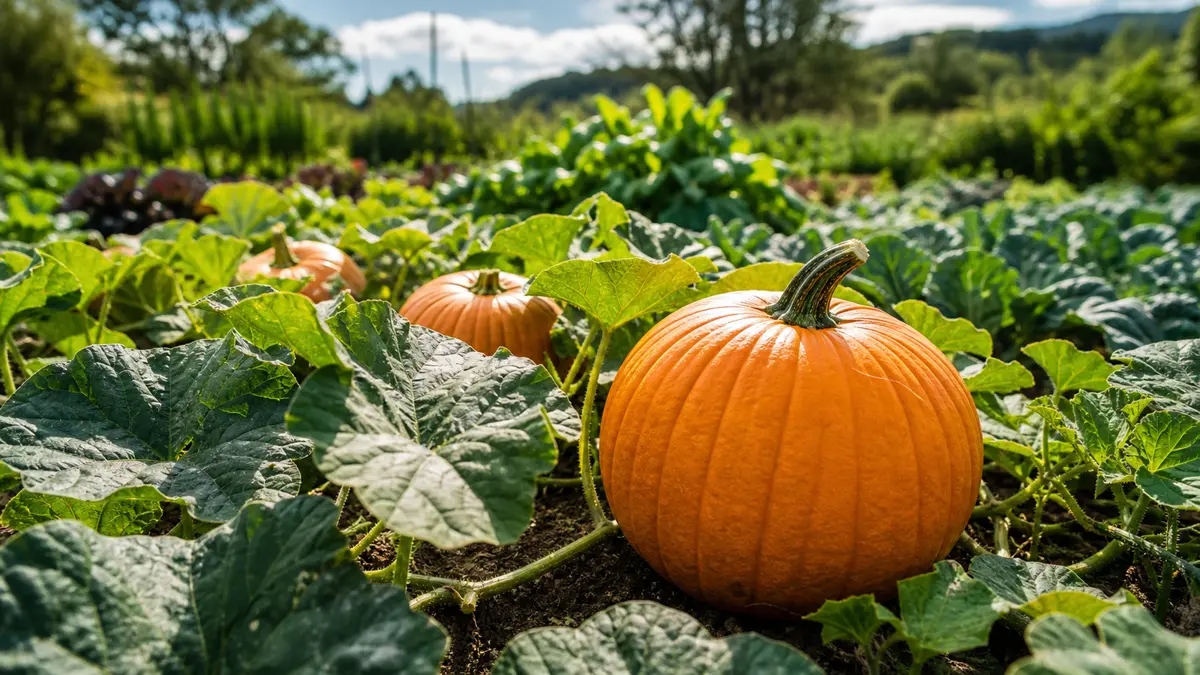
A pumpkin begins as one tender seedling but soon sends long vines beneath leaves 50-100 cm high. Give it a sunny, compost-enriched bed with reliable water and room to run, plant only after frost risk has passed, and leave enough autumn time for the skin to harden before storage.
One plant can occupy a surprising area
Pumpkins are warm-season cucurbits with broad leaves, yellow flowers and vigorous trailing stems. The fruit may sit near the crown or several metres away, so the useful measurement is the vine's future footprint rather than the width of the transplant.
Choose full sun and fertile, moisture-retentive soil improved with compost or other organic matter. Keep a path to the crown for watering and a route to every developing fruit; vines hidden behind shrubs are easily stepped on and fruit left in dense foliage is harder to inspect.
In a small plot, guide vines along a bed edge instead of across a main path. Do not assume a decorative arch will carry a heavy-fruited variety unless both the support and each fruit are securely supported.
- Warm, sunny ground that does not remain saturated.
- Space for long vines without blocking routine access.
- Water available at the root zone through flowering and fruit swelling.
Wait for genuinely warm planting conditions
Pumpkin seed struggles in cold soil, bees are needed for pollination, and mature fruit should be harvested before heavy frost. Sow under cover where the season is short, or direct-sow only once the soil is warm. Harden indoor-raised plants gradually, then transplant without breaking the root ball.
Set the plant into prepared soil and water it in. A mulch can conserve moisture after the soil has warmed, but keep it clear of the stem. Protect a newly planted seedling from cold wind rather than rushing it into unsuitable weather.
- Use soil warmth and frost risk, not a calendar date alone.
- Handle the root ball gently when transplanting.
- Water at soil level rather than repeatedly wetting the foliage.
- Mark the crown so it is not hidden once vines cross the bed.
Water, flowers and fruit set
Keep moisture reasonably even at the roots as vines expand and fruits swell. Irregular drought followed by heavy watering stresses the plant, while wet leaves and stagnant air favour disease. Feed only according to the product and soil need; rich leafy growth without flowers is not the goal.
The plant produces separate male and female flowers, and insects normally transfer pollen. A female flower has a small swelling behind it. If flowers appear but fruits repeatedly fail to enlarge, poor pollination during cold or wet weather may be involved.
From warm sowing conditions to curing before frost
- Late spring: plant out only after frost risk has passed and soil is warm.
- Early summer: direct vines away from paths and water around the crown.
- Midseason: watch female flowers and developing fruit for successful pollination.
- Autumn: harvest mature fruit before frost, leaving a sound stalk attached.
Protect developing pumpkins without fuss
Once a fruit enlarges, place it on a dry board, tile or similar barrier if it rests on persistently damp soil. Turn it only with great care: twisting the vine or stalk can end development. Continue watering the root area during dry spells while keeping the fruit itself dry.
Powdery mildew often appears as pale coating on older leaves later in the season. Preserve airflow, remove badly affected material and avoid overhead watering. Do not strip away healthy leaves that are still feeding the crop.
Harvest maturity and curing
Plant pumpkins after frost risk has passed, water at the root, and cure mature sound fruit before storage. At harvest, wait until the variety has reached its mature colour and the rind has hardened, but act before frost. Cut rather than tear the fruit, leaving a stalk attached, and carry it by supporting the base instead of using the stalk as a handle.
Cure sound pumpkins in a warm, dry, ventilated place so the skin can finish hardening, then move them to cool, dry storage. Check stored fruit regularly and use any with damage first; rot can spread unnoticed where fruits touch.
- Do not plant a tender seedling into cold soil to gain a few days.
- Do not lift a pumpkin by its stalk.
- Do not store fruit with soft spots or broken skin beside sound fruit.
- Do not eat a bitter pumpkin or ornamental gourd; cooking does not make cucurbitacins safe.
Compare sprawling pumpkins with crops that use less ground
Pumpkin works better when nearby choices do not compete for the same space, water, light, path or winter storage.
Compare nearby crop guides when they help you allocate vine space, water access or dry storage before planting.
FAQ about Pumpkin
How much space does a pumpkin plant need?
Allow for long trailing vines beyond the planting hole. Check the variety's spacing and guide vines where they will not block paths or smother smaller crops.
When can pumpkin seedlings go outdoors?
Harden them gradually and plant after frost danger has passed, when the soil is warm. Keep the root ball intact during transplanting.
Why do pumpkin flowers fall without making fruit?
The first flowers are often male. If female flowers with a swelling behind them also fail, cold or wet weather may have limited insect pollination.
How do I know a pumpkin is ready to store?
Harvest before frost when mature colour has developed and the rind is hard. Leave a sound stalk, cure the fruit warm and dry, then store it cool and ventilated.