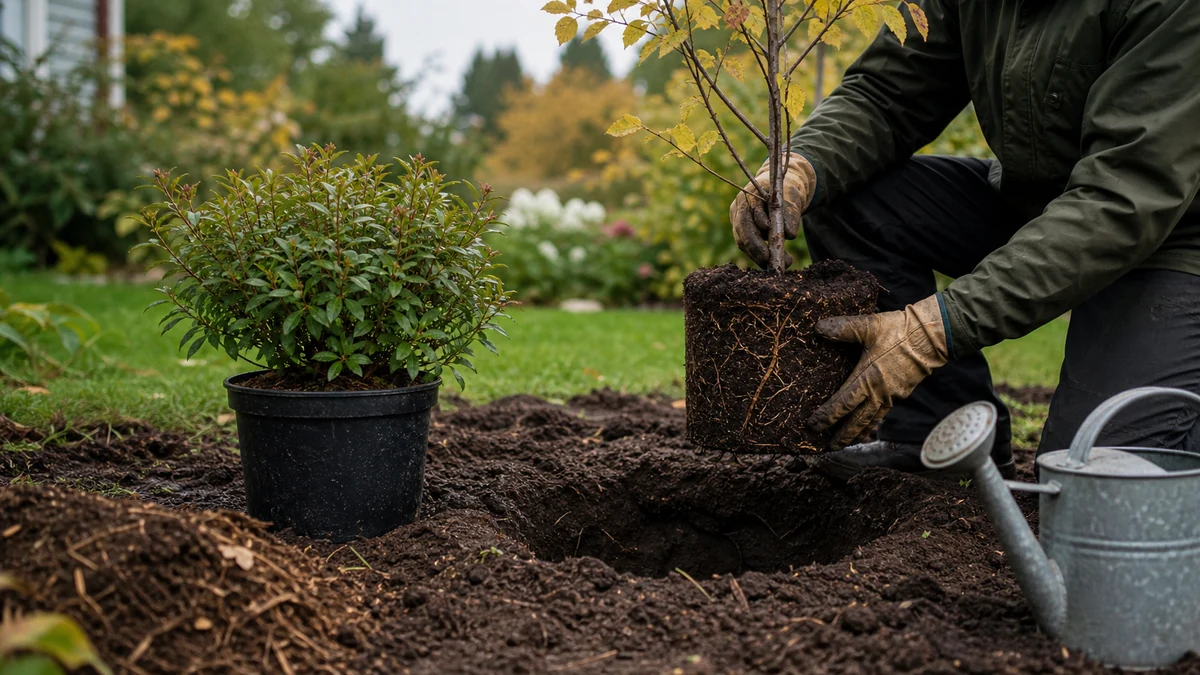
First check whether the shrub or tree is bare-root, balled or container-grown. Bare-root stock belongs in the dormant season; an intact rootball permits a wider window, provided the ground is workable and you can keep the rootball moist. Postpone the job when soil is frozen or saturated, during a spell of heat or drought, or whenever establishment watering cannot be maintained.
Start with root type, then test the soil
Plant deciduous shrubs and trees while they are dormant or close to dormancy when a spade leaves crumbly sides rather than shiny wet walls. That usually gives roots a cooler, less thirsty establishment window than a hot summer day.
Use spring planting where winters are severe, where the site is windy, or where the plant is marginal for the garden. Autumn planting works well in mild, well-drained ground, but it should not be pushed into cold, saturated soil.
Container-grown shrubs and trees give more flexibility because their rootball travels with them. Flexibility is not immunity: the rootball must be soaked before planting and checked afterwards.
- Plant in the dormant season when the plant is resting and the soil is neither frozen nor smeared wet.
- Choose spring planting for cold, exposed, heavy or uncertain sites.
- Choose autumn planting where the ground stays workable and roots have time before hard weather.
- Delay planting during heat, drought, waterlogged soil, frozen soil or any week without a watering routine.
Why dormancy can make establishment easier
During the dormant season, shoots and leaves demand less water, so a newly planted root system has less immediate pressure. Cooler air also gives the gardener more time to correct dry pockets around the rootball.
Autumn can be especially efficient when soil still holds warmth after summer and rain is moderate rather than constant. Stop when the planting hole stays glossy with standing water or when night frost is already locking the surface.
- Dormant season is a condition as much as a date: resting top growth, workable soil and realistic aftercare.
- Mild autumn weather helps only if drainage and rootball moisture are controlled.
- Bare-root plants belong in dormancy, while balled or container stock may have a wider window.
When spring leaves a better establishment margin
Spring planting gives a shrub or young tree a full growing season to make new root contact before its first winter in the garden. That margin matters on windy slopes, cold soils and sites where autumn turns wet quickly.
The trade-off is watering. A dry spring can empty a small rootball fast once leaves expand, so spring planting still needs inspection at the rootball rather than a glance at the soil surface.
What a container-grown rootball changes
Container-grown plants can be planted in the growing season because the roots remain inside a defined rootball. Before planting, water that rootball thoroughly; after planting, keep checking the original potting mix because it can dry faster than surrounding garden soil.
Mid-season planting is most sensible on an overcast day, in the evening, or before settled mild weather. If the forecast is hot and dry, keep the plant shaded in its container until you can plant and water without rushing.
Planting depth and soil contact still matter
A good month cannot rescue a buried stem or a polished hole in heavy soil. Find the root flare on a tree, or the top of the shrub rootball, and set it level with the surrounding ground.
Dig wide rather than deep, loosen the sides where soil has been smeared, backfill with the soil you removed, then water slowly to settle contact around the roots. Mulch the root area but keep mulch away from bark and stems.
- Set the rootball at the correct height before backfilling.
- Do not hide the root flare under extra soil.
- Avoid narrow sump-like holes in heavy ground.
- Water in after planting, then let excess water drain away.
Check moisture inside the original rootball
The first watering job is to wet the rootball, not to make the whole bed look damp. Rain can wet mulch and the top few centimetres while the original rootball remains dry inside.
Water slowly, then check with a finger or small trowel close to the rootball. If soil smells sour, stays flooded or leaves hang despite wet ground, stop adding water and check drainage before the roots lose oxygen.
- Soak the rootball before planting.
- Build a watering routine around actual moisture checks.
- Mulch to reduce evaporation without burying bark.
- Reduce frequency only when new roots are clearly using the surrounding soil.
Exceptions for evergreens, bare-root stock and heavy soil
Broadleaf evergreens deserve extra caution because leaves can continue losing water when cold soil limits uptake. In exposed gardens, plant them in spring or early enough in autumn for roots to settle before winter wind.
Bare-root shrubs and trees are handled during dormancy and should be planted soon after they arrive. Heavy clay or compacted soil changes the decision: wait until it crumbles rather than smears, and do not turn a planting hole into a water bucket.
Let the limiting condition decide
Choose the window that makes establishment easiest to manage. Dormant-season planting reduces water stress, spring planting buys time before winter, autumn planting works in mild drained soil, and container-grown stock can be planted in season when the watering routine is real.
If one condition is wrong, let that condition decide. Frozen soil, waterlogged soil, heat, a dry rootball or an unattended week are stronger signals than the name of the month.
Questions about planting windows and root establishment
Is autumn better than spring for planting shrubs and trees?
Autumn can be easier in mild, drained soil because the plant uses less water, but spring is safer in cold, exposed or wet sites. The right answer depends on soil condition, plant type and follow-up.
Can I plant container-grown shrubs in summer?
Yes, if the rootball is fully wet, the weather is not hot and dry, and you can check moisture closely afterwards. Without that routine, summer planting is risky.
Should I plant when the soil is frozen?
No. Frozen soil prevents good root contact and makes correct planting depth difficult. Wait until the soil is workable.
Is waterlogged soil a reason to wait?
Yes. Waterlogged soil can remove oxygen from the root zone and leave a new planting sitting in a wet pocket.
Do broadleaf evergreens need different timing?
Often, yes. Broadleaf evergreens can lose water through leaves in winter, so they need enough root establishment before cold wind and frozen ground.
What matters more: the month or the planting conditions?
Root type, workable soil and reliable watering are more useful checks than a calendar date on its own. Correct planting depth and rootball moisture still need attention.
Plant when roots and aftercare can both succeed
Plant trees and shrubs when soil is workable and aftercare is realistic, keeping the root flare visible, the hole broad rather than deep and the first seasons of watering tied to actual moisture.