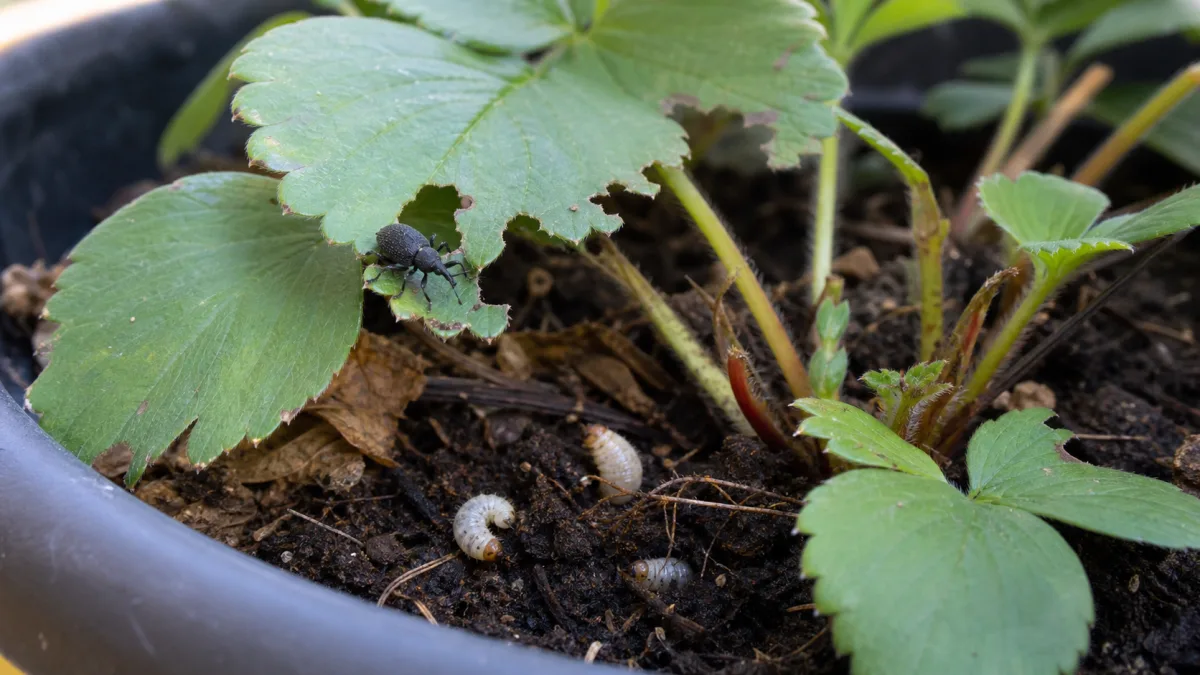
Vine weevils can leave a plant wilting despite moist compost because their grubs have eaten much of its root system. Leaf notches are a useful warning, but the decisive check is in the root ball, especially for container plants, strawberries and heuchera.
How to find and control vine weevils: recognise adult and larval damage
Adult vine weevils leave rounded notches along leaf margins and often feed after dark. The cream-coloured, legless grubs live around roots and can cause sudden wilting or a loose crown.
Root injury is the serious stage. Tip a suspect container carefully and examine the outer compost for curved grubs with brown heads before blaming drought or disease.
Inspect notched leaves at dusk, but do not stop there: larvae can damage roots while foliage still looks tidy. Tip a suspect container from its pot, examine the root ball and compost edge, then deal with the finding before moving the plant or reusing the material elsewhere. Record the plant, container and damage pattern so that a later check answers whether the treatment worked.
A clean result is not proved by one untouched leaf. Check the same pot or border again after the next period of active growth, compare fresh notches with the earlier damage and inspect the root zone where larvae were found. That follow-up separates old feeding marks from a continuing problem and avoids repeating treatments where they are no longer needed.
- Scalloped leaf margins
- Night-feeding dark adults
- Cream grubs and damaged roots
Which plants need closer inspection
Container plants are vulnerable because their roots cannot escape damage. Strawberries, heuchera, rhododendron and yew also deserve attention when notched leaves or unexplained decline appear.
Inspect before choosing a treatment
Search foliage with a torch at night and collect adults by hand. If a plant is failing, inspect its root ball and isolate infested compost so that larvae are not carried into clean pots.
- Inspect foliage after dark
- Check failing root balls
- Separate infested compost
Follow the pest through the seasons
- Spring: inspect weak plants and roots for overwintered grubs.
- Summer: look for fresh leaf notches and collect adults at night.
- Late summer: prevent eggs and larvae moving in containers.
- Autumn to winter: monitor root health in protected pots.
Protect pots and new purchases
Examine bought plants before placing them among an established collection. Clean used containers and replace suspect compost rather than mixing it into new potting material.
Common vine weevil mistakes
Watering a root-damaged plant more heavily can worsen decline. Moving an unchecked root ball also spreads the hidden larval stage to another container or bed.
- Do not assume every wilted pot is dry
- Do not reuse compost containing larvae
Using nematodes responsibly
Nematodes can suppress grubs when the product, soil temperature and moisture are suitable. Apply only according to the current label and keep cultural measures in place. Record which containers were treated, then recheck their root balls and fresh leaf growth rather than judging the result from old notches that cannot disappear. Keep untreated and suspect pots separate until repeated inspection shows no new adults or larvae.
Evidence behind the guidance
The identification and management advice for Vine weevils is based on the listed horticultural and integrated pest-management sources. Product approvals and biological-control conditions must still be checked locally.
Questions about Vine weevils
What does vine weevil damage look like?
Adults cut rounded notches from leaf edges. Grubs eat roots, causing poor growth, wilting and sometimes the sudden collapse of a container plant.
Where should I look for the grubs?
Slide a declining plant from its pot and inspect compost around the roots. The grubs are pale, curved and legless with a brown head.
Can vine weevils be controlled by hand?
Adults can be collected at night, and badly infested compost can be isolated or replaced. Hand control is most useful when combined with repeated inspection.
When are nematodes appropriate?
Use a product labelled for vine weevil grubs only when soil temperature and moisture match its instructions. Timing varies, so follow the current label rather than a fixed calendar date.