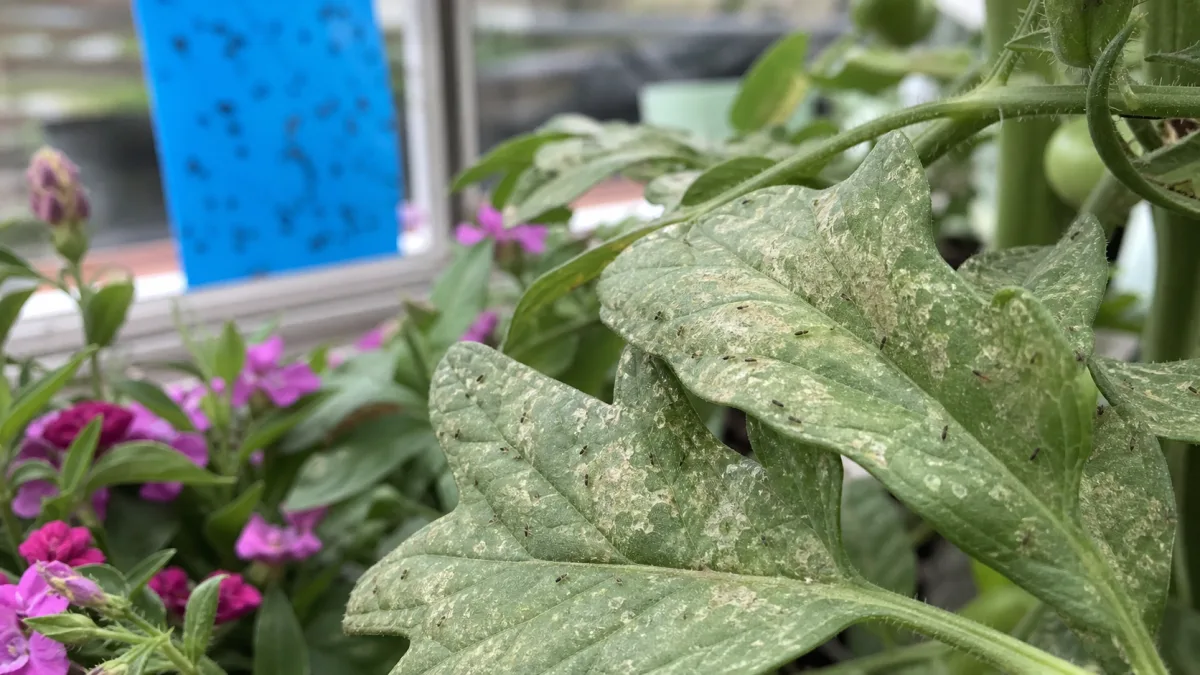
Thrips are slender insects that rasp cells on garden and greenhouse plants, leaving pale silvered patches, tiny black droppings and scarred or distorted flowers. Those symptoms overlap with mites, abrasion and other stress. Tap a damaged flower over white paper, inspect moving specks with a hand lens and compare old marks with the newest leaves before isolating or treating the plant.
Find the feeding front, not the oldest scar
Old silvering never turns green again, so it cannot show whether a response worked. Mark the newest damaged leaf or flower and inspect the next growth that unfolds. Fresh black specks, moving larvae and continuing distortion indicate current activity.
Thrips hide in buds, folded leaves and the narrow spaces where petals meet. Check those sites before declaring a plant clear merely because the upper leaf surface looks empty.
- Tap flowers and shoot tips over plain white paper.
- Use a hand lens to distinguish moving insects from dust.
- Photograph one marked shoot every few days under similar light.
Quarantine without spreading the inspection
Move an affected pot away from clean plants if it can be carried without brushing through them. Bag removed flowers and badly infested soft growth at the plant; do not walk loose debris across the greenhouse or windowsill.
Inspect neighbouring plants in the direction of touching leaves and routine handling. A distant plant with no shared contact needs observation, not automatic disposal.
Use sticky cards as a trend, not a cure
A card can reveal flying adults and show whether activity is rising, but it misses eggs in tissue and many larvae feeding inside flowers. Hang cards where foliage does not stick to them, date each one and compare counts over equal intervals.
Card colour and placement affect catches, so do not compare a blue card near a door with a yellow card deep inside a canopy as if they were one experiment.
Interrupt repeated generations
Warm protected spaces can support rapid development. Repeat inspection after removing damaged flowers because unseen stages may emerge later. Clean benches and pots, control weeds that touch the crop and avoid moving cuttings from an affected plant until new growth remains clean.
A shower or careful wipe can reduce exposed insects on robust foliage, but protect the potting mix from saturation and test delicate leaves first.
Choose controls by crop, life stage and label
Biological controls and pesticides differ in crop approval, temperature range and the thrips stage they affect. Check the current product label or local official register rather than copying a recommendation from another country.
If beneficial insects are already present, an incompatible spray can remove them while leaving hidden thrips stages. Record what was applied and evaluate the next leaves before repeating it.
A two-week thrips evidence log
- Day 0: isolate the plant, mark fresh damage and tap two comparable shoots over white paper.
- Day 3 or 4: inspect unfolding leaves and flowers, then remove only tissue that acts as a dense reservoir.
- Day 7: compare equal sticky-card intervals and repeat the same tap test at the marked sites.
- Day 14: judge clean new growth and living insects together before ending quarantine or changing the control plan.
Practical questions about Thrips
Can thrips fly between houseplants?
Adults can move between nearby plants, and routine handling can also transfer them. Separate touching canopies and inspect the plants you handled after the affected one.
Are black dots enough to identify thrips?
No. Black frass supports the diagnosis when it occurs with characteristic silvering and living insects, but dirt and other pests can leave dark specks too.
Why did damage continue after I removed the flowers?
Eggs or larvae may remain in other tissue, and old scars remain visible. Check the next leaves for new injury and continue the same monitoring method before assuming failure.
When can an isolated plant return?
Return it only after repeated inspections find no living thrips and successive new leaves or flowers open without fresh scarring. One clean glance is too short a test for hidden stages.
Release the plant on new growth, not hope
End quarantine when the monitoring record shows clean new tissue and no living thrips across repeated checks. If either signal remains uncertain, keep the plant separate and continue the same measured inspection.
Require fresh damage and living insects to tell one story
Silvered leaf tissue plus tiny black frass spots and distorted petals makes thrips damage plausible, but living insects still need confirmation.
Tap a scarred flower or shoot over white paper and use magnification to look for living thrips before selecting a response.
Use a hand lens to inspect new transplants, then repeat the thrips check because generations turn over quickly in warm conditions.