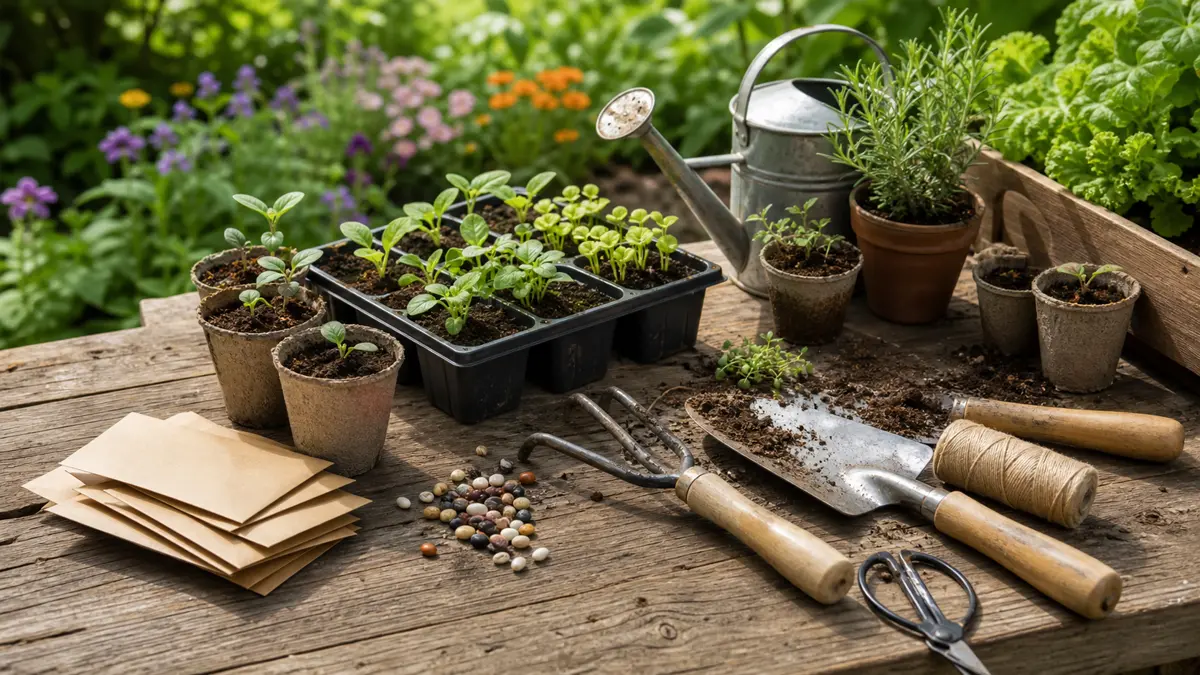
Buying seeds online expands the choice beyond a local display, but a long catalogue can hide the practical question: can you identify, receive, store and sow this exact variety at the right time? Check the full cultivar name, crop type, packet quantity, sowing guidance and seller's delivery information before paying. Then work backwards from the planting space and likely transplant date so early arrivals do not sit warm and damp, while late arrivals do not miss their useful sowing window.
Start with the cultivar and packet, not the photograph
Before ordering, verify the cultivar identity, packet information and intended growing space rather than relying on the photograph. Similar common names can cover different species or cultivars. Record whether the variety is an annual, perennial or vegetable crop and the traits that matter to its destination. For vegetables, that might include growth habit or harvest type; for flowers, height and life cycle may determine whether the packet belongs in a border, container or cutting patch.
Read the listing for packet quantity and sowing information rather than comparing packet price alone. A small garden may not benefit from the largest count, while a succession crop may need enough seed for several sowings. Check whether the seller describes packing, dispatch and substitutions, and understand the return or problem-reporting route before ordering perishable living material.
Build a short order list around actual sowing capacity. Indoor seed raising requires trays, suitable growing medium, adequate light and time for hardening plants before transplanting. Direct-sown crops need prepared ground at the correct point in the season. If several packets all demand the same limited windowsill space, postpone the lower-priority choices.
- supplier, quality signs, delivery time and the place of use.
- variety, size, packing, returns and seasonal guidance.
- what is delivered, when it ships, how it is packed and how it should be stored, with Seeds online checked against its own maintenance route..
Check sowing dates against your available space
Translate each attractive listing into a destination: a measured bed, a container, a greenhouse row or a specific indoor tray. Confirm that the mature crop and its sowing method fit that destination. This prevents an order from becoming a collection of packets with no prepared place to grow.
Work backwards from the expected outdoor conditions. Seeds started indoors need enough light, a realistic period of care and gradual hardening before transplanting. Seed intended for direct sowing should arrive before its useful window, but not so early that avoidable months of poor storage are added. Delivery estimates are therefore part of crop planning, not merely customer-service detail.
- Record the exact cultivar and intended growing space before adding it to the basket.
- Check packet quantity, sowing method and useful seasonal window.
- Allow for dispatch time, indoor light and hardening where seedlings are started inside.
- Prepare a cool, dry, labelled place for packets that will not be sown immediately.
Order early enough to test uncertain packets
On arrival, compare the packet with the order. Check the crop and cultivar name, quantity or weight where stated, and any sowing or storage directions. Photograph damaged packaging before opening it and contact the seller promptly if the identity is wrong or the contents have been compromised.
Keep seed cool, dry and clearly labelled until sowing, following packet guidance where it is more specific. Do not leave packets in a humid greenhouse or an unlabelled open envelope. Group them by sowing period and write the arrival year on any packet that does not make age obvious; this turns storage into a usable sowing queue.
From delivery to the final sowing date
- Cultivar, age and sowing.
- Supplier, quality signs, delivery time and the place of use.
- Variety, size, packing, returns and seasonal guidance.
- What is delivered, when it ships, how it is packed and how it should be stored, with Seeds online checked against its own maintenance route..
Store each packet cool, dry and clearly labelled
Keep seed in suitable storage and use a labelled germination test to assess older packets before sowing. Older seed is not automatically useless, but uncertainty should be resolved before valuable tray space is committed. The test can show whether enough seed still sprouts to justify normal sowing or whether the rate must be treated cautiously; label it with variety and date so the result is not confused with another packet.
When germination is disappointing, separate possible causes. Seed age and storage matter, but sowing depth, moisture, temperature and light requirements can also affect emergence. Check the packet instructions and the conditions you provided before assuming the seller supplied poor seed or compensating with excessive water.
Ordering errors that waste a growing season
The common failure is ordering from the photograph and solving identity, timing and space only after delivery. A five-minute packet plan prevents more waste than adding another variety to the basket.
- Ordering from a photograph without confirming species and cultivar identity.
- Buying more varieties than the available beds, containers or indoor trays can hold.
- Ignoring delivery estimates until a useful sowing window has passed.
- Leaving opened or older packets warm, damp or unlabelled.
Compare seed offers by usable information
Compare two listings using the information that changes the growing plan: exact variety, packet amount, sowing method, seasonal timing and delivery estimate. Decorative packaging and a broad promise such as ‘easy to grow’ do not replace those details.
Use crop-specific guides after the shortlist is credible. A tomato-starting guide can clarify indoor light and hardening; a direct-sowing guide can help prepare a bed. Related reading is valuable when it answers a decision raised by the chosen seed, not when it encourages another unrelated purchase.
FAQ about Seeds online
What details should a seed listing give me?
Confirm the exact cultivar, packet amount, sowing method and timing. Then check dispatch, storage instructions and whether the crop fits your available space and equipment.
How early should I order seeds?
Order early enough for delivery, but work backwards from a realistic sowing date. Indoor starts also need adequate light, tray space and time for hardening before transplanting.
Where should unopened seed packets be kept?
Warm, humid or unlabelled storage can undermine a carefully chosen packet. Keep seed cool, dry and identified, following any more specific packet directions.
Is an older packet still worth sowing?
A small germination test can reduce uncertainty before old seed occupies a full tray or bed. Record the variety, date and result.
Turn the order confirmation into a sowing record
Save the order confirmation until every packet has been checked, then record cultivar, arrival year, intended sowing period and destination. Keep that record with germination-test results and brief notes from the season. Next year's order can then replace failures, retain successful varieties and avoid buying duplicates whose packets are still viable and correctly stored.