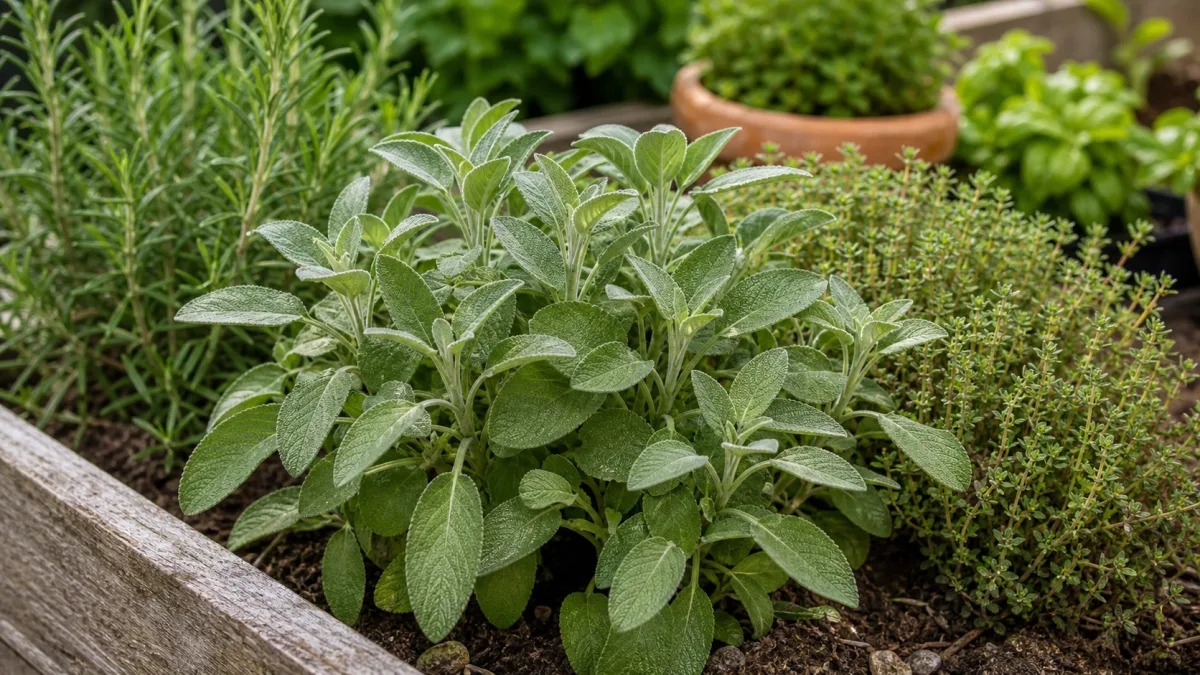
Salvia flowers best in sun, free-draining soil and an open position. Check the hardiness of the species or cultivar before planting, because some salvias overwinter outdoors while others need frost protection.
Salvia: What to expect
A plant labelled Salvia may be a hardy flowering perennial, a frost-tender seasonal plant or culinary sage. Confirming which one it is determines whether the main task is preserving flower spikes, harvesting leaves or arranging winter protection.
Colours: Blue, violet, pink, red or white. Height: About 30-90 cm.
- Type: Perennial or annual depending on species and variety (Salvia).
- Colours: Blue, violet, pink, red or white.
- Height: About 30-90 cm.
Salvia: Position and soil
Placement: Sun, free-draining soil and open position.
Salvia: When and how to plant
Planting or sowing: Plant after frost risk or plant hardy types in spring or early autumn.
Water pots, protect tender kinds and keep crowns airy
Flowering or harvest: Flowers from early summer to late summer depending on type.
Water a newly planted salvia until it is established, but do not keep the crown in saturated ground. On perennial flowering types, removing finished spikes can keep the plant tidy and may encourage further flowers. Culinary sage is harvested as leaves or short shoots instead; leave enough healthy growth for the plant to retain its shape and recover.
Salvia: Common problems to prevent
The label Salvia covers hardy perennials, annual bedding plants and culinary sage, so a flower colour is not enough to predict winter survival. Confirm the species or cultivar before autumn. A plant that dislikes frost needs protection, while a hardy border salvia can still fail if its crown sits in cold, waterlogged soil.
Identify the salvia before choosing its place
Start with the intended use. Salvia officinalis is grown for aromatic edible leaves as well as flowers; Salvia nemorosa is chosen for perennial flower spikes and pollinator activity. Other salvias may be treated as frost-tender seasonal plants. All can be sold under the same broad name, yet their harvesting, pruning and overwintering decisions are not interchangeable.
Height ranges from about 30 cm to 90 cm in this guide. Place a low culinary sage where leaves can be reached without brushing through taller plants. Give a taller ornamental salvia enough open space for its spikes and put it where blue, violet, pink, red or white flowers are not hidden behind an earlier-growing neighbour. Full sun and free-draining soil remain the shared starting points.
Hardy plants can go into workable soil in spring or early autumn, allowing roots to establish before difficult weather. Frost-tender types should remain protected until frost risk has passed. If the label does not identify the plant clearly, seek that information before assigning it a permanent border position; appearance during summer cannot establish hardiness.
Water according to root establishment and soil condition. A fresh transplant needs attention during dry weather, whereas an established sage in open soil should not be placed on the same frequent schedule as a thirsty container display. In a pot, check that surplus water exits freely. In a border, look for winter wet at the crown rather than assuming every setback is caused by cold alone.
For a long display, remove some spent flower spikes while other spikes are still serving pollinators. For culinary use, take modest harvests from vigorous growth and avoid stripping a small plant before winter. These two routines reflect different reader jobs, which is why the exact salvia matters more than a generic instruction to prune after flowering.
- Culinary sage: verify edible identity and plan repeated leaf harvests from healthy growth.
- Hardy ornamental salvia: provide sun, drainage and room for its mature flower-spike height.
- Frost-tender salvia: delay planting out and decide on protection before cold nights return.
Salvia: FAQ
Where should it grow?
Placement: Sun, free-draining soil and open position.
When should I plant it?
Planting or sowing: Plant after frost risk or plant hardy types in spring or early autumn.
What usually causes poor growth?
Avoid waterlogged soil around Salvia and do not plant out while local conditions remain too cold. Weak growth in Salvia often points to poor light, blocked drainage or weather-blind watering.
How do culinary sage and ornamental salvias differ?
Culinary sage is grown for its aromatic leaves, while ornamental salvias are chosen chiefly for flower display. Check the exact plant name before pruning hard, harvesting leaves or deciding whether winter protection is realistic.