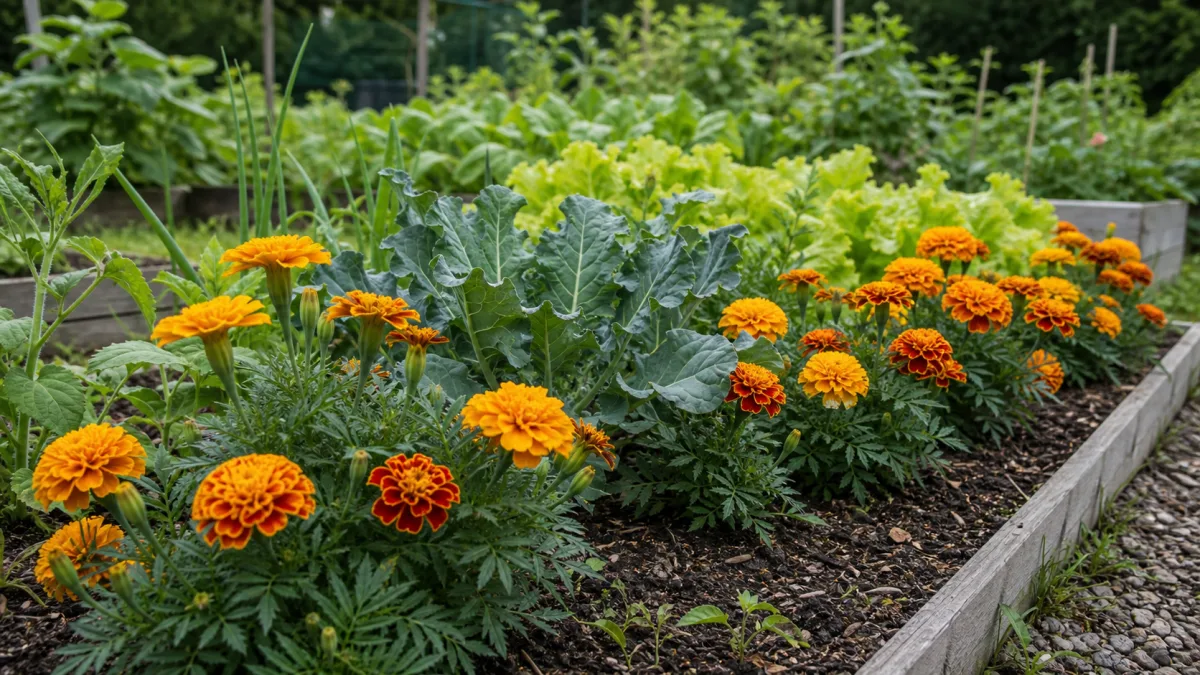
“Marigold” describes more than one garden shape. French marigold, Tagetes patula, is generally the compact edging or container choice; African marigold, T. erecta, builds a taller plant and asks for a different position. Flower color does not settle that distinction. Check the botanical line and cultivar height on the packet, then decide whether the plant belongs along a path, within a vegetable bed or farther back where its eventual frame will not hide smaller neighbors.
Choose a marigold by Tagetes type, not flower color: read the species line before choosing the edge
French marigold (Tagetes patula) is the more compact choice for edging and containers, subject to the cultivar named on the packet. Its position should still allow the stated spread and leave vegetables or path surfaces accessible. Even a compact cultivar needs gaps for weeding and inspection.
African marigold (Tagetes erecta) is the taller form, so its final position should be chosen from the cultivar height rather than the flower color. Put a physical marker at that height beside the proposed site. Check the view from the path and the light received by plants behind it.
- Record Tagetes species, cultivar and height range.
- Match compact forms to edges or pots with adequate spread.
- Place taller forms where their height will not conceal lower crops.
Raise sturdy transplants, not rushed stems
Follow packet depth, temperature and timing. Seedlings raised indoors need gradual hardening before they are moved into outdoor sun and wind. Begin with protected periods appropriate to local weather and increase exposure while watching the leaves and root-zone moisture.
Good indoor light matters because stretched seedlings are difficult to correct by planting them deeper without species guidance. If direct sowing is specified, prepare and label the row so the seedlings are distinguishable from weeds. A fixed month copied from another region can put seedlings outdoors too early or too late.
Move from label to established plant
Let development and local conditions trigger the work.
- Before sowing, write the species and cultivar height on a durable label.
- At transplant size, harden indoor-raised seedlings through graduated outdoor exposure.
- After planting, water the root zone and keep weeds from closing around the base.
- As the canopy fills, preserve access for inspection, spent-flower removal and diagnosing pest damage.
Keep the crown visible
Use the packet and reliable species guidance for light and spacing, then watch the real bed. Marigolds crowded against broad vegetable leaves can lose air movement and become hard to inspect. In a pot, leave enough surface to apply water to the mix rather than over the flowers.
Water according to root-zone moisture and weather, allowing drainage rather than maintaining permanently saturated soil. Remove broken or decaying material with clean tools. Feeding should follow the medium, soil information and product label; extra fertilizer is not a substitute for correct light or space.
Use the edge as a managed strip
The photographed raised-bed edge is a design option, not proof that marigolds protect the crop behind it. Keep a narrow working gap where vegetables must be harvested and where irrigation fittings need inspection. If the marigolds begin to cover small crops, thin or transplant them while they are still manageable.
Choose the plant because its size and display suit the bed. Research on companion planting varies with the exact pest, crop and arrangement, so a marigold edge should not be treated as a universal barrier. Use a specific, locally relevant recommendation rather than a catch-all promise.
Diagnose chewing before choosing a control
If leaves are chewed, look for slugs or snails and fresh feeding signs before choosing a control. Inspect at a time when the suspected pest is active, look for slime and hiding places, and distinguish holes from mechanical damage or another feeder.
Modify shelter, watering or access where those changes address the diagnosed problem, and use current local guidance for any further measure. Do not apply a pesticide merely because a marigold is damaged. Read the full label, protect non-target organisms and act only on the pest that has actually been identified.
Keep the edge usable through the season
An edging plant should continue to define an edge rather than bury it. Trim only with regard to healthy leaves and the cultivar's form, remove spent growth when useful and preserve enough canopy to support recovery. Taller plants may need selective support where wind catches their stems.
At the end of the growing period, compare the planned role with the result: Did the cultivar remain within the path? Did it shade a crop? Could pests and irrigation be inspected? Those notes will improve the next choice more than remembering color alone.
Marigold identity and placement questions
What is the difference between French and African marigolds?
French marigold is Tagetes patula and is generally the more compact edging or container type. African marigold is T. erecta and is generally taller. The cultivar label supplies the height and spread needed for the actual placement.
Can marigolds keep slugs out of a vegetable bed?
Do not rely on them as a universal barrier. Marigolds themselves can show chewing, and companion effects vary by pest and planting arrangement. Confirm the feeder from fresh signs, then use current local management guidance for that pest.
When should I move indoor seedlings outside?
Use the packet and local conditions, then harden seedlings gradually. Increase their exposure to outdoor light, wind and temperature over time, pausing during severe weather. A date from another region cannot make conditions safe.
Which marigold belongs at the front of a border?
Begin with the cultivar's stated height and spread. Compact T. patula selections commonly suit front edges, while taller T. erecta usually needs a position that will not obscure smaller plants. Confirm the named cultivar rather than judging by color.
Let species, transplant strength and actual damage guide the edge
Read Tagetes patula as the generally compact marigold choice for an edge or container, then check the cultivar height.
Place Tagetes erecta as the taller marigold form, using the named cultivar height rather than flower colour to set its position.
Give indoor-raised seedlings several stages of hardening before transplanting them into full outdoor sun and wind.
A marigold companion strip is not a universal repellent; any effect depends on the pest, crop and planting arrangement.
When leaves are chewed, look for slugs and fresh feeding signs before blaming the planting arrangement or choosing a control.