A preparedness garden begins where a shopping list cannot help: knowing where water reaches the bed, when potatoes need earthing up, how Jerusalem artichokes spread, which known edible plants you can identify without guessing, and why seaweed or fermentation still need food-safety limits.
Quick facts
| Official frame | stored water and shelf-stable food come before the garden |
|---|---|
| Water | garden irrigation is not a drinking-water plan |
| Calories | potatoes and Jerusalem artichokes matter more than decorative greens |
| Foraging | known edible plants only, with look-alikes learned in advance |
| Seaweed | iodine, inorganic arsenic and harvest site limit use |
| Storage | fermentation and drying need controlled recipes and cool storage |
| Seed | one labelled seed-saving task is enough for a first season |
Start with the kit the garden cannot provide
Ready.gov-style preparedness puts water, shelf-stable food, light, hygiene and information before any preparedness garden. A bed can grow potatoes later, but it cannot produce safe drinking water when the tap stops.
Use the preparedness garden as a rehearsal space: rotate stored food, cook with shelf-stable ingredients, and note whether potatoes, Jerusalem artichokes or garlic actually become meals in your household.
- Store water separately from irrigation water.
- Keep shelf-stable food before counting fresh harvest.
- Use cold food first during a power cut.
Put calories before romance
Potatoes and Jerusalem artichokes earn space because they can feed people from a small area, store better than salad leaves and expose weak routines such as no dark crate or no harvest path.
Storage crops are not a seed-catalog fantasy; a preparedness garden should count edible meals, not species names, and it should reject unknown plants even when online photos look convincing.
- Choose two filling crops.
- Keep a harvest notebook.
- Plan storage before expanding the bed.
Water, soil and work routes
Water for beds is logistics: a hose that does not reach the potatoes in July will fail faster than a seed packet with the wrong variety name.
Keep drinking water decisions separate from compost, barrels and irrigation; the preparedness garden can practise growing, but safety comes from a clean water plan and food hygiene.
- Place hungry crops near water.
- Keep washing and storage areas clean.
- Do not drink untreated garden water.
A small layout that teaches
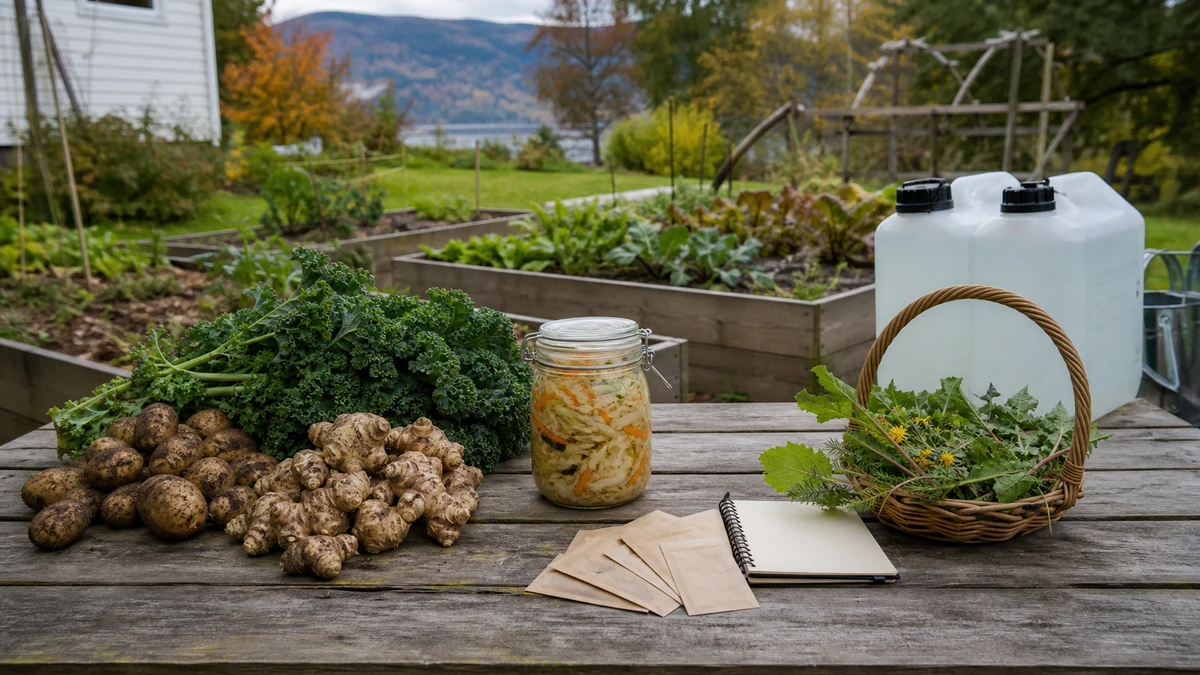
In a small preparedness garden, give about half the space to potatoes and Jerusalem artichokes, a quarter to storage crops such as garlic or cabbage, and the rest to quick greens, known edible herbs and one seed-saving row.
- 50 percent filling crops.
- 25 percent storage crops.
- 15 percent quick greens.
- 10 percent seed or learning plot.
Foraging is identification, not emergency panic
Known edible plants belong in the plan only after you can identify them in your own area, including look-alikes, polluted verges and places where herbicides or dog waste make a patch unsuitable.
Keep the known edible list short: nettle, dandelion, berries or herbs you already use beat a long emergency list that nobody has cooked before.
- Use books, courses or an experienced person.
- Avoid roadsides and dirty runoff.
- Never use image recognition as the safety basis.
Seaweed is seasoning, not a calorie base
Seaweed can add flavour and minerals near clean coasts, but iodine, inorganic arsenic and cadmium are the reason it should stay a small condiment in a preparedness garden.
Harvest seaweed only where the water is clean and the species is known; do not treat washed-up material from harbours, river mouths or sewage outfalls as safe food.
- Use small amounts.
- Avoid uncertain species.
- Keep seaweed out of children's emergency meals unless advice is clear.
Storage is part of the crop
Fermentation, drying and pickling extend the preparedness garden only when salt, acid, cleanliness and temperature are controlled; they do not make damaged food safe.
Best-before food can often rotate through the shelf, while use-by food belongs in the fridge plan; write this distinction beside fermentation jars and potato crates.
- Label date and method.
- Cool food quickly.
- Discard bulging cans or mouldy dry goods.
Seed practice without pretending to be a seed bank
Seed saving starts with one easy crop or herb, a dry labelled envelope and a note of year and place; the point is learning, not replacing professional seed systems in one season.
- Save one seed lot.
- Label crop, variety, place and year.
- Keep bought seed dry and cool.
30 days
- Day 1: check water and shelf-stable food.
- Day 2-5: choose potatoes and one storage crop.
- Day 6-10: find dark storage.
- Day 11-15: learn one known edible plant.
- Day 16-20: make one safe fermentation jar.
- Day 21-25: record harvest and meals.
- Day 26-30: label seed for next season.
Mistakes that make the garden less useful
The preparedness garden fails when it is planned as self-sufficiency theatre: green potatoes in a bright shed, Jerusalem artichokes spreading into a border, or water barrels confused with drinking water.
Seaweed, known edible plants and fermentation are useful only when practised before stress; improvising with unknown species or warm jars is a food-safety problem, not resilience.
- No unknown plants.
- No large seaweed meals.
- No low-acid home canning without tested equipment.
Sources used
The preparedness garden advice above uses official water and food guidance, food-safety material, tested preservation sources, seaweed monitoring and crop references for potatoes, Jerusalem artichokes and seed handling.
- Ready.gov: Water: https://www.ready.gov/water
- Ready.gov: Food: https://www.ready.gov/food
- FoodSafety.gov: Food safety charts: https://www.foodsafety.gov/food-safety-charts
- National Center for Home Food Preservation: How do I?: https://nchfp.uga.edu/how/
- RHS: Potatoes: https://www.rhs.org.uk/vegetables/potatoes/grow-your-own
- RHS: Jerusalem artichokes: https://www.rhs.org.uk/vegetables/jerusalem-artichokes/grow-your-own
- EUR-Lex: seaweed monitoring recommendation: https://eur-lex.europa.eu/legal-content/EN/TXT/?uri=CELEX:32018H0464
FAQ
Can a preparedness garden replace emergency food?
No. A preparedness garden supports water and shelf-stable food; it does not replace drinking water, safe cooking or stored meals.
What should I grow first?
Start with potatoes, then add Jerusalem artichokes only where the row can be contained and harvested without spreading tubers.
Are wild plants emergency food?
Known edible plants are a small supplement, not a calorie plan; learn look-alikes before the plant becomes part of meals.
Can seaweed be stored as emergency food?
Seaweed should stay a small seasoning because iodine and inorganic arsenic vary by species, place and processing.
Is fermentation safe for everything?
Fermentation is useful when salt, acid, cleanliness and cold storage are controlled; it does not rescue spoiled food.
Do I need to save seed?
Seed saving is optional; one labelled seed task teaches more than filling a box with untested packets.
What is the first practical step?
Put water and shelf-stable food in order, then plant one row of potatoes you can water, earth up, harvest and store.