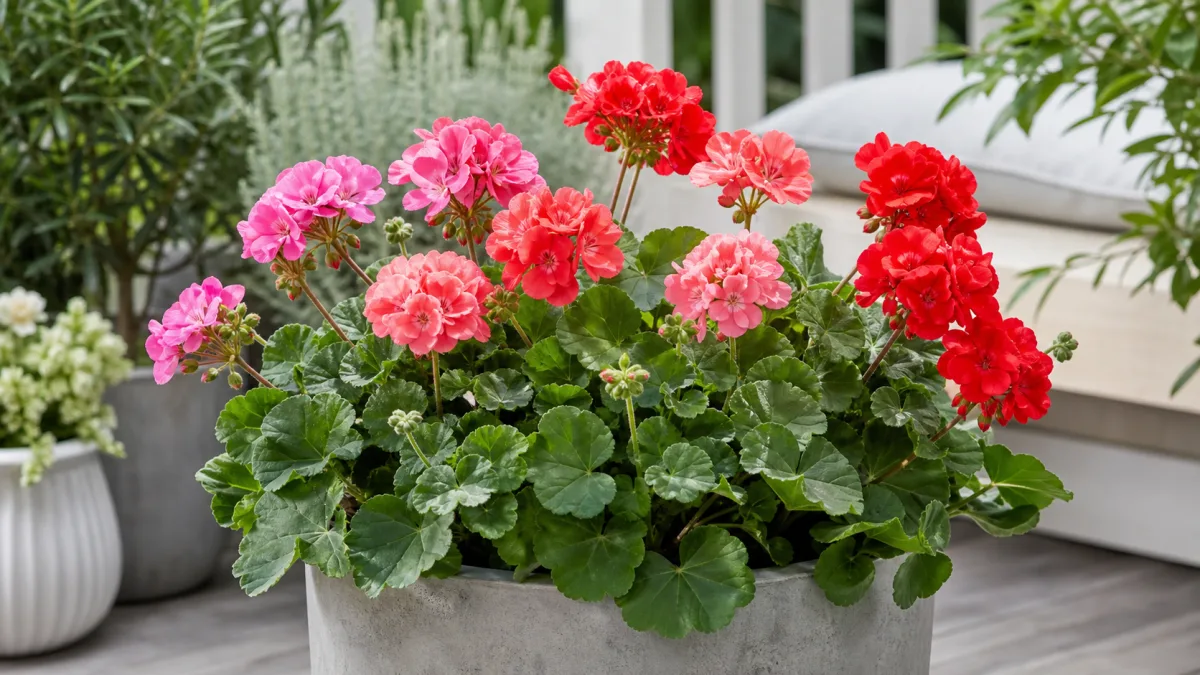
The familiar summer ‘geranium’ sold for pots is a frost-tender Pelargonium, not the same genus as hardy Geranium grown as a garden perennial. Give the pot bright light and free drainage, then decide before local frost whether the whole plant or labelled cuttings will move into frost-free shelter.
Choose a pelargonium for the pot, colour and winter space
Pelargoniums can flower through summer when spent blooms are removed and the root ball drains freely between waterings. Their tender growth makes a movable pot more useful than a cold, wet permanent position where frost or waterlogging cannot be avoided.
Choose the flower colour and mature size for the container, but reserve enough room around the crown for air movement and routine deadheading.
- Type: summer container plant and frost-tender perennial (Pelargonium).
- Colours: red, pink, salmon, white and bicoloured varieties.
- Habit: compact, upright and trailing forms need different pots and winter space; use the cultivar label.
Balance sun, free drainage and shelter from hard rain
Use a container with open drainage holes and enough weight to steady a mature plant. Bright light supports flowering; shelter from the hardest rain protects open blooms without turning the corner into a dark, stagnant place.
A sheltered wall can provide light and reduce damage from hard rain, but the pot must still be reachable for watering and removal of spent flower heads.
- Confirm that surplus water can leave both the inner pot and any decorative outer container.
- Leave the crown above the compost rather than burying the stem bases.
- Keep the pot close enough for faded flower trusses to be removed regularly.
- Reserve its frost-free winter position before buying more plants.
Move outside after frost and plan winter space early
Move pelargoniums outdoors only after frost risk has passed, then acclimatise them to stronger light and wind rather than moving tender indoor growth straight into an exposed position.
Move plants back under cover when cold nights return. Pelargoniums do not gain hardiness from an early move outdoors, and chilled wet compost can set growth back before flowering begins.
A pelargonium calendar for cuttings, feeding and shelter
- Spring: repot or refresh the upper compost, resume watering gradually and pinch leggy shoots above a leaf joint.
- After frost: acclimatise plants outdoors over several days, protecting them from cold wind and hard midday sun at first.
- Summer: water when the compost surface dries, feed during active growth and remove each spent flower truss at its base.
- Autumn: stop feeding, inspect leaves and stems for pests, then move the plant or labelled cuttings into frost-free shelter.
Deadhead, feed lightly and keep the crown ventilated
Pelargoniums need bright light, free-draining compost and watering that moistens the root ball without leaving it saturated. During active growth, feed as the chosen product label directs; reduce feeding as autumn growth slows.
Remove spent flower trusses and yellow leaves where their stalks meet the stem. This exposes the crown for pest checks and prevents decaying material from collecting among succulent shoots.
Avoid cold wet roots and an unplanned autumn rescue
- Do not leave a pot standing in a full saucer after watering or heavy rain.
- Do not add feed to dry compost; water first so concentrated fertiliser does not meet dry roots.
- Do not leave faded trusses hanging against the crown when wet weather arrives.
- Do not wait for the first frost warning to find indoor space and inspect for pests.
Group pots by watering needs, not flower colour alone
Keep pelargoniums apart from containers that must remain constantly wet. A shared display is easier to maintain when every pot can drain and the pelargonium can be lifted out for winter without dismantling the whole arrangement.
Use the related container and overwintering guides before adding another pelargonium pot that needs the same limited frost-free space.
Choose the overwintering method before autumn
A bright, frost-free plant kept in growth needs more water and inspection than a cool dormant specimen. Decide which space you have, check plants for pests before they come indoors and reduce watering as growth slows.
If indoor space is limited, take labelled cuttings from healthy shoots before cold weather. A small rooted cutting preserves a favourite flower colour without asking you to carry a saturated mature pot through the house.
Whichever method you use, do not leave the decision until the frost forecast. Wet compost, cold roots and a rushed move are a poor start to winter.
Questions about flowering pots and winter shelter
How much sun does a flowering pelargonium need?
Give it bright light, but introduce a plant raised indoors to direct sun gradually. A sheltered position helps flowers last through heavy rain.
What pot and drainage setup keeps pelargonium roots healthy?
Use a pot with open drainage holes and free-draining compost. Water the root ball thoroughly, then wait until excess water has left the pot rather than keeping a saucer permanently full.
Why does a pelargonium stop flowering in midsummer?
Check light first, then remove faded flower heads and inspect moisture at root level. Constantly wet compost and repeated drought can both interrupt new growth.
How can I overwinter a favourite pelargonium?
Move a healthy plant into a bright frost-free place before the first frost, or take labelled cuttings while shoots are still firm. Reduce watering as growth slows and inspect for pests before bringing plants indoors.
Plan the winter destination before the first frost
A pelargonium performs best when its pot drains freely, flowering growth receives enough light and winter space is decided before frost forces an emergency move indoors.