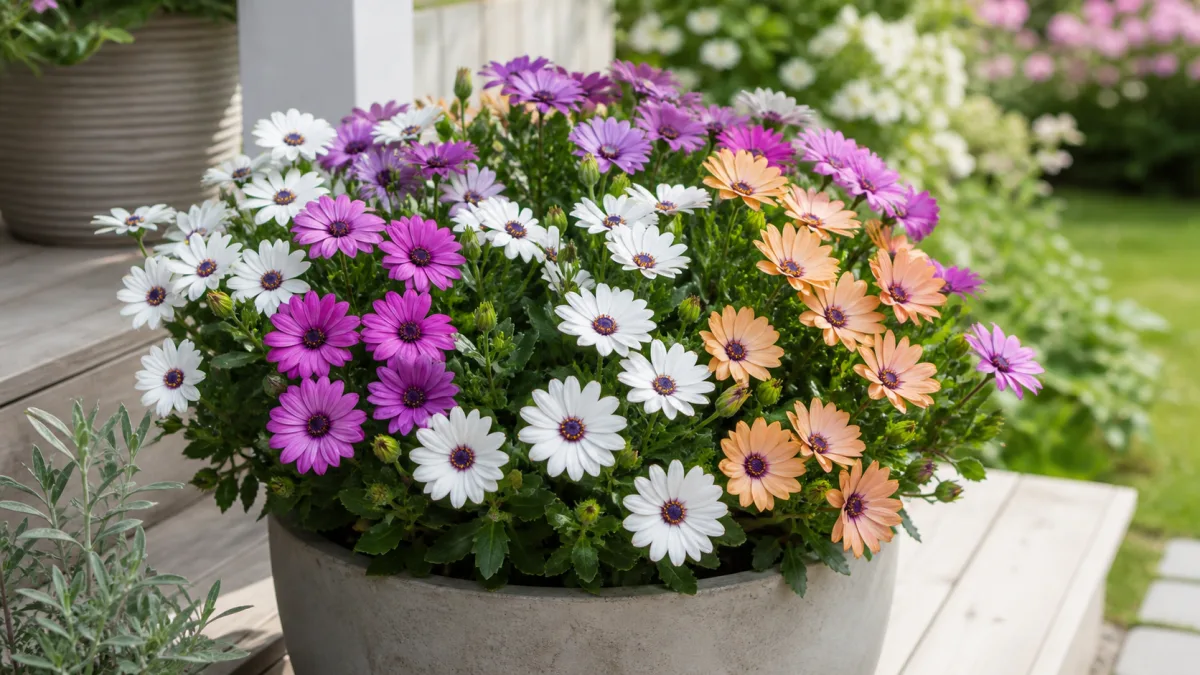
African daisy (Osteospermum) makes a 25-50 cm summer display when it receives sun, free drainage and protection from frost. Its white, purple, pink, yellow or apricot flowers often have dark centres and can continue from late spring into autumn when spent blooms are removed. Use a pot with open drainage holes or a sharply drained bed, because a cold, wet crown is a greater risk than brief dryness at the soil surface.
Use African daisies for a sunny, free-draining display
Osteospermum opens its daisy-like flowers best in strong light. A shaded corner may keep foliage alive but produces a looser plant with fewer open blooms.
Plants are commonly treated as summer annuals where winter frost is expected. Containers make it easier to control drainage and move a valued plant under cover before cold weather.
The 25-50 cm habit suits pot fronts and sunny bed edges, where the dark-centred flowers can be seen and reached for regular deadheading.
- Type: summer flower and half-hardy perennial usually grown as an annual in containers (Osteospermum).
- Colours: white, purple, pink, yellow, apricot and varieties with dark centres.
- Height: about 25-50 cm.
Put sun and drainage ahead of flower colour
Choose an open, sunny position where rain leaves the root zone quickly. In a container, check that decorative sleeves or saucers cannot trap water beneath the compost.
Keep the plant accessible for watering and deadheading, and decide whether it will be discarded after frost or moved to a bright, frost-free place.
- give the crown full sun and free-draining soil or potting mix
- leave enough air around a 25-50 cm plant instead of packing pots tightly
- water at compost level and empty any container that remains standing in runoff
- identify a frost-free holding place before autumn if the plant will be kept
Wait for warmth before moving plants outside
Plant outside after frost risk has passed and acclimatise greenhouse-raised plants to sun and wind over several days. Keep the original root ball level with the surrounding compost or soil.
A warm afternoon is not proof that nights are safe. Hold tender plants under cover when a cold spell is forecast rather than relying on recovery after frost damage.
From spring planting to the final flush
- Spring: pot plants into free-draining mix and keep them protected while frost remains possible.
- Early summer: harden off, move into full sun and establish careful watering without saturation.
- High summer: deadhead, trim untidy growth and feed container plants at the stated rate.
- Autumn: move selected plants under cover before frost or clear them when the display ends.
Keep flowers coming without soaking the crown
Water when the compost begins to dry, soak the root ball and let surplus escape. Constant shallow watering can leave the crown damp while deeper roots still receive an uneven supply.
Remove faded heads to keep the plant tidy and encourage further buds. If flowering stalls, check light, temperature and root condition before increasing feed.
What checks an African daisy display
- buying by colour and then using a shaded position where flowers stay closed
- putting a nursery pot inside a watertight sleeve that holds irrigation water
- moving soft growth outdoors without acclimatising it to sun, wind and cool nights
- leaving overwintering until frost has already blackened the crown
Pair African daisies with plants that like the same exposure
Combine Osteospermum with other sun-loving container plants that tolerate a draining mix, rather than placing it beside shade plants that need persistently moist compost.
Use pot height and watering demand to arrange companions, keeping the 25-50 cm daisies visible and reachable for deadheading.
Treat frost protection as part of container care
A container does not make African daisy hardy; it makes the tender root system easier to move. The route indoors must still be available before the first frost.
If no bright, frost-free space exists, grow Osteospermum as a seasonal display and plan replacement rather than promising successful winter survival outdoors.
FAQ about Osteospermum / African daisy
Where will an African daisy flower most reliably?
Choose full sun with free drainage. The flowers respond to light, while a cold, saturated root zone can damage a plant that is only half-hardy.
Why does an African daisy stop flowering?
Check whether the plant has enough sun, whether faded heads are being removed and whether the roots are too wet before adding fertiliser.
Can Osteospermum survive winter?
It is half-hardy and should not be assumed to survive frost. Keep a selected plant bright and frost-free, or treat it as an annual where winter protection is unavailable.
Should African daisies be deadheaded?
Remove faded flower heads and trim untidy stems during active growth. This keeps the plant compact and directs energy away from unwanted seed production.