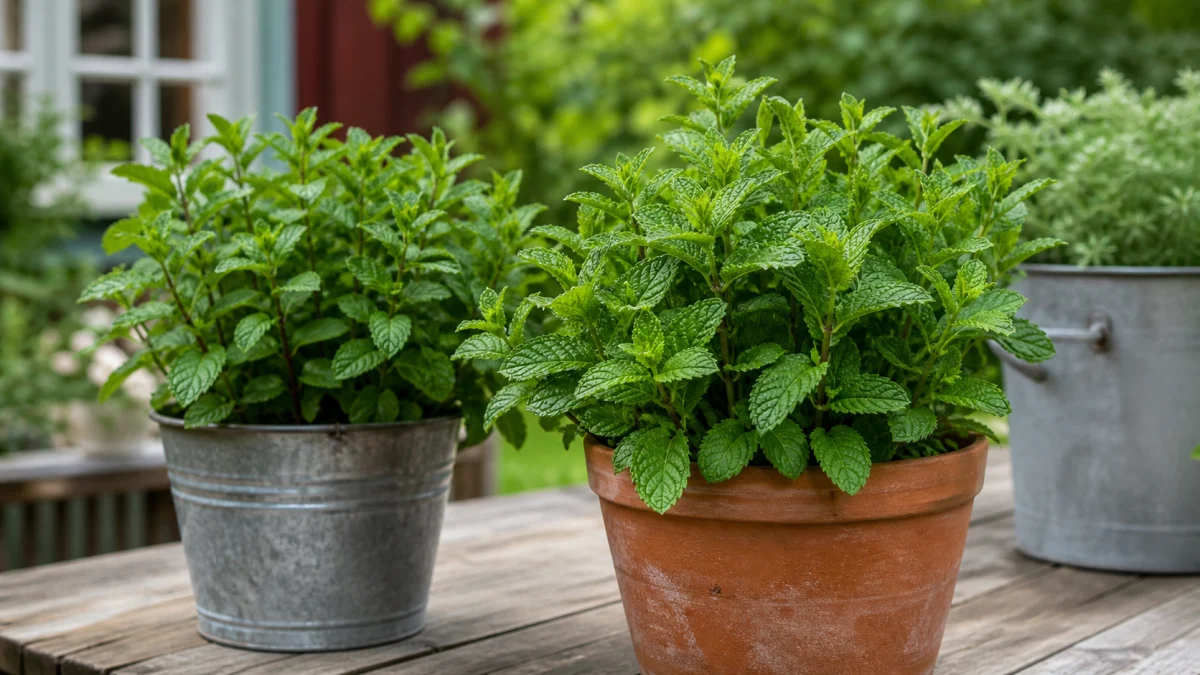
Mint spreads by underground runners that can leave a pot through drainage holes or root from stems touching nearby soil. Give a labelled culinary Mentha plant its own roomy container, place it in sun or partial shade, keep the compost steadily moist but never waterlogged, and inspect the pot edge whenever you cut stems.
Choose a mint you can identify and keep labelled
Spearmint (Mentha spicata) is a spreading perennial culinary herb whose leaves and flowers have a characteristic spearmint scent; keep its label because a common name alone is not a safe identification.
Peppermint (Mentha × piperita) is a separate aromatic hybrid mint with its own flavour and the same spreading habit; grow it apart from spearmint when the distinction matters in the kitchen.
- Use a botanical or cultivar label to distinguish the plant you intend to harvest.
- Grow different mints in separate containers if flavour and identity matter.
- Reject an uncertain plant rather than guessing from mint-like scent alone.
Give runners a boundary you can inspect
Mint's creeping stems make an inspectable container more reliable than a boundary hidden in a crowded border. Leave room around the rim and drainage holes so escaped shoots can be removed before they root.
- Choose a pot whose rim, base and drainage holes remain easy to inspect.
Plant into moisture-retentive compost that still drains
Mint grows in sun or partial shade and needs moisture-retentive soil with drainage. A broad container buffers drying better than a small nursery pot, while open drainage holes prevent the root zone remaining saturated after watering.
Contain the runners without starving the roots
Mint spreads by creeping underground stems, so its first design question is containment. A generous pot with open drainage gives a clearer boundary than a thin barrier buried in a bed. Stand the pot where escaping shoots can be seen, and do not let stems root unnoticed through neighbouring containers.
The plant prefers steady moisture, but a permanently saturated pot loses air around the roots. Water when the upper layer begins to dry, then let excess drain freely. In hot weather, a larger container and some afternoon protection are usually more effective than repeated shallow splashes.
Cut leafy stems before flowering for the freshest culinary growth, using clean tools and leaving enough foliage for recovery. Regular cutting keeps a compact supply coming; an exhausted, woody centre can be divided and replanted with vigorous outer pieces.
Spearmint and peppermint differ in flavour and growth, and unnamed nursery pots may not match a recipe or planting plan. Keep the label, taste a leaf before committing a large area, and grow different mints separately if you want their identity to remain clear.
Follow the plant from spring shoots to winter rest
- Spring: divide a congested clump and replant vigorous outer pieces in fresh compost.
- Summer: water deeply when the surface begins to dry and cut leafy stems before flowering for kitchen use.
- Early autumn: inspect for runners that have crossed the pot edge or rooted below it.
- Winter: expect top growth to die back; keep the dormant crown drained rather than wet.
Harvest on time and get more from the plant
Mint responds best to repeated pinching just above a leaf pair. Take the soft tips before the stems flower, then use the leaves fresh; waiting until the stems harden makes the harvest coarser and leaves a sparse base.
Cut for leaves and watch every escape route
When a mint pot becomes sparse, woody or invasive
A woody centre and fewer leafy shoots usually call for division, while wandering stems call for immediate removal and a clearer gap around the pot. More feed cannot correct trapped water or an unchecked escape route.
- Do not stand a mint pot directly on open soil if roots can pass unnoticed through its drainage holes.
Let one clump flower only if you can spare the leaves
Frequent cutting delays flowering and favours tender kitchen stems. If pollinator flowers matter too, keep a separate labelled clump for bloom rather than allowing every container to become tall and coarse at once.
Questions from a container mint grower
How do I stop mint escaping through drainage holes?
Raise the pot where its base can be checked, trim roots or shoots that emerge from the holes, and remove stems before they touch neighbouring soil and root.
Why has the middle of my mint plant become woody?
A crowded older crown can lose vigorous shoots in its centre. Lift the plant in spring, discard the exhausted middle and replant healthy outer divisions in refreshed compost.
Should I let container mint flower?
Cut before flowering when tender culinary stems are the priority. Keep a separate clump for flowers if you also want to leave nectar for visiting insects.
Can mint stay outdoors through winter?
Mint is perennial and its top growth commonly dies back. A container can remain outdoors where excess rain drains freely and the dormant crown is not left in saturated compost.
How often should container mint be watered?
Check the compost rather than following a fixed timetable. Water when the upper layer begins to dry, soak the root ball and allow the surplus to leave through the drainage holes.
Is mint perennial, and when should old stems be cut?
Culinary mint is perennial. Cut damaged old stems after winter, then harvest leafy shoots regularly before flowering when tenderness matters.
Can a patio mint pot overwinter outdoors?
Yes, where rain drains freely and the container is not left waterlogged. Move a small or exposed pot against shelter during severe cold and check that drainage holes remain open.
Can mint leaves be frozen after harvest?
Freeze clean, correctly identified culinary leaves in small portions for cooking or drinks. Freezing softens the leaf texture, so keep fresh shoots for garnishes.
Labels prevent flavour mix-ups
Named mints can look similar once pots grow together. Keep labels attached and do not allow runners to cross between containers, particularly when you want peppermint for one use and spearmint for another.
- Keep each named mint in its own pot.
- Replace a lost label before using the plant in food.
- Divide and relabel vigorous outer pieces rather than mixing them.
Containment keeps mint useful
A useful mint pot is easy to inspect from rim to drainage hole. Keep it moist but freely drained, harvest before flowering when tender leaves matter, and renew a woody centre from labelled outer divisions.