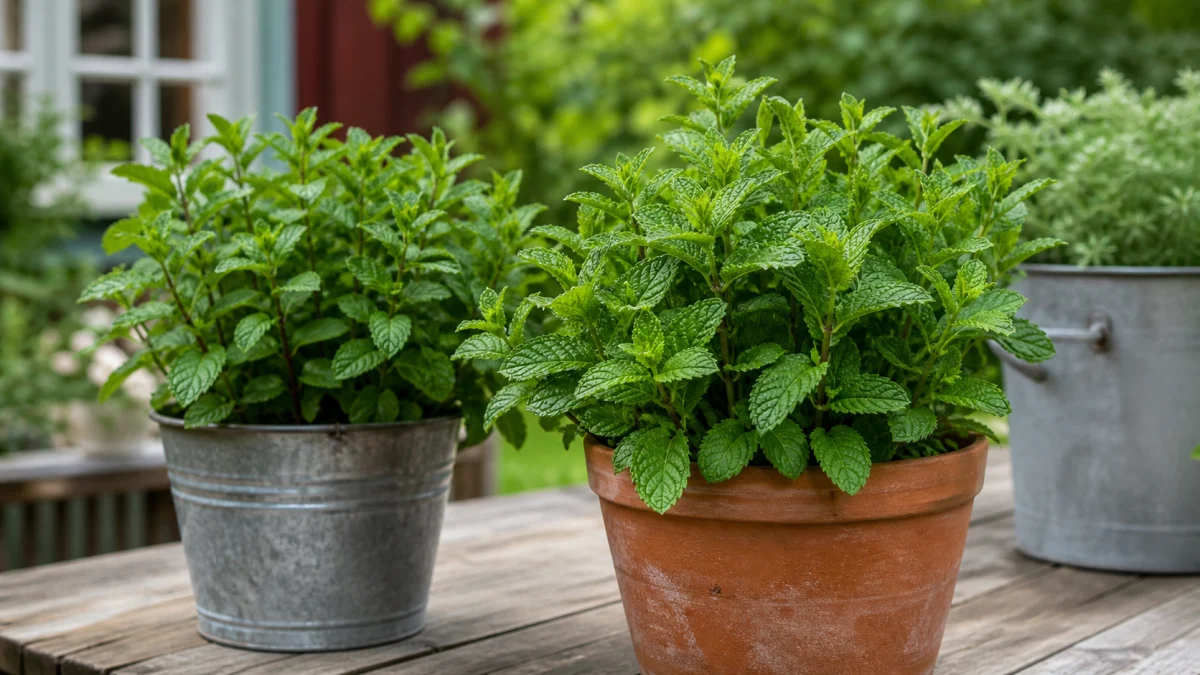
Mint is most useful when it grows close to the kitchen, patio or path. It copes with sun or partial shade, grows back quickly after trimming and fits patios, balconies and kitchen gardens. Give the roots a container or a clear boundary before the runners start travelling.
Updated 28 May 2026
Quick facts
| Type | perennial culinary herb in the Mentha genus |
|---|---|
| Flavour | peppermint, apple, lemon, orange, chocolate, strawberry and mojito-style varieties |
| Height | often about 30-80 cm, depending on variety and growing conditions |
| Harvest and flowers | harvest leaves from spring to autumn; plants flower in summer if not cut regularly |
| Planting/sowing | plant young plants or rooted pieces in spring once soil can be worked |
| Placement | sun to partial shade, moisture-retentive but free-draining soil and preferably its own container |
Character and best uses
Fresh mint is useful beside a door, table or path where you can cut a few stems for tea, water, salads and desserts.
The plant spreads by underground runners. That can fill a spare corner, but it is awkward in a mixed herb bed with slower crops. Containers keep the harvest tidy.
Cut whole shoots rather than picking single leaves. The plant responds with softer growth and a denser shape.
- place the container where you will harvest it
- give runners a boundary from the first season
- cut shoots often before stems turn woody
Checkpoints before you choose
Choose the position from the way you will use the plant: near the kitchen for drinks and cooking, near seating for scent, or away from a mixed border if you want it to spread.
Container size matters. A wide pot with drainage holes holds moisture more evenly and is easier to divide than a small decorative pot.
- check whether the pot holds enough compost for hot days
- use a separate container where the herb bed is already full
- label varieties such as strawberry mint, peppermint and mojito mint
- let one plant flower if you want late-season food for pollinators
Growing in containers, planters and beds
In containers, mint needs drainage holes and enough compost to stay evenly moist between waterings. A low, broad pot is usually better than a narrow display pot.
In a raised planter, give mint its own corner or sink a bottomless bucket into the soil to slow runners.
Avoid squeezing mint between thyme, rosemary or small seedlings. It fills space quickly and competes for light and moisture.
Mint types and flavour
Strawberry mint has a sweet, fruity scent for flavoured water, cakes and summer desserts. Lemon mint and orange mint bring a clean citrus note to iced tea and fruit salad.
Apple mint is rounded and mild in tea. Chocolate mint is best with coffee, ice cream or cocoa. Peppermint gives the clearest classic mint flavour.
Bare-root pieces and small culinary herb pots should be moved into a larger container soon. More root room helps them bounce back after the first cut.
- strawberry mint for desserts and chilled water
- mojito mint for lime drinks and alcohol-free spritzes
- peppermint and apple mint for tea
- chocolate mint for ice cream, coffee and cocoa
Planting and establishment
Plant young plants or rooted pieces in spring once the soil can be worked. Water well after planting and keep the root zone evenly moist until new growth is clear.
- choose a roomy container with drainage holes
- water well after potting and through the first dry spell
- pinch out tips once new shoots are growing
- check whether runners have crossed the pot edge
- divide the plant when roots fill the compost
Season plan
- Spring: pot on young plants, divide old clumps and place containers where you can reach them easily.
- Early summer: cut tips often before stems become long and coarse.
- Summer: water steadily, harvest young shoots and leave some flowers if pollinators are part of the plan.
- Autumn: cut back tired stems, divide packed pots and move small containers into shelter.
Harvesting and summer care
Harvest by cutting whole shoots above a pair of leaves. The plant then breaks into new side shoots and stays bushier.
Leaves are mildest on fresh growth before flowering. For drying, cut on a dry day and hang small bunches in shade with good airflow. For cold drinks and desserts, use fresh leaves.
Flowers and pollinators
When mint flowers, bees and other pollinators visit the small blooms. That is useful in herb gardens where many plants are cut before flowering.
Keep one container clipped for tender leaves and let another flower later in summer if you have space.
Common mistakes to avoid
Mint is tough, but not maintenance-free. The usual trouble comes from a cramped pot, dry compost, or runners that go unchecked for a full season.
- planting mint loose in a tight mixed border
- letting a hot container dry out completely
- pinching leaves instead of cutting shoots
- leaving a pot root-bound year after year
- overwintering small pots without shelter
Good combinations
Mint is easiest beside vigorous plants that also enjoy steady moisture. In many gardens, though, it looks best alone in its own pot near a seat or doorway.
If you grow several mint varieties, give each one its own container. You will taste the differences more clearly, and the strongest variety will not take over.
FAQ about mint
Can mint grow in a container?
Yes. A container is often the simplest choice because it keeps the runners contained. Use a broad pot with drainage holes, water steadily and divide the plant when roots fill the pot.
Does mint tolerate shade?
Mint handles partial shade well. Light shade can keep leaves fresher in dry weather, while deep shade gives thinner growth.
Which mint is best for summer drinks?
Mojito mint, spearmint, lemon mint and orange mint are good in cold drinks. Strawberry mint gives a sweeter scent.
How do I stop mint spreading?
Grow it in its own container, or sink a bottomless bucket into a raised bed. Check the edge during the season and cut runners before they root outside the boundary.
Can mint overwinter outdoors?
Yes, many mint plants overwinter well when the roots have enough compost around them. Large containers and raised beds are safer than small pots, which benefit from shelter.
Can you dry or freeze mint leaves?
Yes. Dry mint in small airy bunches, or freeze leaves in ice cubes for drinks. Divide the plant in spring when the container is packed with roots.
Editorial method
Editorial policy, image use and advertising are explained on the about page.