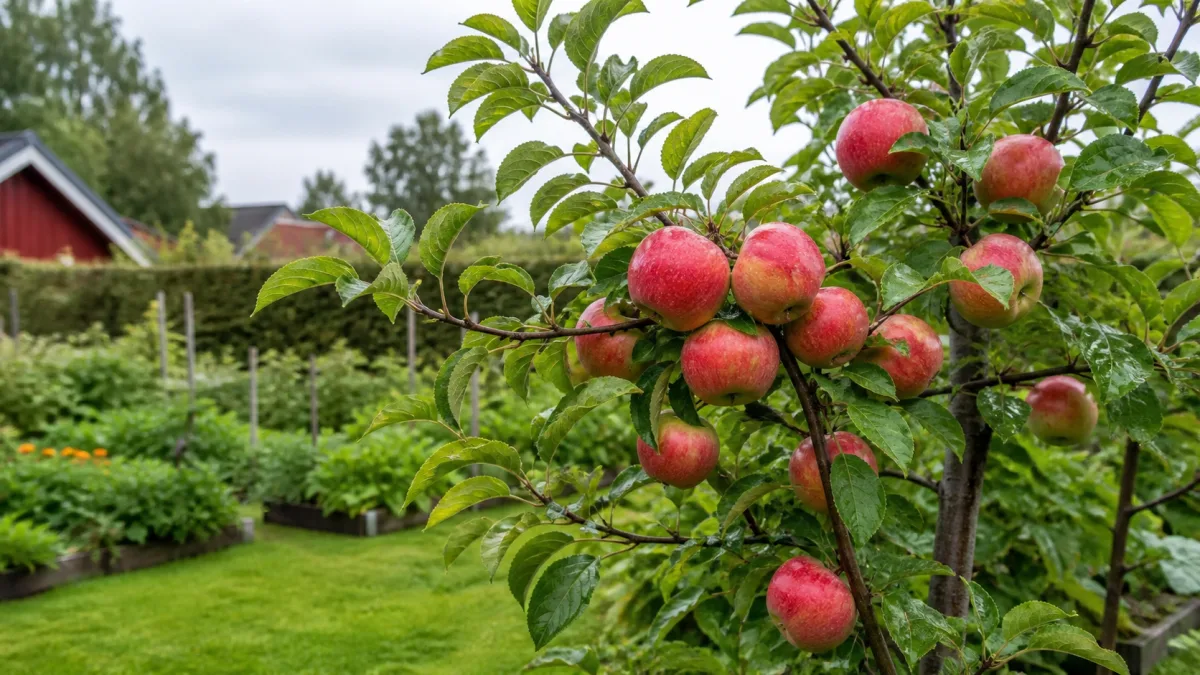
Assess the tree before reaching for the fertiliser. Long, dark-green shoots may show that it already has ample nitrogen. Pale leaves and weak growth can also result from dry roots, waterlogging or unsuitable soil conditions. This guide helps you identify the limiting factor and combine need-based spring feeding with steady watering, fruit thinning, an open canopy and good hygiene.
Find the limiting factor before feeding
Assess the whole tree. Are the new shoots short and the leaves evenly pale, or does the tree have long upright shoots and dense, dark-green foliage? At the same time, check whether the soil is dry, compacted or persistently wet.
Small fruit alone does not prove a nutrient deficiency. A heavy crop, drought-stressed roots or a shaded canopy can limit apple size even in fertile soil.
- Long water shoots and dark foliage: hold back nitrogen.
- Weak pale growth: inspect moisture, roots and soil before targeted feeding.
- Crowded small fruitlets: thin the crop rather than increasing the rate.
- Spots, cankers or dead shoots: diagnose disease instead of guessing at deficiency.
Use shoot growth and leaf colour as clues, not proof
Compare several shoots with growth from previous seasons and with other branches on the same tree. Uniformly weak growth can indicate poor nutrition, whereas patchy yellowing often points to roots, drainage, pH or disease.
A soil test is particularly useful before liming or trying to correct a specific nutrient. It helps prevent a wet-root problem from being treated with another handful of fertiliser.
- Measure several current-season shoots.
- Account for fertiliser used on lawn beneath the canopy.
- Inspect soil moisture and trunk damage.
- Compare symptoms with flowering and crop load.
Established trees do not need an automatic annual feed
A tree that is growing, flowering and cropping normally may not need fertiliser that year. Fertiliser applied to the lawn, decomposing mulch, compost and earlier applications all count towards the same total.
Routine nitrogen can produce lush shoots at the expense of flower-bud formation. Adjust the feeding to the tree's response rather than following a fixed annual schedule.
Feed in spring, and only when evidence supports it
Make the main application from late winter into spring as the tree resumes active growth. Local soil temperature and bud development are better guides than a date intended for another climate.
Avoid a heavy nitrogen application late in summer. Soft, late growth may not ripen fully and can make the canopy unnecessarily dense.
- Review last year's growth before bud break.
- Measure the chosen product rather than estimating by handfuls.
- Do not feed bone-dry soil unless you can water it in.
- Stop when vegetative growth is already vigorous.
Spread fertiliser across the root zone, not beside the trunk
Fine absorbing roots extend beneath and beyond the canopy. Spread the measured amount evenly across that area according to the label, keeping mineral fertiliser, compost and mulch away from the bark.
Water slowly if the ground is dry and rain is not expected. A 5–8 cm layer of organic mulch can conserve moisture and reduce competition from grass, but leave a clear ring around the trunk.
- Use the product analysis to calculate the rate.
- Distribute it broadly and evenly.
- Do not apply to waterlogged soil.
- Watch the following weeks before considering a second feed.
Four factors influence apple size
Crop load, water, light and balanced nutrition work together. If clusters remain crowded after the natural fruit drop, extra fertiliser cannot replace thinning. If the soil dries while fruit is expanding, thorough watering matters more than another feed.
Thin only overloaded clusters while fruitlets are small. Maintain an open canopy, but avoid severe pruning that triggers a flush of upright water shoots.
- Thin crowded clusters early.
- Water deeply during prolonged dry weather.
- Keep a balanced light-filled canopy.
- Feed only where growth or a soil test indicates need.
Lots of leaves and little fruit usually call for restraint
Long upright shoots, dense dark foliage and poor flowering signal strong vegetative growth. Pause nitrogen and avoid hard heading cuts while the current shoots mature.
A light crop can also result from frost at blossom time, poor pollination, the tree's young age or biennial bearing. Review flowering and fruit set before blaming nutrition.
Reduce disease pressure with light, sanitation and moderate growth
Fertiliser does not cure apple scab or canker. An open canopy dries sooner after rain, whereas excessive nitrogen can produce dense young growth that stays damp.
Remove mummified or rotting fruit, clear affected plant material and manage fallen leaves where scab recurs. Direct irrigation towards the soil rather than the foliage.
- Prune for light and air, not maximum wood removal.
- Take diseased fruit out of the canopy.
- Keep mulch away from the trunk.
- Use the dedicated scab guide for typical leaf and fruit lesions.
An annual apple-tree care plan
- Late winter: inspect structure and remove dead, damaged or crossing wood in suitable dry weather.
- Early spring: review last year's shoots, soil moisture and the case for testing before feeding.
- Blossom: monitor frost and pollination; a poor set is not automatically a nutrition problem.
- After natural fruit drop: thin overloaded clusters and relieve weak branches.
- Summer: water the root zone in dry spells, remove rotten fruit and avoid late nitrogen.
- Harvest: record fruit size, disease and shoot growth for next year's decisions.
- Autumn: remove diseased fruit and manage leaves if scab is recurrent.
Match the response to the symptom
A vigorous tree with dark-green foliage rarely needs more nitrogen. Before applying a targeted feed to a pale, weak tree, check for drought, root stress, unsuitable pH and poor drainage. Small apples on a heavily laden tree point first to crop load and water supply.
Leaf spots, sunken bark, dying shoots or fruit rot require a disease diagnosis. Nutrition supports normal growth, but it does not remove an infection.
Common mistakes that grow shoots instead of apples
- Feeding every year without checking shoot growth.
- Using a universal rate regardless of product and soil.
- Piling compost or fertiliser against the trunk.
- Applying heavy nitrogen late in summer.
- Pruning hard and then feeding the resulting water shoots.
- Trying to solve drought or excessive crop load with nutrients.
- Presenting fertiliser as a treatment for apple scab.
Questions about feeding apple trees
When should I fertilise an apple tree?
Apply the main feed from late winter into spring if the tree genuinely needs it. Assess the tree and soil first, and avoid encouraging soft, nitrogen-rich growth late in the season.
Does a mature apple tree need feeding every year?
No. Normal shoot growth, healthy leaf colour and a satisfactory crop can mean no extra feed is required. Lawn fertiliser, compost and fertile soil may already supply enough nutrients.
What is the best fertiliser for an apple tree?
Choose a product with a declared nutrient analysis, and follow the label once you have established a need. Mature compost can improve soil structure and supply nutrients gradually, but it should still be applied in moderation.
How much fertiliser should I use?
There is no safe universal rate. Tree size, soil test results, previous feeding, shoot growth and the product's nitrogen percentage all affect the amount.
Why is my apple tree leafy but not fruiting?
Possible causes include excess nitrogen, hard pruning, youth, poor pollination, spring frost and biennial bearing. More feed may worsen the imbalance when shoots are already long and dark green.
What helps apples grow larger?
Thin crowded fruitlets after natural fruit drop, maintain even soil moisture during dry spells and allow light into the canopy. Extra fertiliser only helps when nutrition is genuinely limiting growth.
Should I lime around an apple tree?
Do not lime routinely. Test soil pH first, because excessive liming can make some nutrients harder for roots to take up.
Can fertiliser prevent apple diseases?
No. Balanced growth is part of good care, but cultivar, weather, leaf wetness, inoculum and sanitation also influence disease risk.