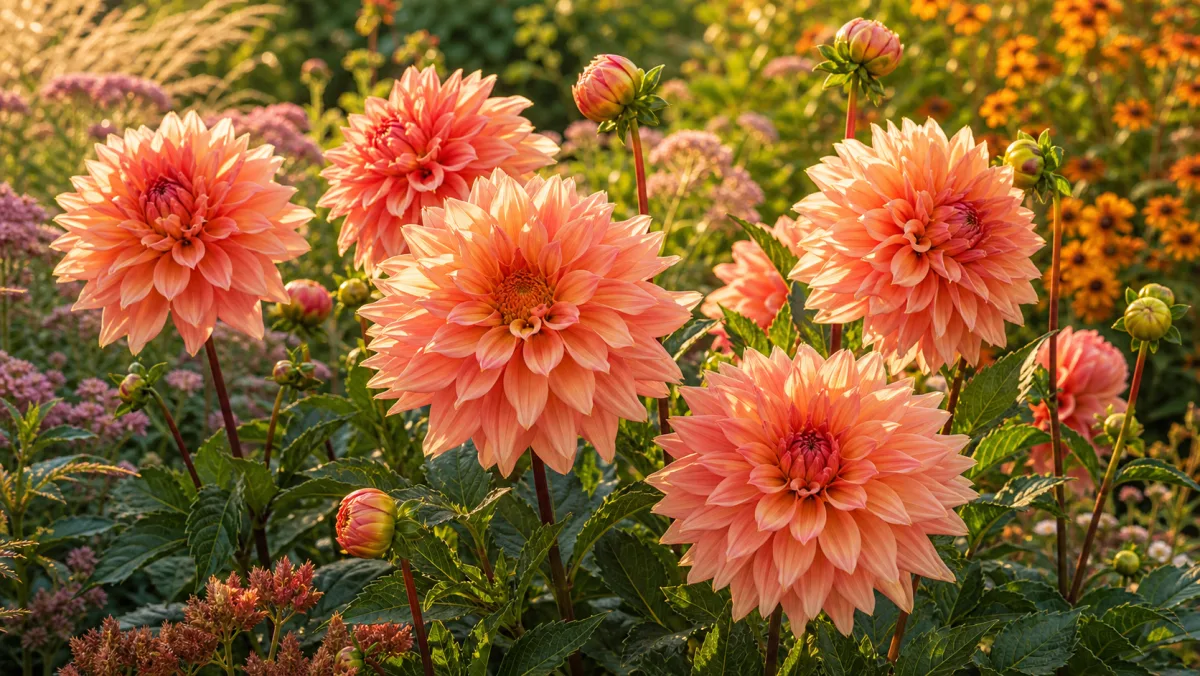
At roughly 100-130 cm, Dahlia 'Belle of Barmera' needs back-border room and firmer support than a compact pot dahlia. Its coral, apricot, pink and golden-peach flowers are easiest to cut when the stake and access path are planned at planting, with labelled frost-free tuber storage ready for winter.
A tall coral-and-peach dahlia for the cutting border
'Belle of Barmera' is a tall dahlia, commonly planned at about 100-130 cm, with coral, apricot, pink and golden-peach colouring. Give that scale visual room and avoid placing it where heavy flower stems would lean into a narrow path.
The useful comparison is with other tall cutting dahlias: support capacity, access to the blooms and autumn tuber handling matter more than a photograph of one flower. Install a firm stake early and keep neighbouring growth low enough that ties remain visible.
Its flowering period can extend from midsummer until frost in a suitable temperate season. Cut or deadhead regularly, but let local cold—not a fixed date—decide when the display ends and tuber lifting begins.
- dahlia tuber.
- coral, apricot, pink and golden peach.
- 100-130 cm.
Reserve depth, support and a clear route to the flowers
Allow enough depth behind or within the border for a 100-130 cm plant and its support. The site should be sunny, drained and reachable from one side for watering and from another if stems are being selected for the vase.
Confirm a cool frost-free storage place before buying several tubers. A tall cultivar is a poor fit when the only lifting route crosses delicate planting or when labelled tubers cannot be kept separately over winter.
- back-border depth for a 100-130 cm plant without blocking a path
- a firm support that remains reachable as the tall stems fill out
- a clear cutting route that does not cross fragile neighbours
- space to lift and label the tuber before frost-free storage
Build roots before the 100-130 cm growth surge
Start the tuber under cover only if the young plant can be kept bright, frost-free and uncrowded. Otherwise wait for a warm, workable bed; a delayed outdoor start is safer than moving weak growth into cold soil.
Plant beside a firm support and keep the crown reachable from the front or side of the border. The expected 100-130 cm height makes late staking awkward, particularly once broad flowers and rain add weight.
From protected start to labelled winter storage
- Before planting: confirm the back-border space, firm stake and cool frost-free storage place.
- At planting: set the labelled tuber into warm, drained soil and water the root zone thoroughly.
- During flowering: add ties as stems lengthen, cut or deadhead often and inspect after heavy rain.
- At season's end: lift from the accessible side, dry the tuber and keep its label attached through storage.
Support long stems without closing the cutting path
Follow the main stems upward after wind or rain and add soft ties before they bow across neighbouring plants. Water the soil, not the flower heads, and retain enough open ground to approach with secateurs.
Regular cutting suits this tall cultivar because it reduces spent weight and exposes new damage early. If growth stalls, inspect drainage and the root zone before increasing feed; a saturated bed cannot be corrected with more nutrients.
Where a tall 'Belle of Barmera' planting goes wrong
The scale of 'Belle of Barmera' turns small planning errors into broken stems or an inaccessible tuber by autumn.
- squeezing a 100-130 cm dahlia into the front of a narrow path
- using a support too short or loose for flower-laden stems
- allowing taller neighbours to close the only cutting route
- waiting until lifting day to decide how cultivars will stay labelled
Give its peach colouring room behind lower plants
'Belle of Barmera' belongs behind lower flowers where its coral, apricot and golden-peach colouring remains visible above them. The comparison with another tall dahlia should begin with stake strength and access, not colour alone.
Leave enough separation to follow each plant to its crown. That gap keeps ties visible in summer and prevents tubers and labels becoming confused when the border is dismantled after frost.
Questions about Dahlia 'Belle of Barmera'
Where should a 100-130 cm 'Belle of Barmera' be planted?
Use a sunny, sheltered, well-drained part of the middle or back border. Leave a route to the stake and flowers, because reaching through dense neighbours increases the chance of broken stems.
How much support does this tall dahlia need?
Install a firm stake at planting and add ties as the main stems rise. Recheck after wind and heavy rain, when the large flower heads put the greatest leverage on 100-130 cm growth.
Should I cut or deadhead 'Belle of Barmera' regularly?
Yes. Removing flowers keeps the display moving and prevents spent heads adding unnecessary weight. Cut from the planned access side so the stake and new shoots stay visible.
How do I prepare this cultivar for winter storage?
Keep its label attached, lift after frost ends the display, dry the tuber and store it cool and frost-free. Plan the route before autumn so neighbouring plants are not damaged during lifting.