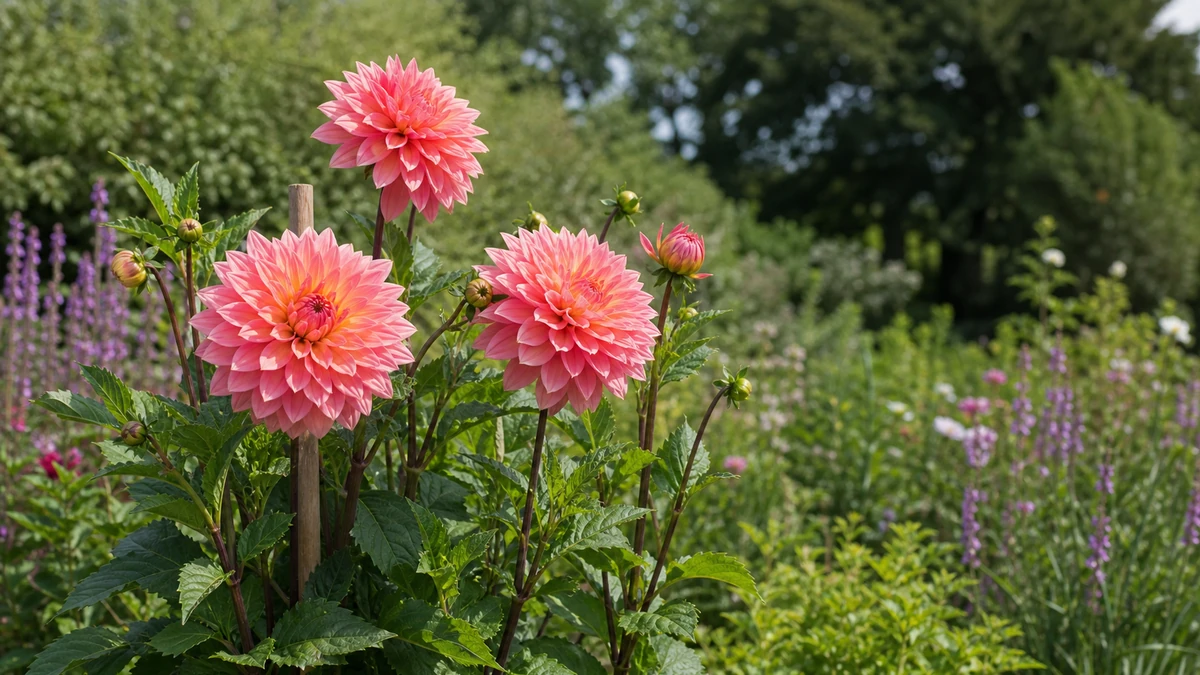
Dahlia 'Fairway Spur' is a decorative cultivar with peachy-pink flowerheads, recorded at around 1.2 m tall. Start the tuber under frost-free conditions or wait until cold nights have passed and the soil is warming, then place support before the stems become brittle and flower-heavy. Give it sun, steady water at the root zone and a route for cutting flowers without trampling neighbouring plants; before autumn frost, decide how the named tuber will be lifted, dried and stored.
Turn the height of 'Fairway Spur' into accessible cutting stems
The cultivar description of around 1.2 m puts 'Fairway Spur' behind lower edging plants but still within reach for cutting. Give the clump enough air and hand space to follow stems to the base. Crowding it behind a rigid shrub can make tying, removing spent flowerheads and lifting the tuber needlessly awkward.
Peachy-pink flowerheads can be repeated through a border with pale grasses, blue-purple flowers or dark foliage, but companion plants should not hide the lower stems. Keep a small open circle around the crown so water reaches the root zone and the label remains visible when the top growth dies back.
For a container, use a large stable pot with free drainage and enough weight to resist a tall canopy. Pots dry faster and expose the tuber to colder winter temperatures, so they need a closer watering routine and a deliberate storage location.
- The cultivar record describes the cultivar at around 1.2 m tall.
- The decorative flowerheads are peachy pink.
- Best practical use: a sunny cut-flower or mixed border with early support.
Put the stake in before the stems need it
Choose full sun, soil that drains after rain and a position reachable by a hose or watering can. Push in a sturdy stake or support ring when the tuber is planted, marking the tuber position so it is not pierced. Early ties can be loose and low; add more as stems extend rather than pulling a leaning plant upright in one late operation.
Shelter from strong wind reduces strain but should not mean a dark, stagnant corner. Space the plant according to its mature spread and keep ties broad enough not to cut the stems. After heavy rain, check loaded flower stems before they bend across the path.
- sun for flowering and open access for cutting
- drained soil with mulch kept clear of the emerging crown
- support installed before tall growth develops
- a permanent label that remains after frost removes the stems
Warm start, careful watering, stronger growth
A tuber started indoors needs light and frost-free conditions without saturated compost. When planting outside, wait for the local frost risk and cold wet soil to ease, then harden indoor growth gradually. Set the tuber at the depth recommended for dahlias and avoid heavy watering before active roots and shoots can use it.
Once growth is established, water deeply at the root zone in dry periods rather than sprinkling foliage and flowers. Container plants need more frequent checks. Remove damaged leaves, keep airflow around the base and feed only according to the chosen dahlia regime rather than trying to force weak growth with repeated high-nitrogen applications.
A season organised around the tuber
- Before planting: inspect the labelled tuber, choose the site and put the support in place.
- Early growth: protect from frost, harden indoor shoots and tie stems while they are flexible.
- Flowering: water at the root, cut flowers cleanly and remove spent heads before seed formation takes over.
- After frost: cut back, lift with a wide fork, dry the tuber surface and store it labelled under suitable frost-free conditions.
Cut to a branching point and keep checking the ties
For cut flowers, use clean tools and take stems above a healthy branching point so lower buds can continue. Spent flowerheads have a pointed or empty look unlike rounded developing buds; trace each finished stem back rather than snapping off only the petals. Regular removal keeps the plant tidy and makes room for later flowers.
Check supports whenever flowers become heavy with rain. Add soft ties without binding the stem, and remove any tie that has begun to cut in. Water before severe wilting, but do not leave the tuber in persistently saturated ground.
Four avoidable losses
The cultivar is easiest to keep when support and identity are maintained from planting to storage.
- planting into cold saturated soil because the calendar date has arrived
- adding support only after flower-laden stems have started leaning
- losing the cultivar label when top growth is cut down
- storing a wet or damaged tuber without inspection or ventilation
Lift wide, label immediately and inspect in storage
After frost has blackened the foliage, cut the stems and lift from a generous distance so the fork does not slice through the tuber cluster. Shake off loose soil carefully, label 'Fairway Spur' at once and let surface moisture dry in a sheltered place. Do not wash or divide automatically if the chosen storage method advises otherwise.
Store frost-free under the temperature, humidity and packing method recommended for dahlias in the local setting. Inspect occasionally for rot or excessive shrivelling and remove decaying material before it spreads. Keep the label with the tuber until it returns to the bed.
Dahlia 'Fairway Spur' questions
How tall is Dahlia 'Fairway Spur'?
The cultivar record describes the cultivar at around 1.2 m tall. Actual growth varies with conditions, so give it a tall-dahlia position and install support before the stems need it.
Which outdoor conditions should be ready before planting Fairway Spur?
Wait until local night-frost risk has passed and the soil is warming rather than cold and saturated. Indoor-started shoots should be hardened gradually before they remain outside.
How do I keep flowers coming?
Water the root zone during dry periods, cut flowers with clean tools and remove spent heads back to a healthy branching point. Continue checking ties as stems lengthen and flowers become heavier.
How should the tuber be stored?
Lift carefully after frost, dry surface moisture, label it immediately and follow suitable frost-free dahlia storage guidance for temperature and packing. Inspect during winter for decay or excessive drying.