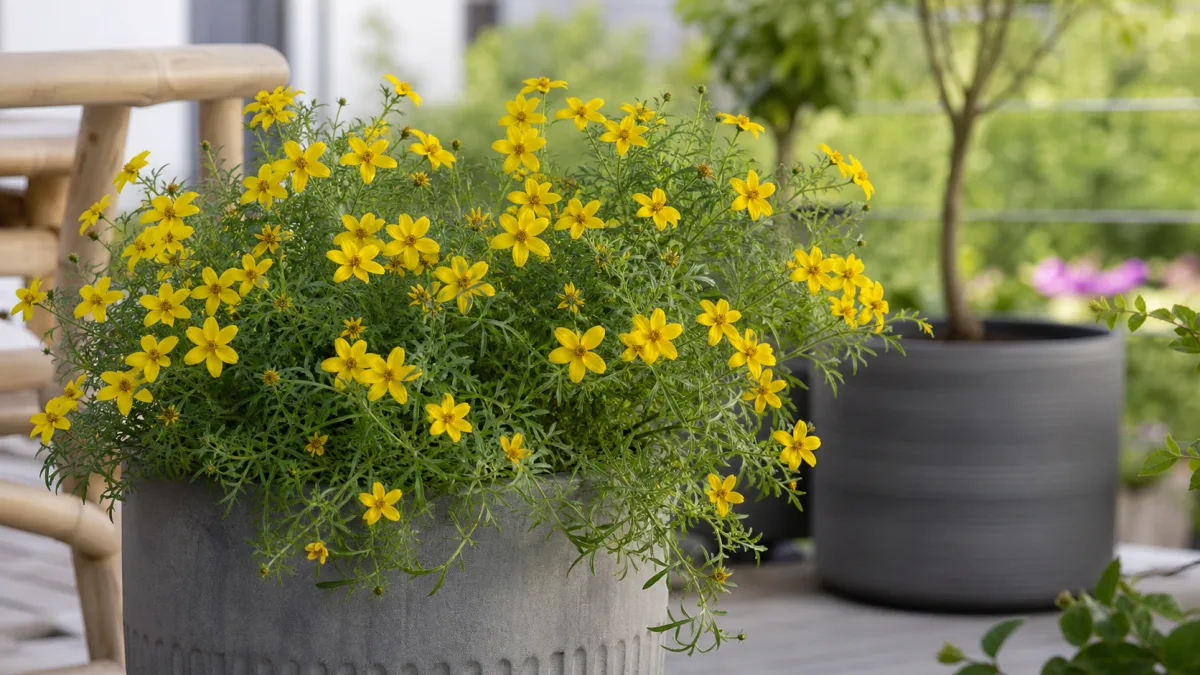
Bidens ferulifolia makes sense at the edge: its stems can travel over a pot or basket rim while neighboring plants occupy the center. That visible cascade is supported by a much less visible constraint—the entire root ball must receive water and then shed the excess. A shallow decorative pot can look generous from above while offering little usable mix beneath the surface. Choose the container by root volume, drainage and stability at full wet weight before choosing its companions.
Let Bidens trail over a secure container edge
Bidens ferulifolia has a trailing habit suited to a hanging basket or large container in full sun. Place it where stems can clear the rim without being trapped behind a rail, dragged across paving or repeatedly struck by a door. A high basket also needs to remain reachable for moisture checks and trimming.
Full sun describes the plant's exposure preference, not permission to ignore reflected heat. A dark pot beside masonry may heat and dry differently from a basket in moving air. Observe the chosen position through the day, including the shadow cast by roofs, neighboring containers and the mature plants themselves.
- Allow an unobstructed path over the rim.
- Keep the container within safe watering reach.
- Check the wet pot against the strength of its support.
Choose pot volume before flower colour
Choose a pot with free drainage and enough mix to keep the entire root ball moist after watering. Fresh container mix should accept water across the surface and release the surplus below. If water races down a gap at the pot edge while the center remains dry, apply it slowly in passes and check whether the mix has pulled away or become difficult to rewet.
In a mixed container, count the root space claimed by every plant. One vigorous centerpiece and several edge plants can exhaust a small volume quickly. Leave a modest watering lip, keep drainage outlets clear and avoid a saucer that holds the base in water after irrigation.
Read moisture, pot weight and weather together
Lift a manageable pot or press a finger into the mix to learn the difference between newly watered and nearly dry. Wind can remove moisture from a hanging basket even on a mild day, while cool wet weather slows use. Water until the root zone is evenly supplied and let the container drain before returning it to a cachepot or saucer.
Do not respond to every wilt with another dose. Check whether the mix is dry, saturated, hot or poorly penetrated. A container that repeatedly moves from severe dryness to saturation needs more usable volume, better water application or a different position—not simply a more complicated calendar.
Establish roots before pushing for flowers
Use plant response and weather rather than a fixed weekly recipe.
- After planting, water the complete mix and confirm that drainage exits freely.
- During establishment, test moisture at more than one point so a dry edge does not conceal a wet center.
- As stems extend, rotate a movable pot only when uneven light is distorting the display rather than by automatic schedule.
- When growth tires, inspect roots, nutrition, water penetration and spent stems before selecting a remedy.
Replace nutrients through the flowering season
Container plants draw from a finite amount of mix, and repeated watering can carry nutrients away. Start with the product directions for the potting medium and any fertilizer, then watch the newest growth. Measure feed accurately; doubling a dose does not double flowering and can damage roots or create soft growth.
Hanging baskets need frequent moisture checks, measured feeding and a trim when growth becomes tired or straggly. Treat those as three separate decisions. A thirsty plant needs water, a depleted root zone may need appropriate nutrition and a long bare stem may need selective cutting back.
Shorten selected stems to healthy leafy growth
Before cutting, part the canopy and find healthy leaves or side shoots below the tired tips. Shorten selected stems to that living framework rather than shearing every shoot to a bare knot. Use clean blades and remove damaged or dead material from the surface of the mix.
The response will depend on temperature, root health and the remaining season. Watch for firm new shoots before assuming the renovation worked. If the base is failing, roots circle a nearly empty pot or water no longer enters evenly, pruning alone will not repair the container system.
Choose companions with matching light and water needs
A companion should tolerate similar sun, drainage and watering, not merely echo the flower color. Keep taller plants from shading the Bidens crown or blocking irrigation. At the same time, do not pack the edge so tightly that stems remain damp and cannot be inspected.
If one plant dominates, edit early. Removing a poorly matched companion can preserve the rest of the arrangement and is often more effective than increasing fertilizer. Record which combinations maintained balanced roots and canopy, then use those notes when planning the next container.
Bidens container questions
Can Bidens grow in a hanging basket?
Yes, B. ferulifolia's trailing habit suits baskets, provided the basket receives suitable sun, drains freely and can be checked safely. Include the wet weight of mix, plant and water when assessing the hook and support.
How often should I water Bidens?
There is no reliable interval for every pot. Test the root zone and learn the container's watered weight, then adjust for wind, heat, rain, root growth and volume. Apply enough to moisten the whole root ball and allow the excess to leave.
Should all long stems be cut back together?
Not automatically. Find healthy leaves or side shoots below tired growth and shorten selected stems with clean tools. Staggering the work can retain some cover while the plant shows whether roots and conditions can support renewal.
Why is water running down the side of the pot?
Dry mix may shrink from the wall or resist wetting. Apply water slowly in several passes and test the center. If the problem persists, inspect root crowding and the condition of the mix rather than assuming the run-through reached the roots.