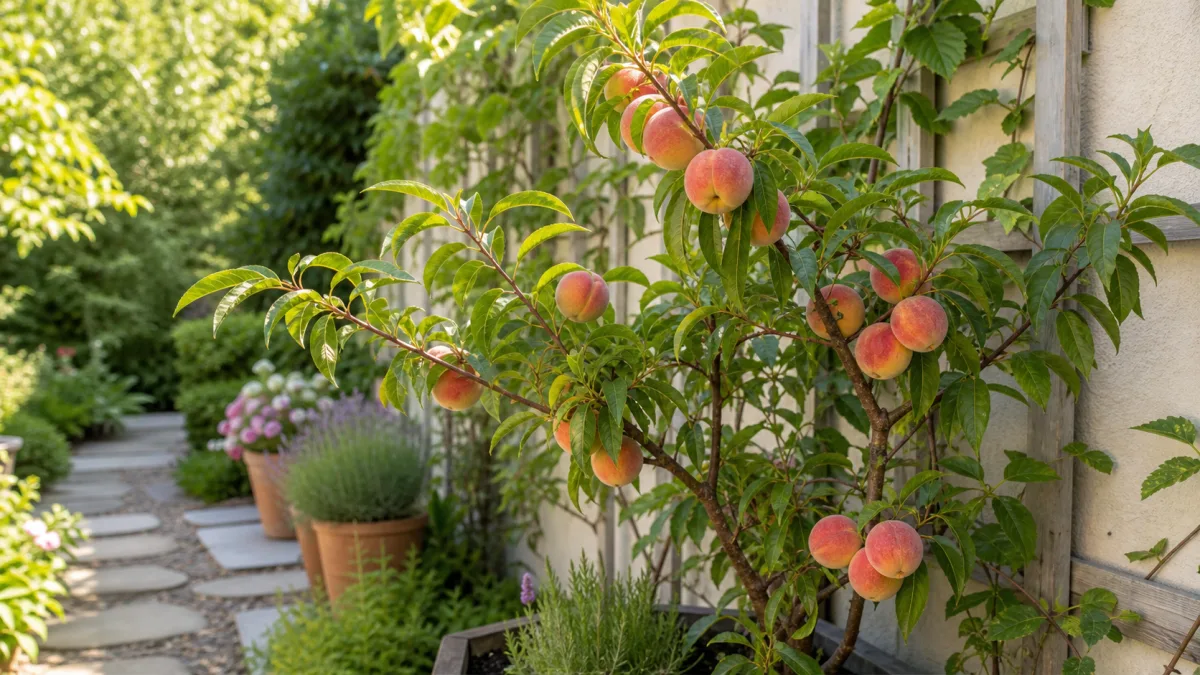
Peach trees flower early, when frost can damage blossom and cool conditions may limit pollinating insects. A sunny wall or greenhouse supplies useful warmth, but it also concentrates two jobs: hand-pollinate flowers under cover, and exclude spring rain from emerging leaves to reduce peach leaf curl. Keep the shelter open at the sides, then water steadily as fruit swells rather than sealing the tree into still, humid air.
Build the wall, cover and access into one system
A free-standing peach needs the warmest sheltered ground available; a fan-trained tree uses a sunny wall more efficiently and keeps the young canopy within reach. Leave space between the branches and wall for air movement, and preserve a route from which blossom can be protected, flowers hand-pollinated and ripe fruit picked without leaning through the framework.
Choose well-drained soil where water does not stand after rain. Before planting, keep bare roots or the root ball moist, then set a grafted tree with the graft union above the final soil level. Grass and dense groundcover around a young tree compete for water just when the new root system is establishing.
- full sun and shelter from cold or drying wind
- room for the chosen bush or fan-trained form
- water access during fruit swelling without a saturated root zone
- a removable rain cover that stays open at the sides
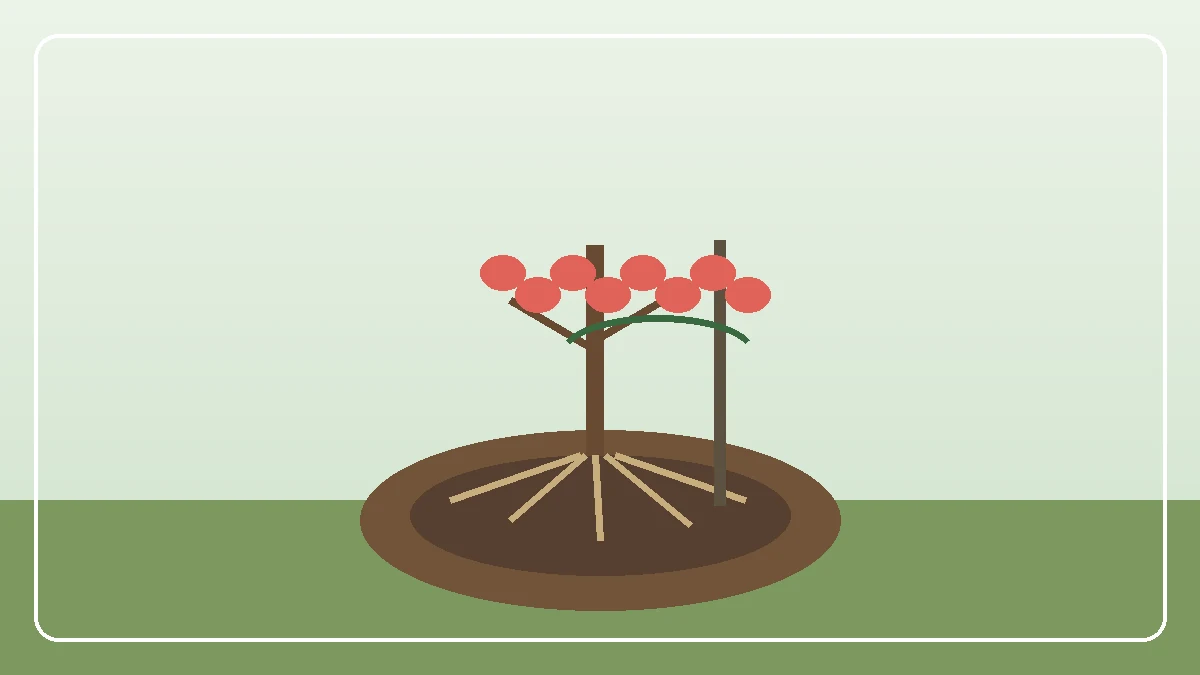
Stop peach leaf curl before rain reaches new leaves
Peach leaf curl distorts and thickens young leaves; red or purple colouring often appears before affected leaves turn pale and fall. The infection happens as new growth emerges in cool, wet conditions, so a roof that goes up after symptoms appear cannot repair those leaves.
Use a clear rain cover before susceptible leaves unfold, extending it over the canopy while leaving the ends or sides open. Ventilation matters, and insects still need access at blossom time. Remove and dispose of badly affected fallen leaves, but do not strip healthy foliage from a stressed tree. New growth may replace damaged leaves once conditions become warmer and drier.
Follow the peach from bud break to harvest
- Before bud break: secure the rain roof, check that air and pollinating insects can still enter, and prepare frost protection for blossom.
- During flowering: uncover when conditions allow insects to work, or transfer pollen between open flowers with a soft brush under glass.
- After fruit set: thin crowded fruit in stages so remaining peaches have room and branches are not overloaded.
- While fruit swells: water the root zone consistently and inspect trained ties before branches carry their full weight.
- At harvest: pick in more than one pass as individual fruit develop full colour, aroma and a slight softness.
Self-fertile does not mean weather-proof
Most peach cultivars are self-fertile, so a second cultivar is not normally required. Fruit set can still be poor when flowers open behind glass or during cold weather with little insect activity. Under cover, move pollen gently between fully open flowers with a soft artist's brush and repeat as more flowers open.
Blossom is vulnerable to frost. Temporary fleece can protect a wall-trained tree on a cold night, but remove or open it during the day so flowers receive light, air and pollinator visits. Frost protection and hand pollination solve different problems; neither compensates for a dark site or a rain cover that traps stagnant air.
- use a soft brush only on open, dry flowers
- protect blossom for the frost event, then uncover promptly
- keep the leaf-curl roof ventilated and accessible to insects
Prune in active growth and pick fruit in passes
Peaches fruit on shoots made the previous year, so a trained tree needs a renewal pattern rather than repeated shortening of every branch. Prune during spring or summer growth, when cuts heal more readily, removing dead growth and tying in suitable replacement shoots. Avoid routine winter pruning.
A peach is ready when its background colour has developed, it smells ripe and the flesh gives slightly near the stalk. Fruit on one tree does not ripen simultaneously. Lift each peach gently and leave firm fruit for a later pass; damaged or diseased fruit should not join sound fruit in storage.
- do not winter-prune a peach as if it were an apple
- do not remove all young replacement shoots from a fan
- do not strip the whole crop because the first sunlit fruit is ripe
Four avoidable peach-tree failures
Each failure points to a different stage of the crop, so correct the cause rather than applying more feed to every weak-looking tree.
- putting up a leaf-curl cover only after distorted leaves appear
- enclosing the tree so completely that air and pollinating insects cannot enter
- assuming self-fertility guarantees fruit set during cold or protected flowering
- watering by the calendar while a container or planting hollow remains saturated
FAQ about Peach trees
Does a peach tree need a second tree for pollination?
Most peach cultivars are self-fertile. One tree can set fruit, but flowers under glass or in cold weather may still need hand pollination because few insects are moving between them.
Can peach leaf curl be treated after leaves distort?
A rain roof cannot restore infected leaves. Its main non-chemical role is preventive: keep rain off susceptible new growth while maintaining open sides for ventilation and pollinators.
When should a peach tree be pruned?
Prune during spring or summer active growth, not as a routine winter job. On a fan-trained tree, remove dead or badly placed growth and tie in suitable young shoots that can carry a future crop.
How do I know when a peach is ripe?
Look for developed background colour, peach aroma and a slight give near the stalk. Pick gently in several passes because shaded and sunlit fruit on the same tree can ripen at different times.