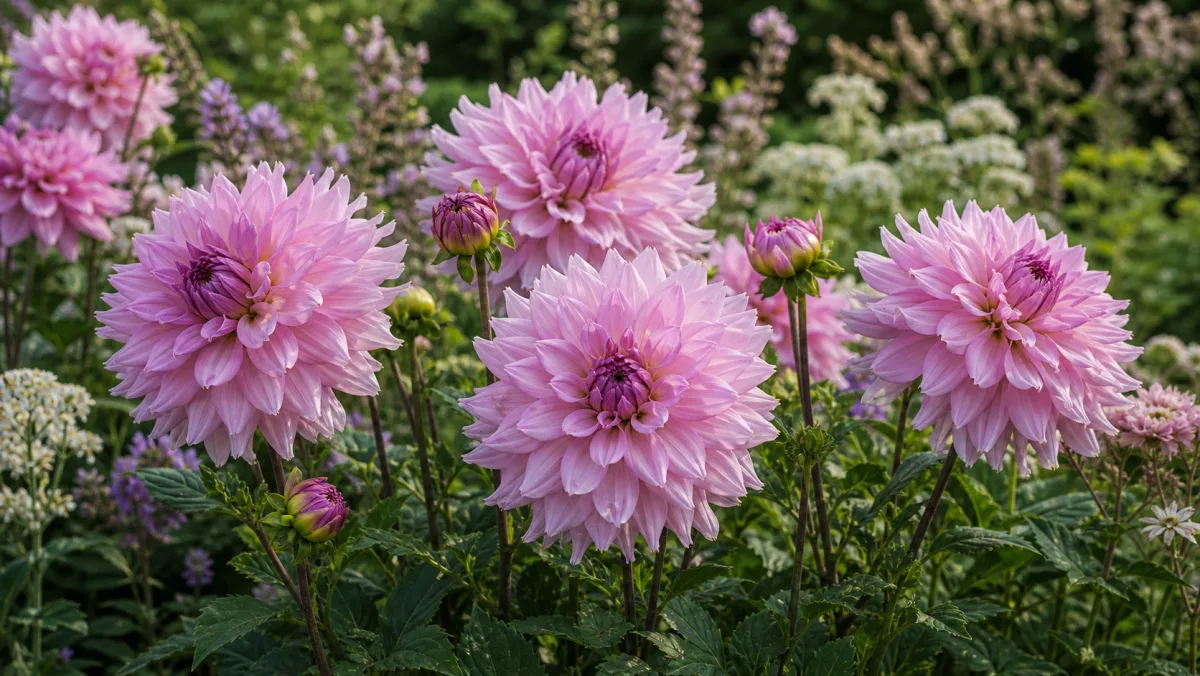
Dahlia 'Lavender Perfection' carries neatly formed, soft, bluish-pink flowerheads that can reach 25 cm across. The plant grows to about 1 m and flowers from midsummer until the first frost, so put support in place early and reserve a dry, frost-free store for the lifted tubers before planting.
What distinguishes 'Lavender Perfection'
'Lavender Perfection' is a decorative dahlia: its fully double flowerheads are broad and orderly rather than open-centred. The soft bluish-pink blooms can reach 25 cm across. That scale gives one stem real presence in a border or vase, but it also gives rain and wind more leverage than they have on a small-flowered dahlia.
Allow for a plant about 1 m high and potentially 0.5–1 m across in the cited cultivar profile. Place it where the flowerheads can be cut and deadheaded without reaching through neighbouring plants, and install a stake or support ring before the stems become brittle and top-heavy.
- full sun and fertile, humus-rich soil that drains after rain
- a sheltered position with support ready for the large flowerheads
- clear access for cutting, deadheading and lifting the tuber clump
Plant only when frost is no longer the immediate risk
A stored tuber can be started under cover to lengthen the flowering season, but tender shoots should not be moved into an exposed bed while frost is still likely. In the final position, set the tuber in fertile, well-drained soil and keep the crown from sitting in a wet pocket. Mark the planting spot so early shoots are not damaged during other spring work.
Put the main support beside the tuber at planting time. Waiting until the first 25 cm flowerheads open means threading stakes through a full plant, when both stems and tubers are easier to injure. In a container, choose a stable pot wide enough for the mature clump and make sure surplus water can leave freely.
A season built around flowers and stored tubers
- Before planting: inspect the stored clump, discard rotting material and keep the cultivar label with the viable tuber.
- During early growth: tie stems loosely to their support and water the root zone when the soil begins to dry.
- From midsummer: cut flowers or remove spent heads regularly, checking ties after wind or heavy rain.
- After the first frost damages the foliage: cut back, lift carefully and dry the clump before frost-free storage.
- During storage: keep the label attached and remove any soft or rotting tissue before it spreads through the clump.
Keep water at the roots and weight off the stems
Water when the root zone needs it during dry periods, especially as the plant builds stems and buds, but do not keep the crown continuously wet. Aim the water below the foliage. A stem carrying a broad decorative bloom can bend after rain even when the plant is otherwise healthy, so check support ties before adding fertiliser or more water in response to a leaning shoot.
Removing a spent flower prevents it from collapsing among the next buds and keeps the display moving. For vase use, approach from the path side and cut without levering the remaining stems against the support. The cultivar flowers from midsummer to frost; no deadheading routine can turn that natural window into an earlier spring display.
Lift and store the named clump after frost
'Lavender Perfection' is not reliably hardy through a freezing winter. Once frost has blackened the foliage, loosen the soil well away from the crown and lift the clump without spearing or snapping the fleshy roots. Let surface moisture dry in a ventilated, frost-free place before packing it for winter.
Check stored tubers periodically. Remove damaged or rotting material, preserve at least one viable bud when dividing, and keep the cultivar name attached to the clump. A sound but unlabelled tuber may grow next spring, but its identity—and the point of saving this particular dahlia—has been lost.
Mistakes that cost flowers or the tuber
The large flowerheads and tender storage organs fail in different ways, so diagnose the part of the plant in front of you.
- planting tender shoots outdoors before the last likely frost
- adding support only after rain has pulled open the first heavy blooms
- confusing a dry surface with a dry root zone, or leaving the crown in saturated soil
- lifting too close to the stems and cutting through the tuber clump
- storing a damp or unlabelled clump without checking it for rot
FAQ about Dahlia 'Lavender Perfection'
How large are 'Lavender Perfection' flowers?
Its neatly formed, soft bluish-pink flowerheads can reach 25 cm across. Treat that as a cultivar description rather than a guaranteed diameter for every stem; light, moisture, stem strength and the season still affect individual blooms.
Does 'Lavender Perfection' need staking?
Plan support before the stems carry their largest flowers. A plant around 1 m tall with broad double heads is much easier to tie while growth is still upright than after wind or rain has bent it.
Can the tubers stay in the ground over winter?
Not where the soil freezes hard or remains cold and wet. Where freezing or prolonged winter wet threatens the crown, lift after frost damages the foliage and store the labelled clump dry and frost-free.
Can 'Lavender Perfection' grow in a container?
Yes, if the container is stable, drains freely and leaves enough room for a plant that may spread 0.5–1 m. Keep it in full sun, provide support and remember that the tubers still need frost-free winter handling.