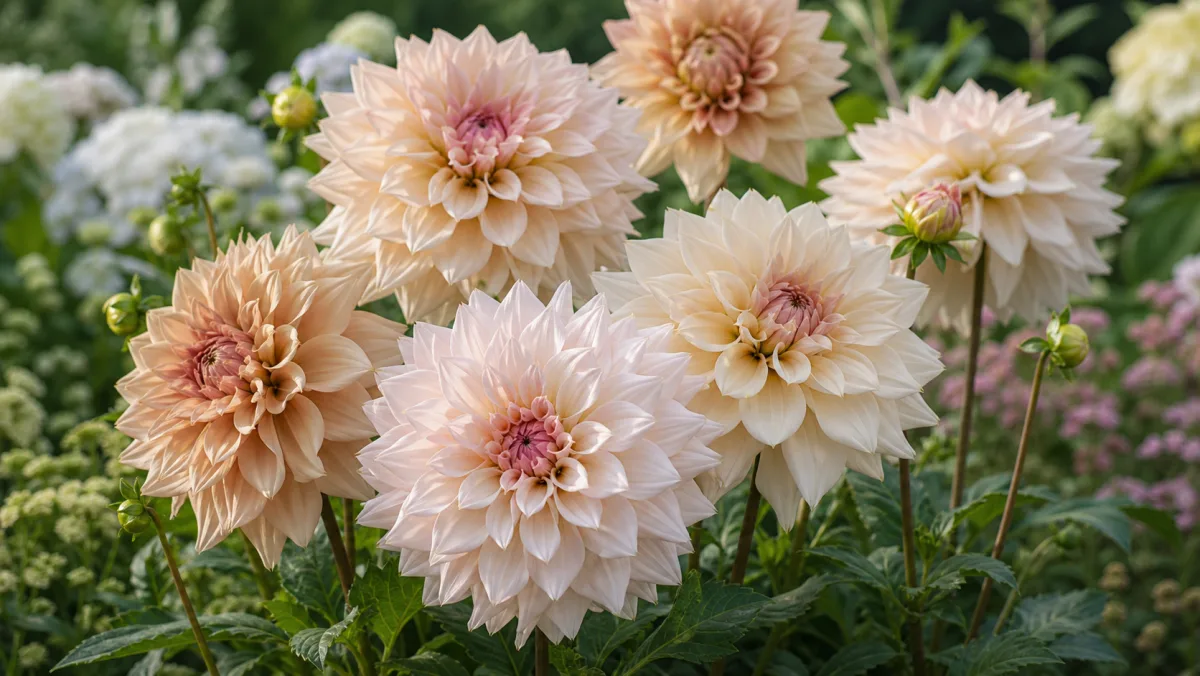
Dahlia 'Café au Lait' should arrive as the named cultivar, not merely as a tuber promising a similar colour mix. Allow space, support and a frost-free start; the large blooms become heavy in rain and wind. Separate documented cultivar traits from normal variation and supplier photography.
Dahlia 'Café au Lait': what makes 'Café au Lait' a deliberate choice
Buy 'Café au Lait' as a named cultivar and keep its label. Cream, beige, blush and champagne tones can all occur, so colour alone cannot identify the plant or promise that it will match a supplier photograph.
Allow for a plant around 90–120 cm high with blooms that become heavy after rain. A sheltered sunny position, fertile free-draining soil and support installed early are more important than squeezing the tuber into the most visible gap in a border.
Plan how you will reach the stems for tying, deadheading and cutting, and decide where lifted tubers will be labelled and stored frost-free. Those practical routes determine whether the cultivar remains manageable through flowering and winter.
- named tuber with its cultivar label retained
- sheltered sunny position with drainage and cutting access
- early support and a frost-free winter-storage plan
Confirm the cultivar and winter plan
Before planting, settle these three points:
- Dahlia 'Café au Lait' should arrive as the named cultivar, not merely as a tuber promising a similar colour mix.
- Allow space, support and a frost-free start; the large blooms become heavy in rain and wind.
- Separate documented cultivar traits from normal variation and supplier photography.
Prepare the bed and support
Choose a position where the soil drains, the plant receives sun and the large flowers have some shelter from wind. Leave a clear approach from the path so tying and cutting do not require stepping through neighbouring plants.
Put the support in while the tuber and new roots occupy little space. The final framework should hold rain-heavy stems without hiding the flowers or blocking air and access around the base.
- check that the label names 'Café au Lait' rather than only describing a colour
- wait for frost risk to pass and for the soil to be ready before planting outdoors
- install a stake or ring before tall stems need emergency support
- reserve a dry, labelled place for tubers if they will be lifted for winter
From tuber to first flowers
Tubers can be started under frost-free conditions for a longer season, but outdoor planting must wait until frost risk has passed and the soil is suitable. Keep the cultivar label attached and set the support as the tuber is planted.
During establishment, judge watering from the soil rather than a fixed weekday. Free drainage matters because a wet root zone and a dry, top-heavy plant require different corrections.
A practical season sequence
- Before planting: verify the cultivar, prepare the soil and choose the support.
- After frost risk: plant into ready soil and keep the label with the tuber.
- During flowering: tie stems, remove spent blooms and keep cutting access open.
- After the season: lift, dry, label and store tubers where winter conditions require it.
Keep the flowers supported and accessible
Check the soil, ties and stem access together. Water according to the root zone, adjust ties before they constrict growth, and remove spent flowers so the plant and support remain visible enough to inspect.
After heavy rain or wind, examine the tallest stems before they lean onto neighbouring plants. Reinforce the existing support rather than pushing a new stake blindly into an established tuber and root system.
Avoid provenance, support and lifting mistakes with the original cultivar
Most avoidable problems begin with identity, timing or support rather than flower colour.
- treating a cream-flowered product photo as proof of cultivar identity
- planting outdoors while frost risk or cold, wet soil still makes establishment unsafe
- waiting until flower-laden stems bend before adding support
- lifting tubers without labels and mixing them during winter storage
Leave room for cutting and winter work
Low neighbouring plants can cover bare soil without blocking the stems, but vigorous companions should not close the route used for tying, deadheading and lifting. Keep the support and cultivar label visible throughout the season.
Related dahlia, tuber-buying and container guides are useful when they clarify support, planting space or frost-free storage. They cannot verify that an unlabelled tuber is 'Café au Lait'.
Dahlia 'Café au Lait': common questions
How can I tell that a 'Café au Lait' tuber is correctly identified?
The listing and parcel should name the cultivar, not merely promise cream or blush flowers. Keep the label with the tuber: bloom colour can vary, and a supplier photograph cannot confirm cultivar identity.
When should Dahlia 'Café au Lait' be planted outdoors?
Wait until frost risk has passed and the planting site is ready. Start or store the tubers frost-free beforehand, then put support in place early so established roots do not have to be disturbed later.
Why does Dahlia 'Café au Lait' need early support?
Plants can reach about 90–120 cm and carry large blooms that become heavy in rain and wind. Set the support at planting or during early growth, while leaving clear access for deadheading and cutting.
How should Dahlia 'Café au Lait' tubers be stored over winter?
Where winter conditions require lifting, dry the tubers after the season and keep them in cool, frost-free storage. Leave the cultivar label with each batch so named tubers are not mixed before replanting.