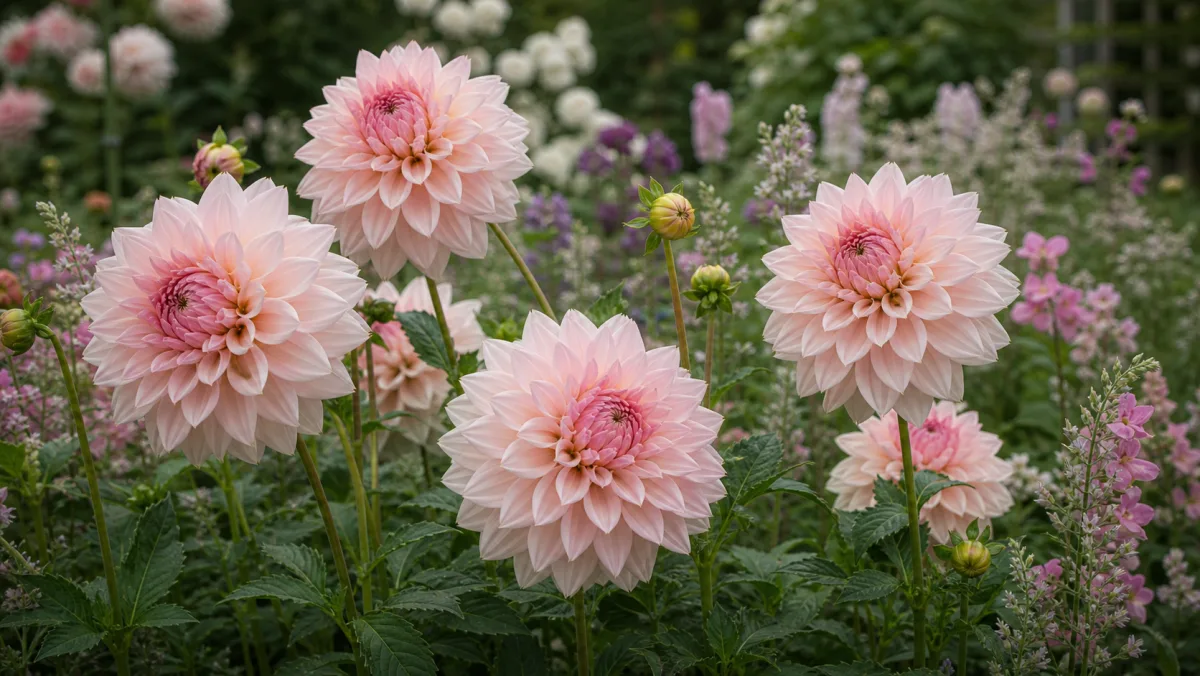
'Café au Lait Rose' opens broad cream-to-blush decorative flowers on stems expected around 90–120 cm. Set the stake before planting, keep one side of the clump open for cutting and carry the cultivar label from the bed to frost-free tuber storage.
Blush dinner-plate flowers need viewing and cutting space
Dahlia 'Café au Lait Rose' should be judged from tuber, support and winter storage. The useful details are dahlia tuber, pink, cream and warm powder tones and 90-120 cm; if those details conflict with the site, change the timing, method or follow-up before repeating the choice elsewhere.
Use the blush-to-cream range to place 'Café au Lait Rose' where flowers can be viewed and cut without reaching through brittle stems. Confirm that the bed has warm sun, drainage and a stake position, then keep the cultivar label beside the crown.
Its powder-pink and cream colouring is clearest before hard autumn weather marks the petals. Give the plant a warm start and an open cutting side, but regard the first frost—not a promised flowering month—as the end of the display.
- dahlia tuber.
- pink, cream and warm powder tones.
- 90-120 cm.
Check the stake, path and storage label before planting
Start with the place. Place Dahlia 'Café au Lait Rose' where Dahlia tuber and Pink, cream and warm powder tones can be seen without blocking access to the stake, cutting side or labelled crown.
Then compare the season with the work you can repeat. For Dahlia 'Café au Lait Rose', concentrate on the constraint created by Pink, cream and warm powder tones and record one adjustment after the season instead of applying a generic dahlia checklist.
- buying Dahlia 'Café au Lait Rose' without space to display Pink, cream and warm powder tones, accessible support and a labelled frost-free storage place
- following a printed date despite cold soil, saturated ground or wind that threatens Pink, cream and warm powder tones on stems of 90-120 Cm
- placing Dahlia 'Café au Lait Rose' where Pink, cream and warm powder tones cannot be reached for tying, cutting or autumn lifting
- ending the season without recording how Pink, cream and warm powder tones performed or keeping the cultivar label with the tuber
Start the rose-toned tuber without forcing weak growth
Before planting Dahlia 'Café au Lait Rose', prepare drainage, a stake, a working path and a label that will remain with Pink, cream and warm powder tones through lifting and storage. Make corrections while the shoots are short; once Pink, cream and warm powder tones is carried on growth of 90-120 Cm, moving ties or reaching the crown becomes riskier.
Use the calendar only as a guide. Wait for warm soil and the end of damaging frost before planting Dahlia 'Café au Lait Rose'; later, use root-zone moisture and the load created by Pink, cream and warm powder tones rather than a fixed calendar to time care.
Four seasonal jobs for 'Café au Lait Rose'
- Tuber, support and winter storage.
- Dahlia tuber.
- Pink, cream and warm powder tones.
- 90-120 Cm.
Protect pale petals while keeping the root zone steady
Check soil moisture at root depth, renew ties around the developing 90-120 Cm, and keep one side open for deadheading or cutting.
When 'Café au Lait Rose' loses vigour, separate a wet crown from ordinary colour change in ageing blooms. Test drainage beside the tuber and inspect the stake; more feed will not rescue roots sitting in stagnant water.
Problems that spoil blush blooms or confuse the stored tuber
The main avoidable errors are losing the cultivar label, adding support after stems lean and hiding Pink, cream and warm powder tones behind inaccessible neighbours.
- buying Dahlia 'Café au Lait Rose' without space to display Pink, cream and warm powder tones, accessible support and a labelled frost-free storage place
- following a printed date despite cold soil, saturated ground or wind that threatens Pink, cream and warm powder tones on stems of 90-120 Cm
- placing Dahlia 'Café au Lait Rose' where Pink, cream and warm powder tones cannot be reached for tying, cutting or autumn lifting
- ending the season without recording how Pink, cream and warm powder tones performed or keeping the cultivar label with the tuber
Frame the cream-pink flowers with lower neighbours
Choose lower or narrower neighbours that keep Pink, cream and warm powder tones visible and leave a clear route to support, cut and lift Dahlia 'Café au Lait Rose'.
A cutting guide helps preserve long stems without unbalancing the plant, while the dahlia storage guide explains how to keep the blush cultivar labelled after lifting. Container advice matters only where a large vessel can drain freely and carry its 90–120 cm growth.
FAQ about Dahlia 'Café au Lait Rose'
How should the blush dinner-plate flowers influence placement?
Give the 90–120 cm plant warm sun, drainage and a clear cutting side. Lower neighbours should frame the cream-pink flowers without hiding the stake or the labelled crown.
What signals that 'Café au Lait Rose' can move outdoors?
Wait until damaging frost has passed, the bed has warmed and excess water drains away. Put the support in first so the large pale heads do not depend on a stake driven through developed roots.
Are rain-marked petals evidence that the tuber is failing?
No. Inspect the crown, lower leaves and drainage separately, remove bruised flowers and judge the next flush. A soft crown or whole-plant decline matters more than cosmetic marks on one bloom.
Which follow-up advice helps with this blush cultivar?
Use cutting guidance for long stems, then consult dahlia storage advice to keep the named tuber labelled. Container guidance is relevant only where a large, freely drained vessel can carry its growth.