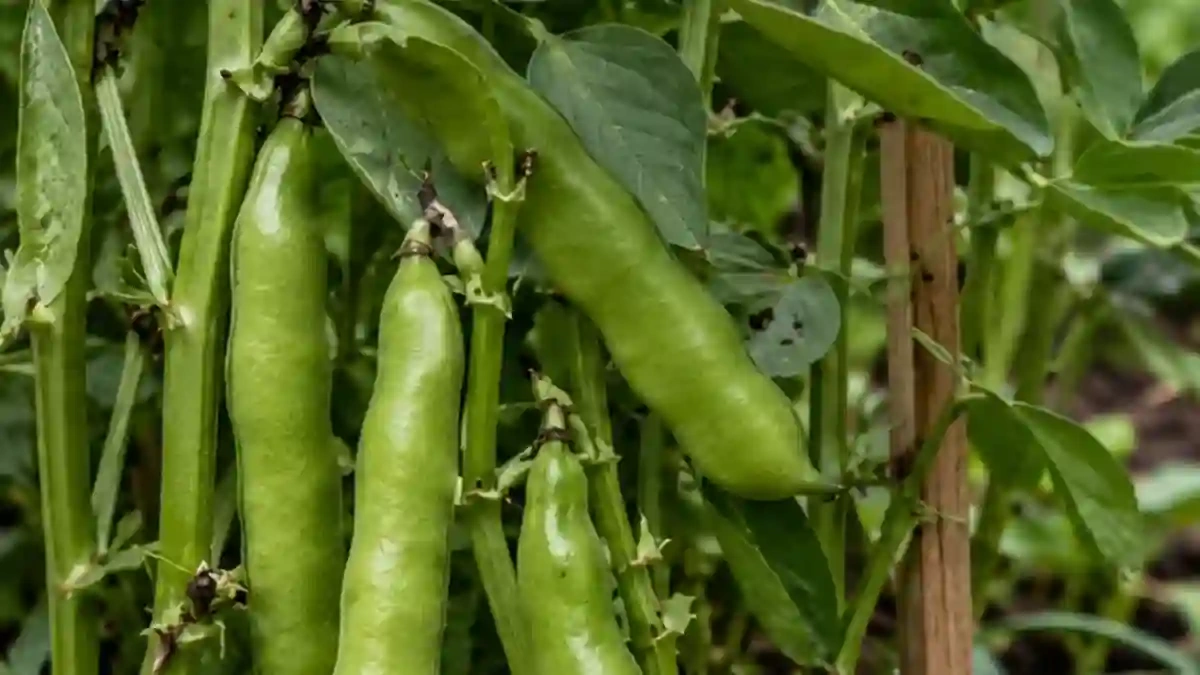
Broad bean, Vicia faba, is a cool-season pulse rather than a warm-soil French or runner bean. On a mild, free-draining site it can be autumn-sown, while cold, exposed or waterlogged ground makes early spring the safer choice. Plan an upright row, water when flowers open and harvest green beans before the seed coat becomes tough.
Let winter drainage decide between autumn and spring
A mild maritime garden may suit an autumn-sown hardy cultivar. The same plan is poor on wet clay, in a frost pocket or where winter wind loosens seedlings. Spring sowing is the dependable option for many sites.
Read the packet for hardiness and height rather than copying a month from another region. Soil should crumble rather than smear, and water should not stand around the seed.
Choose the sowing season from the soil, not the seed display
Broad bean, field bean and fava bean all refer to Vicia faba. It is not a French bean: its seed can begin in much cooler soil, while common Phaseolus beans wait for warmth.
Use autumn only for a suitable hardy cultivar in mild, free-draining ground. In cold, wet or exposed gardens, sow in early spring when soil is workable and no longer saturated.
- Mild, well-drained site: consider an autumn-sowing cultivar.
- Cold, wet or exposed site: use a spring sowing.
- Short season: plan to harvest green beans rather than dry seed.
Give the row light, drainage and a reachable picking side
Most broad beans grow about 60–150 cm tall. Choose sun or light afternoon shade and avoid the lowest pocket of a plot where winter rain sits.
Work mature compost into poor soil, but avoid heavy quick-nitrogen feeding. Leave at least one side open so lower pods, aphids and leaf spots are easy to inspect.
- Moisture-retentive but free-draining soil.
- Room for stakes before stems grow tall.
- A clear route for watering and repeated picking.
Sow 5 cm deep and leave room to inspect every stem
Sow the large seeds about 5 cm deep and 15–20 cm apart, adjusting to the packet and soil. On heavy ground, avoid placing seed in a cold saturated layer.
Direct sowing avoids root disturbance. Where mice or birds remove seed, cover the row securely until seedlings establish. Deep pots are a reserve for wet beds or missing plants, not a reason to keep vigorous seedlings indoors too long.
A season plan that follows the plant
- Before sowing: check drainage, choose the harvest goal and place end stakes.
- Emergence: protect seed and replace clear gaps early.
- Rapid stem growth: run string around the row before wind pushes plants over.
- Flowering: water deeply during dry spells.
- Pod set: inspect soft tips for black bean aphid and leaves for spreading brown lesions.
- Harvest: pick the lowest filled pods first and return every few days.
Brace the crop before pods turn stems into levers
Set strong stakes at both ends and along a long row. Run one or more lines of string around the outside; hold the stand together rather than tying every stem tightly.
Flowering and early pod filling are sensitive to drought. Water slowly at soil level when the root zone is dry instead of wetting the surface and foliage every day.
Open one pod before deciding the whole row is ready
For green use, harvest when pods feel clearly filled but remain green and pliable. Shell one: the beans should be glossy, juicy and tender after cooking, before the attachment scar and skin darken.
Lower pods usually lead, so pick upwards through the row rather than waiting for every pod to reach the same size.
Find black bean aphid while the colony still fits on one shoot
Black bean aphid gathers on soft tips, curls new leaves and coats stems with sticky honeydew. Ant traffic can reveal a colony before the insects are obvious.
Rub off a small colony or remove one heavily infested tip after lower pods have set. Do not pinch every plant in advance as guaranteed prevention; ladybirds, hoverfly larvae and parasitoid wasps often reduce colonies.
- Inspect shoot tips and the underside of young leaves.
- Treat a small colony locally before it spreads.
- Recheck after several days and note whether predators are present.
Chocolate spot is a pattern, not any single brown mark
Chocolate spot disease often begins as small dark-brown lesions. In humid weather around 15–22 °C, lesions can enlarge and merge; flowers, stems and pods may also be affected.
One blemish does not prove the diagnosis. Compare several leaves and watch for new spots after a damp period. Use clean seed, rotate peas and beans, keep the row supported and remove heavily diseased debris after harvest.
Shell the pods and cook the beans according to maturity
Large broad beans are normally shelled from the thick pod. Simmer or blanch fresh green beans until tender; fully dry beans need a longer soaking and cooking method.
Raw or undercooked beans can cause gastrointestinal symptoms because active lectins may remain. Broad beans also contain vicine and convicine. Anyone with known G6PD deficiency should avoid fava beans and follow medical advice.
Questions about sowing, harvest and safe use
Are broad beans, field beans and fava beans the same plant?
They are forms and names of Vicia faba. Seed size, cultivar and intended use differ, so read the packet rather than assuming every field-bean line is selected for tender green eating.
When should I sow broad beans?
Use autumn only for a suitable hardy cultivar in mild, well-drained ground. In cold, wet or exposed gardens, sow in early spring when soil is workable and no longer saturated.
Do broad beans need support?
Tall cultivars and windy rows do. Put stakes at the ends and run string around the stand before pods add weight.
How do I know when broad beans are ready?
Pick green pods when they feel filled but remain pliable. Open one pod: the beans should be plump, glossy and tender after cooking.
What causes brown spots on broad-bean leaves?
Chocolate spot is one possibility when dark lesions spread in humid weather, but physical damage and other diseases can look similar. Watch several leaves over several days.
What should I do about black bean aphid?
Inspect soft tips regularly. Rub off small colonies or remove a badly infested tip after lower pods have set, then check whether ladybirds and hoverfly larvae are already reducing the population.
Set the row up before the sowing window opens
Choose the harvest goal, measure a row reachable from one side and place stakes where they will not damage later roots. Buy a named cultivar with height and sowing guidance.
Compare sugar snap peas if the main aim is crisp edible pods on a trellis. Use the green-manure guide when the decision is about soil cover and rotation rather than a crop of shelled beans.