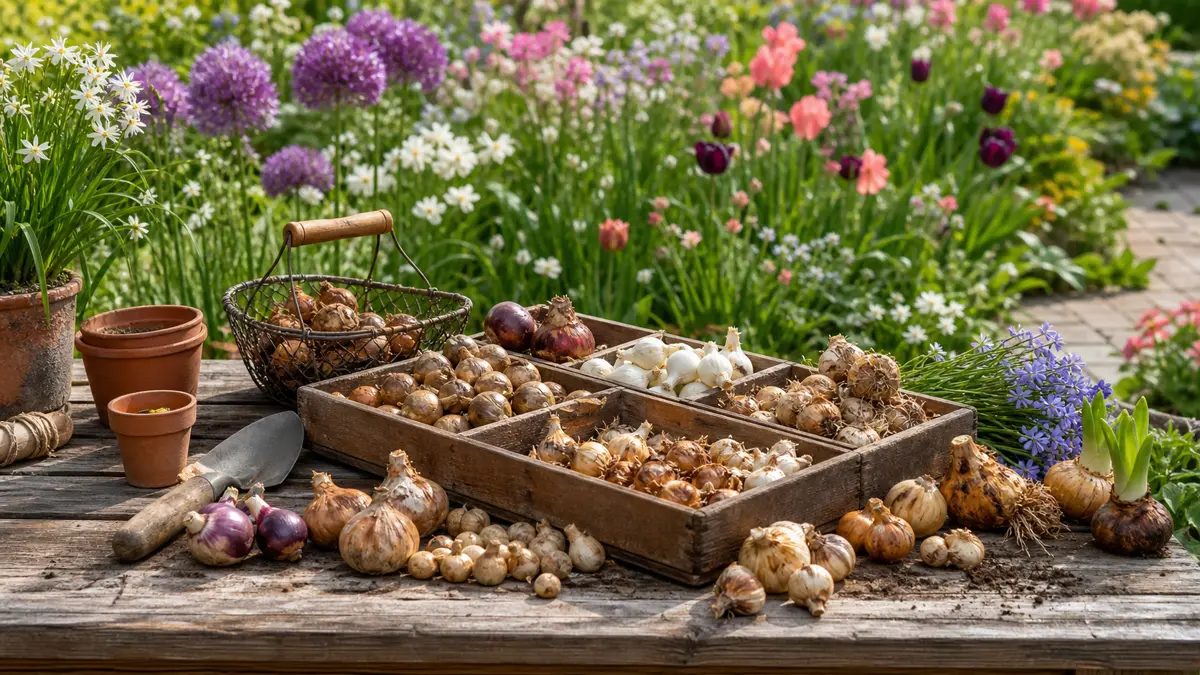
Flower bulbs online are bought months before their flowers can confirm identity, so the label, calibre, condition and delivery record carry unusual weight. Match the dispatch period to the planting window. If planting must wait briefly, retain every label, follow the supplier's guidance for that bulb type and inspect the order again before it goes into the ground. Open the parcel promptly, compare every bag with the order, and photograph bulbs that are soft, mouldy, badly damaged or incorrectly labelled before planting or discarding them.
Read species, cultivar, count and calibre—not only the flower photo
The order line should identify the plant precisely and state how many bulbs are supplied. Some sellers also give a circumference or other size grade. Compare calibre only within the same bulb type and grading system; a larger number does not make unrelated species directly comparable, and it does not override poor condition or wrong identity.
Check whether the photograph shows the named cultivar or only a colour mood. Flowering height, timing and colour can vary with conditions, so keep claims modest unless the seller provides a proper cultivar description. For mixtures, look for the composition or at least the promised species range and bulb count rather than relying on a densely planted display image.
Record substitutions. A seller should not quietly turn a named order into a different cultivar because the original line is exhausted. If substitutions are allowed by the terms, decide whether that uncertainty is acceptable before checkout and keep the confirmation that identifies what was dispatched. For a cross-border order, check which plant-health documents apply to the material, origin and destination before payment.
- Botanical or cultivar name and number of bulbs in each bag.
- Calibre or grade, where the bulb type is normally sold that way.
- Dispatch period, substitution policy and plant-health information where relevant.
Match dispatch to a realistic planting window
Spring-flowering and summer-flowering bulbs do not share one universal delivery or planting calendar. Use guidance for the exact bulb and local conditions, then choose a dispatch period that leaves time to prepare the bed. A parcel arriving while soil is waterlogged, frozen or inaccessible needs a safe temporary plan rather than a forced planting date.
Prepare drainage before delivery. Prolonged wet soil and an extended delay after arrival can both undermine the planting plan, so keep those later risks separate from the condition recorded at delivery. Confirm planting depth and spacing for the type ordered, label the intended groups and avoid buying more bulbs than can be planted carefully within the available time.
- Choose the bed and check drainage before the dispatch month.
- Keep labels and a simple planting map for named cultivars.
- Allow enough time to plant the whole order without rushed shallow holes.
- Do not force bulbs into saturated or frozen ground merely because a parcel arrived.
Open the parcel promptly and minimise storage
Open the outer box soon after delivery and check each labelled bag against the invoice. Healthy bulbs are generally firm for their type, though papery outer tunics can be loose or split without proving internal damage. Isolate and photograph bulbs with extensive softness, wet rot, active mould or severe mechanical injury rather than mixing them through the order.
If planting must wait, keep the delay short, retain the labels and follow the supplier's instructions for that species or cultivar. Do not assume that tulip bulbs, lily bulbs, dahlia tubers and rhizomes all need the same conditions. Inspect every bag again before planting.
Keep labels with each batch from parcel to bed
- Before ordering: choose the planting area, check drainage and save cultivar, count, grade and dispatch details.
- At delivery: compare labels and quantities, photograph the parcel and separate questionable bulbs.
- Before planting: recheck firmness, follow type-specific depth and spacing, and transfer names to durable markers or a map.
- After planting: keep order records until emergence and note any seller contact about wrong or damaged stock.
Plant according to bulb type and soil condition
Use the planting depth and orientation recommended for the actual species; a rule expressed as multiples of bulb height is only a starting point. Loosen compacted ground across the group, maintain drainage and place bulbs at a consistent measured depth. Very shallow planting and water-filled pockets can undermine even a sound order.
Mark groups without driving a label through the bulbs. In containers, use drainage holes and leave enough depth beneath the bulbs for roots. Do not pack a pot so tightly that watering cannot wet the compost evenly or excess water cannot escape.
Photograph damage before contacting the seller
Planting can make a condition or identity dispute harder to document. Pause, keep the packaging and contact the seller promptly when the order cannot be reconciled.
- the cultivar label, bulb count or advertised grade differs from the order
- many bulbs are soft, wet, mouldy or badly crushed on opening
- bags are unlabelled or labels have been mixed in transit
- the parcel arrived outside the stated dispatch arrangement and condition suffered
- plant-health documentation expected for a cross-border order is missing
Online flower-bulb questions
What does bulb calibre mean?
It is a seller's size grade. Check whether the listing means circumference, diameter or another scale, then compare only within the same species and grading system. Identity and condition still matter; a higher number is not a universal quality scale across unrelated bulbs.
How should bulbs be stored after delivery?
Plant as soon as conditions and the type allow. For a short delay, retain the labels, follow the supplied guidance for that bulb type and inspect the contents again before planting. Do not apply one storage routine to every bulb, corm, tuber and rhizome.
Do loose papery skins mean that bulbs are damaged?
Not by themselves. Outer tunics can loosen in handling. Check whether the bulb is firm for its type and free from extensive softness, wet rot, active mould or severe damage, and photograph doubtful batches before planting.
What should I do if the wrong bulbs arrive?
Keep the labels, invoice and packaging, photograph the discrepancy and contact the seller before planting. State the cultivar, count or grade ordered and what was supplied, then follow the current procedure that applies to that purchase.